chris@alfredturbo.com
+86-18112348562
Language
Please Choose Your Language

Views: 17 Author: Alfredturbo Publish Time: 2026-04-24 Origin: Site


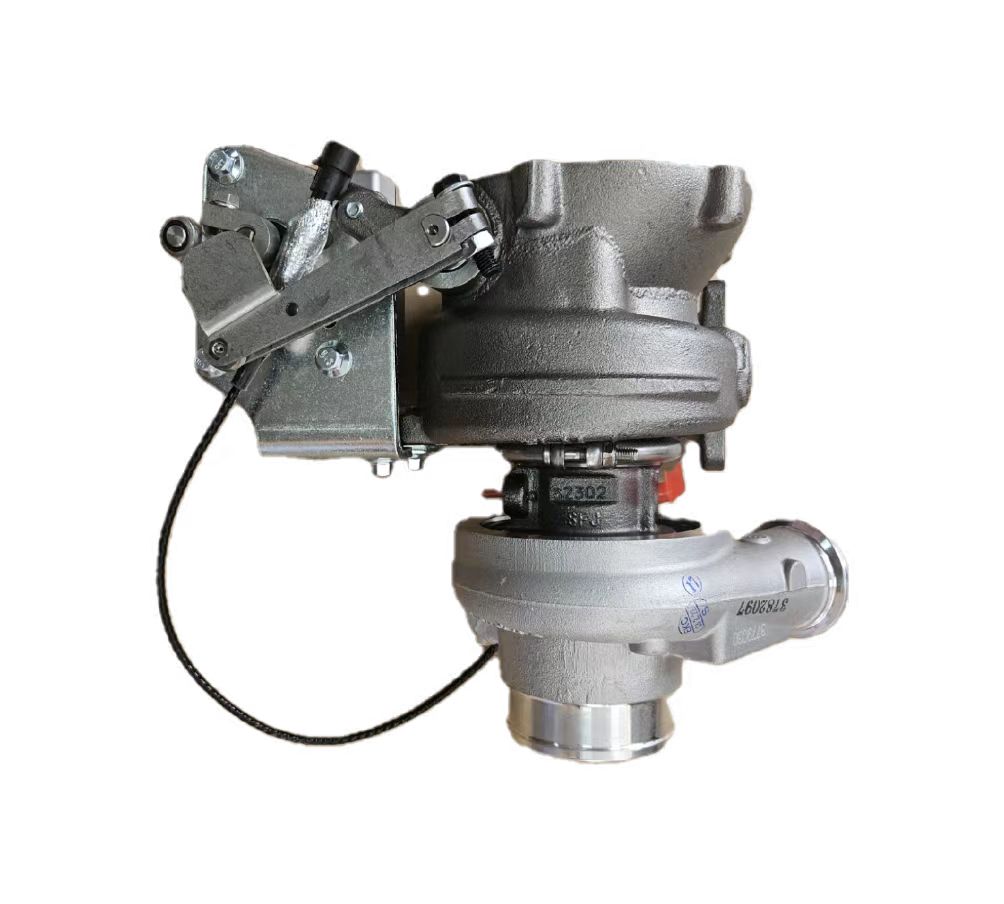
If you are purchasing or driving a heavy-duty truck, you must have often heard the term "turbocharging". It is no longer exclusive to passenger cars, but has become the "pacemaker" of modern commercial vehicles. This article will take you to fully understand the truck turbocharging system - how it works, why it saves fuel, and how to avoid common faults. Whether you are a novice or an experienced driver, you can understand it in seconds after reading, and you can also avoid many pitfalls, helping you save time and costs.
To be honest with everyone: almost all heavy-duty trucks and long-distance trucks on the market now are equipped with turbocharging systems. Especially for transportation, when you often need to carry heavy loads, drive on mountain roads, and travel long distances, a truck cannot hold on without turbocharging. It is not just about "adding power"; it can also help you save fuel consumption, reduce emissions, and even extend the service life of the engine, making it a reliable "right-hand man" for trucks.
Many people feel that "turbo" is a high-end and complex thing, fearing that they cannot understand it or will damage it. In fact, there is no need to worry. Its principle is very simple. Simply put, a turbocharger is an "exhaust-driven air compressor". Its core task is to "stuff" more air into the engine cylinders, allowing diesel to burn more fully, thereby exploding more power.
A naturally aspirated truck, like a person breathing normally, inhales air solely through the suction generated by the downward movement of the engine piston. The amount of air inhaled is limited, so the power is also average. Especially in plateau areas or when climbing with heavy loads, the air itself is relatively thin, and naturally aspirated trucks are prone to "running out of breath", with a significant drop in power, and even power interruption, which seriously affects transportation efficiency.
A turbocharged truck, on the other hand, is equivalent to installing a "powerful hair dryer" on the engine. It uses the energy of the exhaust gas discharged by the truck to drive a turbo fan to rotate at a high speed - this speed is extremely fast, reaching hundreds of thousands of revolutions per minute, and then forcibly compresses fresh air and injects it into the cylinders. Simply put, with the same engine displacement, turbocharging can make the engine burn more fuel and produce more power, with a particularly obvious power improvement, perfectly solving the shortcomings of naturally aspirated trucks.
Here's a popular example: just like when we run normally, we can only run 5 kilometers before getting tired, but if someone blows more oxygen into our lungs, we can run farther and faster. The turbocharging system is the "oxygen supply station" of the engine, and it does not consume additional fuel. It is entirely driven by the exhaust gas discharged by the engine, which is equivalent to "turning waste into treasure", both environmentally friendly and efficient.
This is particularly important for transportation - whether you are carrying a full load of goods on the highway, climbing rugged mountain roads, or even transporting in plateau areas, turbocharging can keep the truck's power sufficient, making it less likely to "struggle", reduce the risk of breakdowns on the way, improve transportation efficiency, and help us deliver goods on time and win customer trust.
Some people may ask, since turbocharging is so good, what practical benefits can it bring to fleet managers? In fact, there are 3 core points, each of which can help us save costs and improve efficiency:
This is the most intuitive advantage of turbocharging and the most needed for transportation. Transportation often involves carrying full loads of goods, and sometimes driving on mountain roads and climbing slopes. If the truck's power is insufficient, it will not only run slowly, but also be prone to power interruption, and even break down on the way, delaying transportation time and affecting customer cooperation.
A turbocharged truck, without increasing the engine volume, can increase power and torque by 20%-40%. Even when carrying dozens of tons of goods, it can start and accelerate smoothly, and does not need to shift gears frequently when climbing mountains. Even in plateau areas (thin air), it can maintain sufficient power - you should know that ordinary naturally aspirated trucks will lose power due to insufficient air in plateaus, while turbocharging can actively press more air in, perfectly solving this problem, making it particularly suitable for cross-regional and long-distance foreign trade transportation.
Here's a real case: a friend engaged in China-Vietnam foreign trade transportation used to drive a naturally aspirated truck. When carrying heavy loads to climb the mountain road at Youyi Pass, he often had to stop to rest, which took an extra 2-3 hours for a trip; later, he switched to a turbocharged truck. With the same goods and the same route, he did not need to stop the whole time, the efficiency was directly improved a lot, and customers were more willing to cooperate with him.
Some people may think: a truck with strong power must consume more fuel? In fact, the opposite is true. Turbocharged trucks are more fuel-efficient than ordinary naturally aspirated trucks, especially in long-term long-distance and heavy-load operations. The fuel money saved can earn a lot more in a year.
The reason is very simple: turbocharging can make the engine's fuel burn more fully. The same amount of fuel can produce more power, which is equivalent to "doing more things with the same money". An ordinary naturally aspirated truck may have a fuel consumption of 20-25 liters per 100 kilometers, while a turbocharged truck can control the fuel consumption at 18-22 liters per 100 kilometers. It seems that only 3-5 liters of fuel are saved per 100 kilometers, but for long-term long-distance driving, running 100,000 kilometers a year can save 3,000-5,000 liters of fuel. According to the current oil price, it can save 20,000-30,000 yuan a year, which is a considerable saving for transportation and fleet operation.
Here is a reminder: to make a turbocharged truck more fuel-efficient, driving habits are also very important, which we will elaborate on later.
Now many countries have increasingly strict requirements on vehicle emission standards for foreign trade exports. If the truck's emissions do not meet the standards, it cannot pass customs, and may even face fines, affecting foreign trade business. The turbocharging system can make fuel burn more fully, reduce exhaust emissions, and has lower emissions than ordinary naturally aspirated trucks, making it easier to meet the environmental standards of various countries and help you avoid customs clearance problems.
This is also a necessary technology to meet the National IV, National V and even National VI emission standards. For example, some countries in the European Union and Southeast Asia have very high requirements on truck emission standards. Turbocharged trucks are easier to pass inspections because their emissions are cleaner, and many countries also give certain preferential policies to environmentally friendly vehicles, indirectly helping you reduce transportation costs.
Many people mistakenly think that the turbocharging system is just that silver "snail shell" (turbocharger body), but this is not the case. A complete truck turbocharging system is composed of four key parts, which we commonly call the "Four Great Vajras". Knowing their respective roles is enough for daily use and maintenance, and there is no need to memorize professional terms by heart:
This is the core component of the entire turbocharging system, commonly known as the "turbine housing", which looks a bit like two connected "small fans". It is mainly divided into two ends internally, and there is a key intermediate body, which we will talk about one by one:
This part is connected to the engine's exhaust pipe. When the engine is working, it will discharge high-temperature and high-pressure exhaust gas, with a temperature of 600-800℃. These high-temperature exhaust gases will directly drive the turbine blades to rotate at a high speed, which is also the "power source" for the turbine's operation, equivalent to providing a steady stream of energy for the turbine.
This part is connected to the engine's intake pipe. When the turbine blades on the hot end rotate, they will drive the blades on the cold end to rotate together. The cold end blades will inhale fresh air, compress the air, and then send the compressed air into the engine cylinders to make the fuel burn more fully.
This is the bearing seat connecting the two shafts of the hot end and the cold end, and it is also the most fragile and maintenance-requiring part of the entire turbocharger. Its normal operation relies entirely on engine oil for lubrication and cooling. Once the oil supply is insufficient or the oil quality is poor, it is easy to cause wear of the intermediate body, and then damage the entire turbocharger.
Here is a reminder: the turbo body rotates very fast, so you should pay attention to maintenance at ordinary times and not let it "run dry", otherwise it is easy to damage. Replacing a turbocharger costs at least several thousand yuan, or even tens of thousands of yuan, which is both costly and delays transportation.
As we all know, when air is compressed, its temperature will rise - just like when we press an air pump hard, the air pump will become hot. High-temperature air has low density and low oxygen content. When it enters the engine, it will not only affect the power, but also may damage engine components.
The role of the intercooler is like an "air conditioner", installed between the turbocharger and the engine, responsible for cooling the high-temperature compressed air, making it denser and more oxygen-rich. When it enters the engine again, it can not only further increase power, but also protect the engine and save a little fuel consumption.
The intercooler is generally installed at the front of the truck. At ordinary times, you should pay attention to cleaning the dust and debris on its surface and not let it be blocked, otherwise it will affect the cooling effect, and then affect the working efficiency of the turbocharger, and even damage the turbocharger.
The intake and exhaust piping is the "transport channel" of the turbocharging system, divided into intake pipes and exhaust pipes. Both have their own functions and are indispensable, and must be tightly sealed, otherwise the work of the entire system will be affected:
The path of the intake pipe is from the air filter to the turbocharger, then to the intercooler, and finally to the engine. Its core function is to transport fresh air and must be tightly sealed. Once air leaks, it will not only lead to insufficient boost pressure and reduced power, but also allow dust to enter the turbocharger and engine, damaging the turbo impeller and engine components.
The role of the exhaust pipe is to efficiently guide the exhaust gas discharged by the engine to the turbocharger, allowing the exhaust gas to fully drive the turbo blades to rotate and provide power for the turbocharger. If the exhaust pipe is blocked or leaks, it will cause poor exhaust gas discharge, the turbocharger cannot rotate normally, and then affect the boosting effect.
Nowadays, trucks are all electronically controlled systems, and the normal operation of the turbocharging system is also inseparable from the "command" of the control and execution system. The core of this system is the ECU (Engine Control Unit), which real-time monitors the working state of the engine through sensors, and then controls the opening and closing of the wastegate.
When the boost pressure is too high, the wastegate will automatically open to release part of the exhaust gas, preventing the turbocharger from overspeeding and being damaged; when the boost pressure is insufficient, the valve will close, allowing more exhaust gas to drive the turbocharger to rotate, ensuring stable boost pressure. Simply put, it is like the "pressure relief valve" we mentioned earlier, the "protector" of the turbocharging system, but the current electronic control system is more accurate and intelligent.

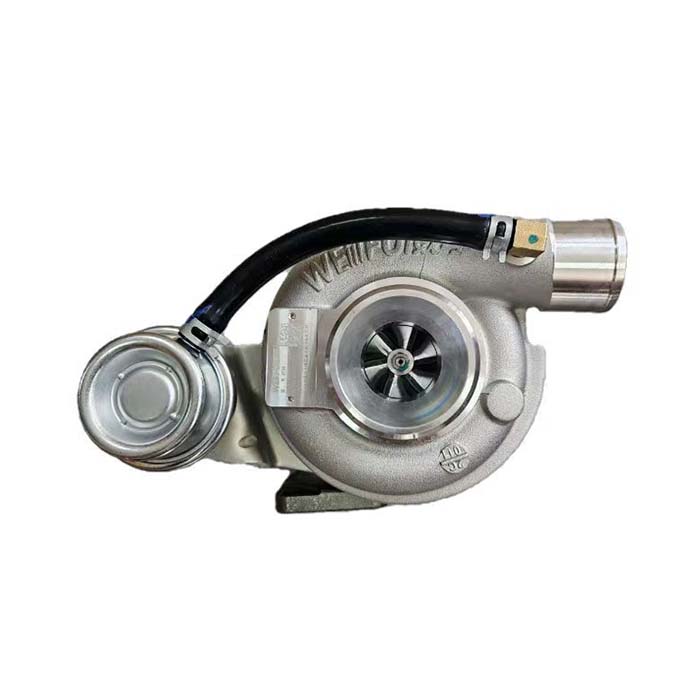

Although the turbocharger is powerful, it is also a "delicate" component. Many faults are not due to quality problems, but caused by improper operation and insufficient maintenance. Many people buy turbocharged trucks but damage the turbocharger in advance because they do not know how to use it correctly, which is both costly and delays transportation. In fact, the service life of the turbocharging system depends largely on daily use habits and maintenance. As long as you do the following points, you can make the turbocharger last 5-10 years without frequent maintenance and replacement. For foreign trade customers, it is necessary to inform end users of these points to avoid after-sales problems caused by improper operation.
Many bad driving habits of drivers are the main cause of turbocharger damage, especially the operations during starting and shutting down. Although they seem trivial, they directly affect the life of the turbocharger:
Many drivers can't wait to step on the accelerator hard to start quickly after starting the truck, especially when they are in a hurry. But for turbocharged trucks, this is a big no-no and can easily damage the turbocharger.
The reason is very simple: after the vehicle is parked overnight, the engine oil has flowed back to the oil pan. The operation of the turbocharger relies entirely on engine oil for lubrication and cooling. When the truck is just started, the engine oil has not fully circulated to the turbocharger, and the turbocharger is in a "dry grinding" state. If you step on the accelerator hard at this time, the turbocharger speed will soar instantly. Without oil lubrication, it is easy to wear the turbocharger's bearings and blades. Over time, the turbocharger will break down, and in severe cases, the turbocharger will be burned out in a few minutes.
The correct approach is: after starting the truck, let it idle for 1-3 minutes to allow the oil pump to deliver oil to the turbocharger bearings for full lubrication and preheat the turbocharger, then step on the accelerator slowly to start. This can effectively protect the turbocharger and extend its service life.
Like the misunderstanding during starting, many drivers turn off the engine immediately after running a long distance and parking, thinking it is convenient. But for turbocharged trucks, doing so will also damage the turbocharger.
Because after the truck runs a long distance or climbs with a heavy load, the turbocharger has been rotating at a high speed and has a high temperature, in a "red-hot" state. If you turn off the engine immediately, the engine stops working, and the oil circulation also stops, but the turbocharger is still rotating at a high speed due to inertia. The residual heat will bake the oil in the bearings into carbon deposits, blocking the oil passages. Over time, it will block the turbocharger, affect its operation, and even cause the turbocharger to seize and be damaged.
The correct approach is: after running a long distance and parking, do not turn off the engine immediately. Let the engine idle for 3-5 minutes to allow the temperature of the turbocharger to drop slowly, and the engine oil to continue circulating to take away the heat of the turbocharger, then turn off the engine. This small action can greatly extend the service life of the turbocharger, so don't be lazy.
The maintenance of the turbocharging system is actually very simple. There is no need to perform complex operations. As long as you do these 2 things regularly, you can avoid most faults. Moreover, the cost is not high, but it can save a lot of maintenance costs:
The operation of the turbocharger relies entirely on engine oil for lubrication and cooling, so the quality and replacement cycle of engine oil directly affect the life of the turbocharger. For turbocharged trucks, high-quality diesel engine oil that meets the standards (such as CI-4 and above) must be used, because the turbocharger rotates at a very high speed and has strict requirements on the lubrication and cleaning ability of the engine oil. Poor-quality engine oil cannot meet the requirements at all and is easy to cause turbocharger wear.
It is recommended that you replace the engine oil and oil filter regularly according to the truck manufacturer's requirements, and do not delay - generally speaking, the engine oil needs to be replaced every 5,000-8,000 kilometers. This is the cheapest and most effective way to extend the life of the turbocharger. Do not delay the maintenance of the entire turbocharger to save a little oil money.
In addition, you must choose the correct engine oil model, do not use poor-quality engine oil, and do not mix different models of engine oil. It is recommended to choose fully synthetic diesel engine oil. This kind of engine oil has better lubrication and cooling performance, which can better protect the turbocharger and engine. Although the price is slightly higher, it can save a lot of maintenance costs and has high cost performance.
The air filter is the first line of defense for the turbocharger. Its role is to filter dust and debris in the air to prevent them from entering the engine and turbocharger and damaging components. If the air filter is damaged or too dirty, dust and sand will enter the turbocharger, which will break the high-speed rotating impeller like bullets, causing irreparable losses.
It is recommended that you check the air filter every 2,000-3,000 kilometers. Clean it in time if it is dirty, and replace it if it is severely blocked. The cost is very low, but it can play a good protective role. Especially for vehicles operating in mining areas and sandy areas, the air filter inspection cycle should be shortened to avoid dust entering the turbocharger.
Even if we maintain it well at ordinary times, the turbocharging system may still have some small faults, especially in long-term long-distance and heavy-load operations, which are inevitably subject to wear and tear. Many drivers panic when they encounter faults and do not know what to do. They either repair blindly or replace components directly, spending a lot of money in vain. In fact, many common faults can be judged by ourselves, and even simply handled, saving time and costs. The following is a common fault self-check table, essential for foreign trade transportation emergencies:
Possible Causes: Insufficient boost pressure, such as air leakage in the intake pipeline, blocked intercooler, turbocharger wear, etc.
Simple Inspection: After parking, check if the intake pipe clamp is loose or the pipeline is damaged, clean the dust and debris on the surface of the intercooler, and check if the air filter is blocked. If there is a problem, handle it in time. Generally, after handling, the power can be restored. If there is still no improvement, it means the turbocharger may be worn, and it is recommended to contact professional maintenance personnel.
Possible Causes: Wear of the turbocharger shaft seal ring, blockage of the oil return pipe, causing engine oil to enter the combustion chamber and be discharged after combustion.
Simple Inspection: Check if there is engine oil stain at the exhaust pipe outlet. If there is, it is likely that the turbocharger shaft seal ring is worn or the oil return pipe is blocked. It is recommended to contact professional maintenance personnel to replace the seal ring or clean the oil return pipe. Do not delay, otherwise the engine oil will continue to enter the combustion chamber, which will not only increase fuel consumption, but also damage the engine.
Possible Causes: Friction between the impeller and the housing (bearing wear), air leakage in the intake and exhaust pipelines. This situation is relatively dangerous and requires immediate parking.
Simple Inspection: If you hear a "hissing" sound, it is likely that the pipeline is leaking. Check if the intake and exhaust pipe interfaces are loose or damaged, and tighten or replace them in time; if you hear a "whirring" sound or a "clicking" sound, it is likely that the turbocharger bearing is worn or the blades are loose or damaged. Stop immediately and do not continue driving, otherwise the damaged blades may enter the engine, causing greater damage, and then contact professional maintenance personnel to inspect the turbocharger.
If you are a trader purchasing trucks or turbocharging accessories in China, in addition to the price, there are several key points that need to be focused on. These points directly affect the quality, adaptability and service life of the product, avoiding after-sales disputes caused by improper purchasing and affecting foreign trade business:
Do not only look at the turbocharger model, but also confirm whether the model is perfectly matched with the engine's displacement and power range. If the turbocharger model is too large, it will cause "turbo lag", that is, insufficient power when starting ("sluggish"), affecting starting efficiency; if the turbocharger model is too small, it is prone to overspeeding and damage, and cannot meet the power demand of heavy-load transportation.
It is recommended that when purchasing, provide the specific parameters of the engine (displacement, power, model, etc.) to the supplier, and let the supplier recommend a matching turbocharger to ensure that the product can be perfectly matched and exert the best performance.
Heavy-duty trucks are usually used for long-distance and heavy-load transportation. The turbocharger has a large workload and generates a lot of heat, so the cooling method is very important. At present, the turbocharging system of heavy-duty trucks usually adopts a dual cooling structure of oil cooling + water cooling, which has better heat dissipation effect, can effectively reduce the working temperature of the turbocharger, avoid faults caused by high temperature, and is more suitable for long-distance and heavy-load working conditions.
When purchasing, you must confirm the cooling method of the turbocharger, and avoid purchasing products with a single cooling method. Especially for trucks used for transportation in tropical areas and plateau areas, the dual cooling structure can better protect the turbocharger and extend its service life.
The turbocharger has extremely high manufacturing precision. A little error may affect the performance and life of the product. Therefore, when choosing a supplier, do not only look at the price, but also give priority to inspecting its qualifications: for example, whether it has dynamic balance testing equipment (to ensure the rotor rotates stably at high speed, avoiding turbocharger wear caused by rotor imbalance), and whether it has the supply capacity of floating bearings (floating bearings are the core components of the turbocharger, directly affecting the service life of the turbocharger).
It is recommended to choose a supplier with formal production qualifications, a good reputation and a complete after-sales guarantee. This can not only ensure product quality, but also solve problems in a timely manner when they arise later, avoiding affecting foreign trade delivery and customer cooperation.
The turbocharging system is the "soul" of modern trucks and a reliable "right-hand man" for our foreign trade transportation and fleet operation. Understanding its principle, mastering "gentle" operating habits, and doing a good job in regular maintenance can greatly improve the attendance rate and service life of the vehicle, helping us save time, costs and improve efficiency.
For fleet managers, the maintenance and fuel costs saved are real profits; for foreign trade buyers, choosing suitable and high-quality turbocharging products can reduce after-sales disputes and win the trust of overseas customers; for drivers, correctly using and maintaining the turbocharger can avoid breakdowns on the way and make transportation smoother.
It is hoped that this article can help every friend engaged in foreign trade truck business, purchasing turbocharging products, and driving turbocharged trucks, avoid pitfalls, save costs and make more money! If you have any questions, welcome to contact me to discuss together.