chris@alfredturbo.com
+86-18112348562
Language
Please Choose Your Language

Views: 9 Author: Alfredturbo Publish Time: 2026-04-22 Origin: Site


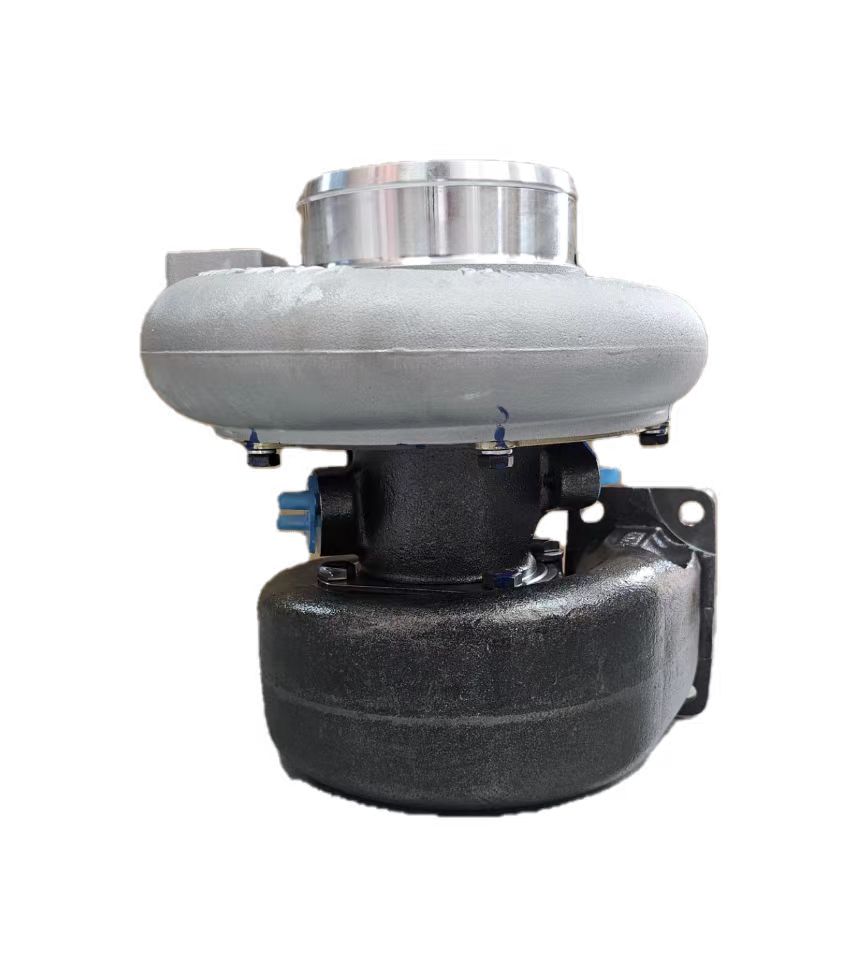
Hello everyone! Today I want to talk to you about the "black technology" in the truck industry — diesel truck turbochargers. Although the name sounds a bit technical, to put it simply, it’s like a "gym coach" + "money-saving assistant" for trucks. It can make the engine stronger and help you save a lot of fuel money at the same time. If you are in the transportation industry or are considering upgrading your truck, this article is worth spending a few minutes reading.
For friends engaged in the diesel truck foreign trade business, whether supplying goods to overseas distributors or directly connecting with logistics fleets and transportation companies, the most common questions customers ask are probably "What are the advantages of this turbocharger?" and "Can it help me make more money after installation?". In fact, the answer is simple — a good diesel truck turbocharger mainly helps truck owners solve three key problems: whether the power is sufficient, whether it can pull goods strongly enough, and whether it saves fuel.
After all, for overseas truck owners and logistics companies, trucks are not a "face project" but a tool for making money. Sufficient power allows them to run faster and carry more; strong torque means less effort and fewer failures; fuel savings mean more profits in the pocket. These three points are exactly the "specialty" of diesel truck turbochargers. Next, we will explain these advantages step by step, starting from the basics, so that both you and your customers can fully understand how this "black technology" works.
Many overseas customers may have heard of turbochargers, but they don’t know what exactly they are or why they can make trucks more powerful and fuel-efficient. In fact, no complicated explanation is needed. Simply put, a turbocharger is a small device installed next to the engine. Its job is to use exhaust gas to drive a small fan and "squeeze" more air into the engine. Just like humans, engines need air to "breathe" — the more air, the more sufficient the combustion, and the stronger the power naturally. Sounds amazing, right? Let’s take it apart to see how it actually works.
Step 1: The wisdom of "turning waste into treasure". When a truck is running, the engine produces a lot of high-temperature exhaust gas. In traditional engines, this exhaust gas is directly discharged from the exhaust pipe, which is actually a bit wasteful. The first clever feature of a turbocharger is to make use of the "power of exhaust gas". It has a small turbine installed in the exhaust pipe. When the exhaust gas rushes out, it pushes this small turbine to rotate rapidly.
Step 2: The key step of "pressurizing and supplying air". When the small turbine rotates, it is connected to another impeller (we call it a compressor wheel) through a shaft. This small impeller is in the engine’s intake pipe. When it rotates, it acts like a powerful fan — instead of blowing air out, it desperately blows air into the engine’s "lungs". In this way, more compressed air is continuously sent into the engine’s cylinders.
Step 3: "Smooth breathing, surging power". When the engine "takes in" more air, it can fully mix and burn with more diesel. What’s the result? Each combustion is more powerful and releases more energy. Therefore, an engine with the same displacement can output stronger power with a turbocharger. It’s like two people — one breathing normally and the other breathing with an oxygen mask. Who works harder? Of course, the latter.
Many customers may ask why turbochargers are mostly used in diesel trucks rather than gasoline trucks. In fact, the answer is simple: diesel engines and turbocharging are born "perfect matches", mainly for three reasons.
First, inherently pressure-resistant. Diesel engines are structurally different from gasoline engines. Diesel engine cylinders are stronger, and their components have higher strength, making them inherently capable of withstanding higher combustion pressure. This provides a solid "physical foundation" for turbochargers to increase intake pressure and extract stronger power. Gasoline engines, on the other hand, would probably "not be able to stand it".
Second, perfect coordination with the ignition method. Gasoline engines require spark plugs for ignition, and excessively high pressure and temperature can easily cause abnormal detonation, damaging the engine. In contrast, diesel engines rely on compressing air to generate high temperatures, and then inject diesel which ignites on its own (compression ignition). This method is less sensitive to the increase in intake pressure and temperature, and can perfectly cooperate with the high-temperature and high-pressure air brought by turbocharging.
Third, the advantage of low-speed high torque is amplified. Diesel engines already have the advantage of "high torque at low speeds", which is particularly suitable for truck starting and climbing. With the addition of turbocharging, this advantage is further amplified. Today’s electronic turbo technology allows the turbocharger to intervene when the engine speed is very low, making you feel that the truck is powerful as soon as it starts. Pulling heavy loads and climbing steep slopes is no longer "sluggish". This is extremely practical for overseas customers who often pull heavy loads and drive in mountainous areas.
After talking so much about the principle, what practical benefits can turbocharging bring to the actual operation of trucks? To sum it up in three words: powerful, fuel-efficient, and environmentally friendly. These three core advantages are directly related to operating costs and transportation efficiency, and are also our core selling points.
Whether it’s long-distance cross-border transportation or local heavy-load transportation, the biggest taboo for diesel trucks is "insufficient power" — unable to climb slopes, unable to overtake, and even struggling to start when fully loaded. This not only wastes time but also may cause missed delivery deadlines and lost orders. The first core advantage of a turbocharger is to "boost" the truck, making a direct leap in power and torque, and completely solving these pain points.
Many people think that to make a truck more powerful, they have to increase the engine displacement. But in fact, there’s no need to be so troublesome. Installing a turbocharger can increase power by 20%-30% or even more without changing the engine size. For overseas customers, this is simply "low cost and high return" — no need to spend a lot of money to replace the engine, and the truck can have stronger power, with full cost performance.
Let’s take a simple example. A regular diesel truck without a turbocharger may have to crawl slowly in first gear when fully loaded, or even stop to reduce weight to continue; but after installation, even when fully loaded, it can climb easily in second gear at a decent speed. A 2.0-liter diesel engine with a turbocharger can output more power than a naturally aspirated (non-turbocharged) 3.0-liter engine. This means that customers can use a smaller displacement, lighter engine to achieve or even exceed the effect of the previous large-displacement engine. With a lighter truck, they can carry more goods (without overloading) or run more easily.
Strong torque means strong traction, which is more important than pure power for diesel trucks. Especially when starting with a full load, climbing long slopes, or passing through muddy roads, sufficient torque can give customers full confidence. Many overseas customers use their trucks to pull heavy loads, such as ore, building materials, and agricultural products, often tens of tons. If the torque is insufficient, the truck will be difficult to start, and there may even be a risk of "rolling back"; during driving, the engine will always be "straining", fuel consumption will soar, and the engine will be prone to damage.
After installing a turbocharger, the truck’s torque can be increased by 30%-50%. Even when fully loaded with tens of tons of goods, it can start smoothly and powerfully without rolling back or insufficient power. Moreover, the engine does not need to roar at high speeds to output maximum torque — it can reach maximum torque in the medium speed range, allowing the truck to run smoothly and the driver to drive easily, thus naturally improving transportation efficiency. Whether it’s mountainous roads or sloping highways, it can be easily handled without frequent acceleration or worrying about mileage issues.
On the highway, when customers need to overtake or tackle an uphill section, power reserve is crucial. Turbocharged engines have better power response in the medium and high speed ranges, allowing customers to overtake quickly and safely, reducing the time spent driving alongside large vehicles and improving driving safety. In addition, many overseas customers’ trucks need to drive on plateau roads, such as some areas in Africa and South America, where the altitude is high and the air is thin. Regular trucks will suffer severe power loss here, and may even "stall" or have "insufficient power", making normal transportation impossible.
One of the core functions of a turbocharger is to "compensate for oxygen". Even on plateaus with thin air, it can ensure that the engine has sufficient air intake to prevent power loss. This is a very good selling point for friends in foreign trade — no matter what road conditions the customer’s truck is on or how high the altitude is, installing our turbocharger can maintain stable power, without worrying about delayed transportation due to complex road conditions. After all, for logistics transportation, "not wasting time" means making money.
For diesel truck owners, one of the biggest operating costs is fuel — especially for long-distance trucks, which burn hundreds of liters of fuel a day, and fuel costs account for more than half of the operating costs. The second core advantage of a turbocharger is "fuel saving", which can help customers reduce fuel consumption. The saved fuel money is the customer’s real pure profit. Some customers may wonder: "Isn’t a turbocharger supposed to increase power? Shouldn’t higher power mean higher fuel consumption?" In fact, a good turbocharger not only improves power and torque but also makes fuel combustion more sufficient, thereby reducing fuel consumption — this is one of the reasons why it is most popular among overseas customers.
Turbochargers themselves do not burn fuel; they use the energy of exhaust gas. By improving combustion efficiency, they make every drop of fuel burn more fully and valuably. As we mentioned earlier, a turbocharger compresses outside air and sends it into the engine’s cylinders, increasing the amount of oxygen in the cylinders. With more oxygen, fuel can burn more fully, avoiding the waste of "unburned fuel".
The fuel combustion efficiency of regular trucks is about 70%, while after installing a turbocharger, the fuel combustion efficiency can be increased to more than 85%. Don’t underestimate this 15% improvement — for trucks that run hundreds of kilometers a day and burn hundreds of liters of fuel, it can save a lot of money over time. For example, a truck that runs 500 kilometers a day with a fuel consumption of 30 liters per 100 kilometers can save 1-2 liters per 100 kilometers after installing a turbocharger, which is 5-10 liters a day and 150-300 liters a month. Converted into money, this is a considerable profit. Under the same power output, turbocharged engines have significantly lower fuel consumption. For long-distance trunk transportation, running hundreds of thousands of kilometers a year, the saved fuel costs are very substantial pure profit.
Today’s turbochargers are very intelligent; they do not work at high intensity all the time but "exert force on demand". When the vehicle is driving at a constant speed on a flat road and does not need much power, the turbocharger’s boost pressure will be maintained at an economical level, without wasting fuel; when the customer steps on the accelerator deeply to need power, it will quickly increase the boost pressure and output at full capacity. This "power when needed, energy-saving when not needed" working method avoids unnecessary fuel consumption.
In addition, as we mentioned earlier, turbochargers can make trucks output strong power and torque even in the low-speed range. When running at low speeds, the engine’s fuel consumption is much lower than at high speeds — which is equivalent to the truck completing the same transportation task with less fuel. For example, a regular truck pulling heavy loads needs to reach more than 2500 rpm to maintain power when climbing slopes, which consumes a lot of fuel; while a turbocharged truck only needs about 1500 rpm to maintain sufficient power for climbing. With lower speed, fuel consumption naturally decreases. For customers running long distances, driving at low speeds for a long time can save a lot of fuel costs.
This is an easily overlooked benefit: to achieve the same power, a turbocharged engine can have a smaller displacement and the engine itself can be made lighter. A lighter engine means a reduction in the overall vehicle weight. Every kilogram lighter the truck is, the more fuel can be saved over time. Moreover, some customers may think that turbochargers are not cheap and worry about "being able to afford it but not being able to use it". But in fact, turbochargers have a long service life — as long as they are properly maintained, they can be used for several years.
Furthermore, the fuel money saved can recover the cost of the turbocharger in a short time. In the long run, it can help customers save a lot of expenses. For example, a cross-border transportation truck that runs 100,000 kilometers a year and saves 2 liters of fuel per 100 kilometers can save 16,000 yuan a year at 8 yuan per liter. The price of a turbocharger is about several thousand to more than ten thousand yuan. The fuel money saved in one year is enough to cover the cost of the turbocharger, and the savings in subsequent years are all pure profit. For overseas customers who focus on cost control, this is undoubtedly the most attractive selling point.
On the one hand, sufficient combustion makes exhaust gas cleaner. By providing sufficient air, the turbocharger enables more full and thorough combustion of diesel in the cylinders. The more sufficient the combustion, the fewer harmful substances such as soot (black smoke) and carbon monoxide are produced. This reduces pollution from the source, allowing the customer’s truck to easily pass local emission inspections, without worrying about being fined or detained due to failure to meet emission standards, which would affect transportation.
On the other hand, it reduces the burden on the after-treatment system. Modern diesel vehicles are equipped with complex exhaust gas after-treatment systems, such as DPF (Diesel Particulate Filter) and SCR (Selective Catalytic Reduction), to treat exhaust gas. If the engine itself burns well and produces fewer original pollutants, the working pressure of the after-treatment system will be reduced, its service life will be longer, and its reliability will be higher, helping customers save expensive maintenance costs of the after-treatment system. For overseas customers, reducing maintenance costs also means increasing pure profit.
After learning about so many benefits, customers may be moved, but they will probably also ask: "How to choose a reliable turbocharger? After choosing the right one, how to maintain it to make it last longer?" In fact, it’s not complicated. As long as you remember a few simple points, you can keep the advantages of the turbocharger for a long time and make customers more confident in choosing our products.
Choosing a reliable turbocharger can not only exert its due advantages but also avoid subsequent failures and save maintenance costs. Here are 3 practical tips for customers, which we can directly share with customers during foreign trade communication.
If choosing a turbocharger for a new car, priority should be given to the original turbocharging configuration matched by the vehicle manufacturer. The matching by the vehicle manufacturer has undergone numerous tests and adjustments, achieving the best balance in power, economy, and reliability. Do not blindly "flash the ECU" or modify the engine to pursue the nominal maximum horsepower, as this may damage the engine life and do more harm than good. Our turbochargers are all produced in accordance with international standards and can also perfectly adapt to mainstream diesel truck models around the world, equivalent to "factory-level" matching, so customers can choose with confidence.
If the truck’s turbocharger needs to be replaced, be sure to choose a regular brand with quality assurance. The market is mixed with products; cheap and low-quality turbochargers are not durable. They not only fail to exert their advantages but may also damage the engine due to blade breakage and other problems, causing huge losses. Our products have undergone strict tests, are high-temperature resistant and wear-resistant, have guaranteed materials, dynamic balance, and high-temperature resistance, and support after-sales guarantee, allowing customers to buy and use with peace of mind.
Now there are more advanced technologies such as variable geometry turbochargers, twin turbochargers, and even electric turbochargers. For most truck drivers, mature, reliable, and market-proven single turbochargers or wastegate turbochargers are the most practical choices. New technologies often mean higher purchase and maintenance costs. Customers should choose according to their actual operating conditions — for example, if they often pull heavy loads and drive in mountainous areas, choose a model with more stable torque output; if they often run long-distance flat roads, choose a more fuel-efficient model. We can also recommend the most suitable products according to customer needs to improve customer experience.
Many overseas customers worry that turbochargers are complicated to operate and maintain, requiring additional money to hire someone for maintenance. In fact, this is completely unnecessary. As long as you remember a few simple tips, daily operation and maintenance are very simple, without additional cost input, and can also extend the service life of the turbocharger.
This is a well-known but very important point among experienced drivers, which we can directly share with customers. After starting a cold engine, do not step on the accelerator hard and drive immediately. Let the engine idle for about one minute to allow the oil circulation to fully lubricate the turbocharger bearings; after long-term high-load operation (such as just getting off the highway or climbing a long slope), do not turn off the engine immediately. Let it idle for 2-3 minutes to allow the turbocharger to cool down slowly with the help of oil circulation, preventing damage to the bearings and oil seals due to local high temperatures. This small operation does not cost extra money but can greatly extend the service life of the turbocharger.
Turbochargers rotate at extremely high speeds, up to 100,000 or even hundreds of thousands of revolutions per minute, and have extremely strict requirements for lubrication and cleanliness. Air and oil are the keys to ensuring their normal operation. First, oil is crucial: be sure to use high-quality diesel engine oil of the grade specified by the manufacturer and replace it strictly according to the cycle. Low-quality or expired oil cannot provide effective lubrication and heat dissipation, and is the number one killer of turbocharger damage. Second, the air filter is a guarantee: the compressor wheel blades of the turbocharger are very precise. Be sure to replace or clean the air filter on time. A damaged or too dirty air filter will allow dust particles to enter, which will damage the high-speed rotating impeller like sandpaper, leading to reduced efficiency or even scrapping.
Pay more attention to the truck’s status in daily use, and you can find small problems with the turbocharger in time, avoiding small problems from turning into major failures. If there is a significant drop in power, weak acceleration, a lot of blue smoke from the exhaust pipe (oil burning), or abnormal "hissing" air leakage and sharp whistling, these may be signs of problems with the turbocharging system and should be inspected in time. We can also provide after-sales support to assist customers in troubleshooting problems, so that customers do not have to worry about maintenance.
In addition to the core advantages and use and maintenance tips mentioned earlier, our diesel truck turbochargers are specially adapted to the needs of overseas customers. Whether in terms of quality, after-sales service, or adaptability, they can make overseas customers worry-free and assured. After all, in foreign trade business, what customers buy is not only the product but also peace of mind and convenience.
Our turbochargers are all produced in accordance with international standards, with qualified quality, and are adaptable to mainstream diesel truck models around the world, such as Hino, Isuzu, Mitsubishi Fuso, Nissan UD, etc. No matter which brand or model the customer’s truck is, a suitable turbocharger can be found. Customers do not need additional modifications and can directly install and use it.
Moreover, our products have undergone strict tests, are high-temperature resistant and wear-resistant, and can adapt to different climates and road conditions overseas — whether it is the high temperature in tropical regions or the low temperature and thin air on plateaus, they can work stably without failures. For customers, there is no need to worry about mileage issues or frequent maintenance, which can save a lot of time and costs.
In foreign trade business, the biggest concerns of customers are "no after-sales guarantee" and "slow delivery". We provide perfect after-sales guarantee for overseas customers. Most products have a warranty period of 6 to 12 months, which can be negotiated according to the product. If there is a quality problem with the product, we will promptly assist the customer in solving it, ensuring that the customer does not suffer losses.
At the same time, we support global shipping. From the warehouse to regions such as Asia, Africa, Latin America, and the Middle East, orders with stock can be shipped within 1-7 days, usually processed within 24 hours; for orders without stock, we will promptly inform the delivery time to ensure that customers receive the products on time without delaying operations. In addition, we support multi-currency settlement and customized packaging to meet the diverse needs of overseas distributors, repair shops, and end customers.
As we mentioned earlier, our turbochargers are simple to operate. After installation, there is no need to learn additional operating skills; they are used in the same way as regular trucks. Maintenance is also convenient — as long as you regularly inspect and replace the oil, you can ensure its normal operation. Moreover, the maintenance cost is very low, no need to spend a lot of money. Ordinary maintenance costs can keep the turbocharger in good condition and greatly extend its service life. For overseas customers, it is both worry-free and cost-saving, without the need for additional investment in turbocharger maintenance.
In a word, the diesel truck turbocharger is by no means a simple "accessory". It is the "heart enhancer" and "intelligent energy-saving housekeeper" of modern diesel trucks. It cleverly turns exhaust gas into power, achieving a perfect unity of stronger power, greater torque, lower fuel consumption, and cleaner emissions, directly improving the truck’s transportation efficiency and operational economy.
For overseas diesel truck owners and logistics companies, the core needs of trucks are "sufficient power, strong load-carrying capacity, and fuel saving" — these three points are exactly the core advantages of our diesel truck turbochargers. No complicated professional terms or additional modification investment are needed. After installation, the effect can be seen directly — doubled power, no struggle in climbing and overtaking; upgraded torque, easier heavy-load climbing; more fuel-saving, saving a lot of money over time; cleaner emissions, adapting to global environmental trends.
Moreover, our products are adaptable to mainstream global truck models, with reliable quality, perfect after-sales service, and fast delivery, fully meeting the needs of overseas customers. Whether you are an overseas trade distributor or directly connecting with end customers, recommending our diesel truck turbochargers can make customers feel tangible benefits, thereby improving the transaction rate.
In today’s increasingly fierce logistics competition, fluctuating oil prices, and strict environmental protection requirements, a truck equipped with an efficient and reliable turbocharger is undoubtedly a powerful partner for customers to reduce operating costs and improve competitiveness. It is hoped that this popular introduction can help you better understand this technology, provide some references for vehicle selection and maintenance, and make your business easier and longer-lasting.