chris@alfredturbo.com
+86-18112348562
Language
Please Choose Your Language

Views: 0 Author: Site Editor Publish Time: 2026-04-17 Origin: Site


When you're driving on the highway and a huge semi-truck passes by steadily, its engine roaring with a deep, powerful sound, have you ever wondered what kind of power drives such a massive vehicle?
Friends engaged in international logistics, heavy-duty vehicle procurement, or those who often work with semi-trucks probably have a question: Do semi-trucks have turbochargers? The answer is simple — the vast majority of semi-trucks on the market today, regardless of which country they are produced in, whether imported or locally manufactured, come standard with turbochargers.
Some people might say, "I've seen older semi-trucks that can run without turbochargers." It's true that many early semi-trucks were equipped with naturally aspirated engines and could operate without turbochargers, but their efficiency and power are completely unable to meet today's transportation needs. Especially for international transportation, whether it's cross-border long-haul or heavy-load transport, a semi-truck without a turbocharger simply cannot withstand the high-intensity work.
First, let's clarify a core question: Do semi-trucks have turbochargers? The answer is: 99% of new semi-trucks are equipped with them; only some old, obsolete models or small semi-trucks used for short-distance, light-load transport may not have them.
Why do modern semi-trucks all need turbochargers? It's actually very simple — to be "more powerful, more fuel-efficient, and more durable." Friends in the transportation industry know that our semi-trucks often carry dozens of tons of goods, travel hundreds or thousands of kilometers, and have to deal with various road conditions — such as steep slopes and plateau sections. If the power is insufficient, not only will they not run fast, but they will also be prone to breakdowns, delaying transportation timelines.
Some people might think that turbochargers are a "high-end configuration" only available on expensive semi-trucks. But that's not the case. Nowadays, whether it's European brands like Volvo and Mercedes-Benz, or American brands like Kenworth and Peterbilt, as long as they are semi-trucks used for long-haul and heavy-load transport, turbochargers are a standard configuration, just as essential as a car's steering wheel.
There are two main reasons behind this: First, policy requirements. Now, countries around the world are advocating energy conservation and emission reduction. Engines without turbochargers can hardly meet exhaust emission standards, making them impossible to register and put on the road. Second, market demand. International transportation emphasizes "high efficiency and low cost." Turbochargers can increase the power of semi-trucks while reducing fuel consumption, helping truck owners save costs, so they have naturally become a necessity.
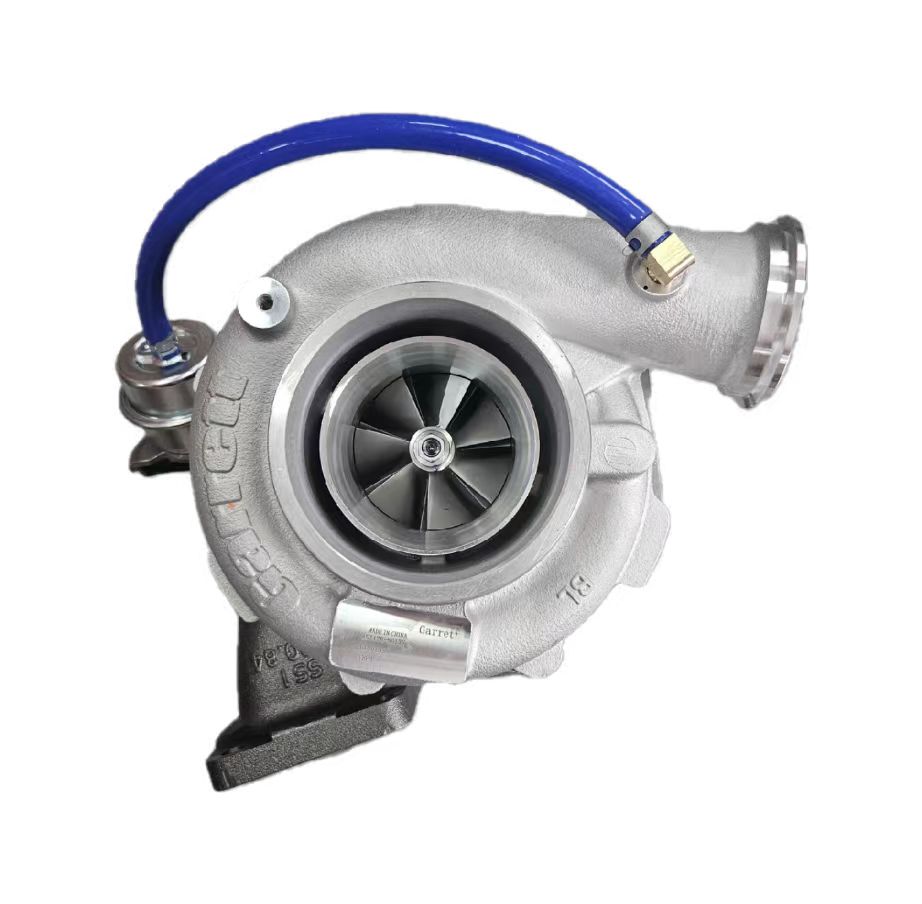
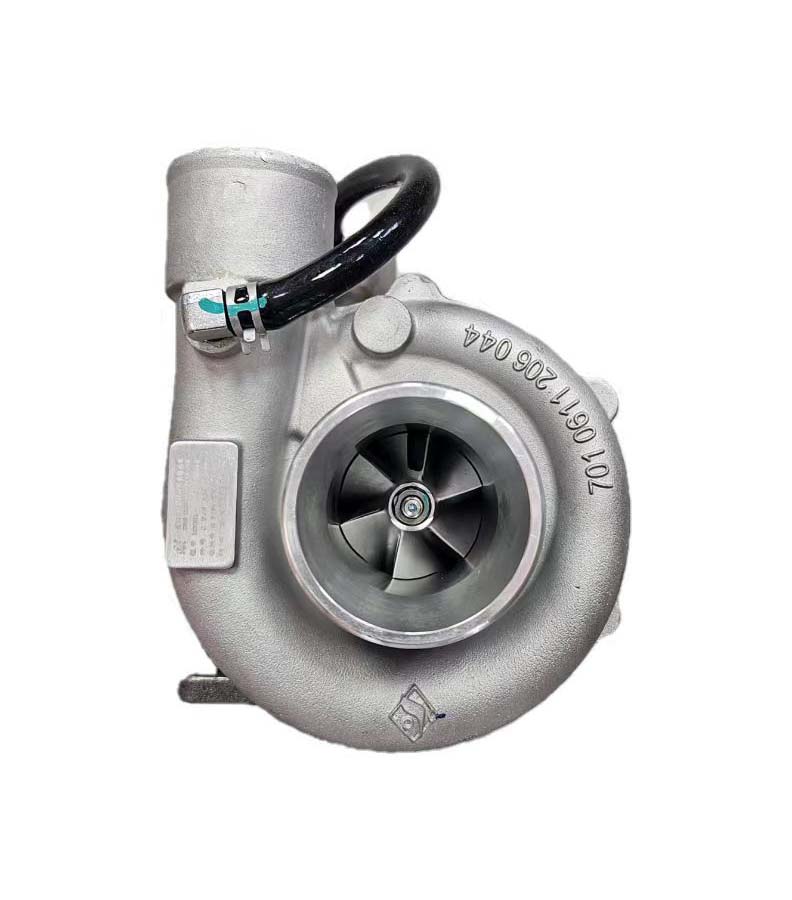
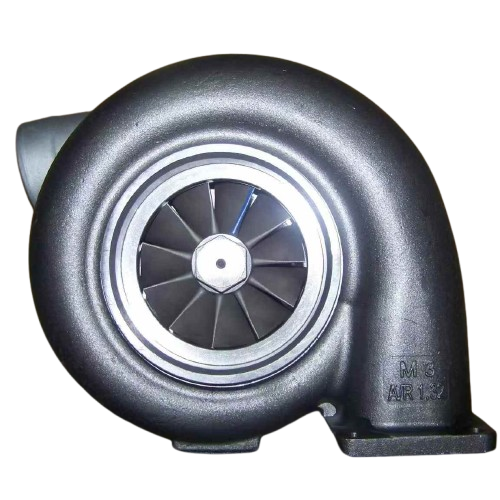
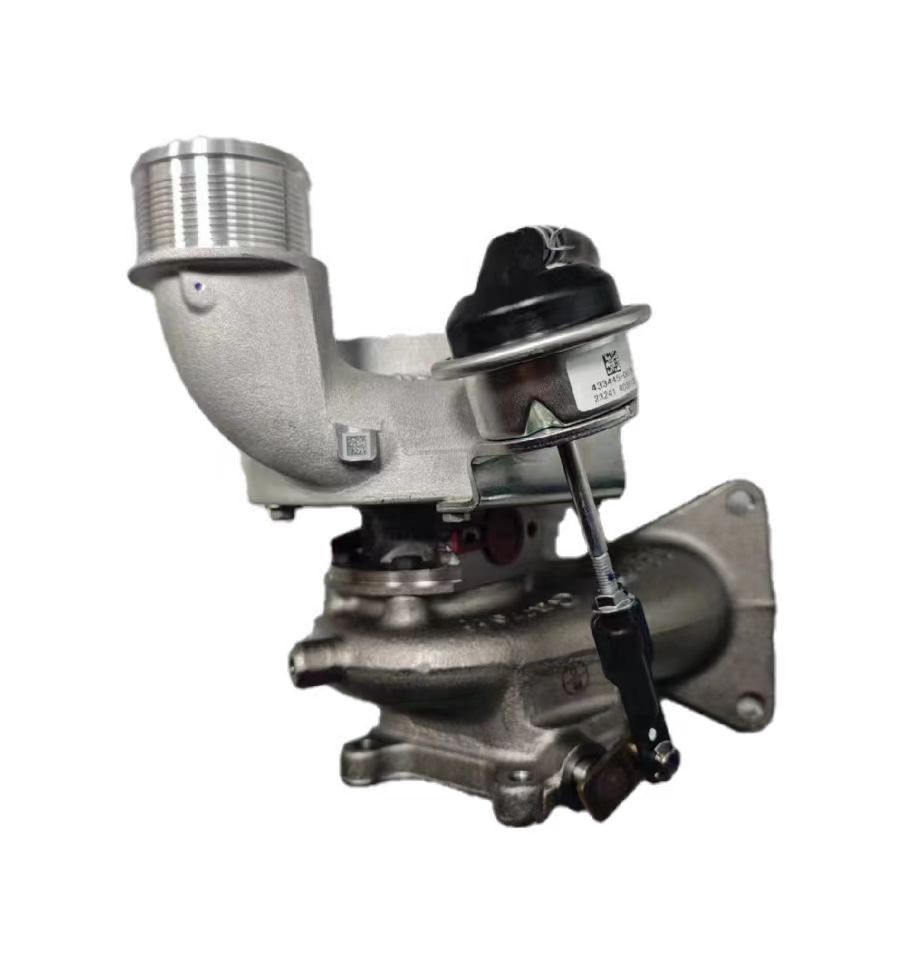
As the main force of logistics and transportation, the power system of heavy-duty trucks directly determines economic benefits. As a forced induction technology, the turbocharger increases the engine's air intake by recovering exhaust gas energy, thereby improving power output without increasing the engine displacement. Simply put, a turbocharger is like a "breathing enhancer" for the vehicle, allowing the engine to "breathe" more smoothly and thus generate more power.
We can think of the engine as a person's lungs. A naturally aspirated engine is like normal breathing, while a turbocharged engine is like an athlete taking deep breaths during a competition, able to inhale more oxygen and generate more energy. The turbocharger is the device that helps the engine "take deep breaths." It is driven by exhaust gas flow, does not require additional engine power consumption, and on the contrary, can improve fuel combustion efficiency, achieving energy conservation and emission reduction effects.
Ten years ago, 300-400 horsepower trucks were common on roads around the world, but today, 500-600 horsepower heavy-duty trucks have become the mainstream. Behind this change is the mature application of turbocharging technology. Turbocharging enables trucks to maintain good acceleration performance and climbing ability even when fully loaded, making them particularly suitable for the complex and varied terrain conditions around the world, and also fully adaptable to the diverse road conditions of cross-border international transportation.
If we compare a semi-truck to a strongman, then the engine is the strongman's heart, and the turbocharger is the device that "pumps up" the heart, making the strongman's strength greater and more durable. Without complicated principles, let's talk about the core advantages of turbochargers in simple terms — each one is closely related to international transportation and precisely hits the most sensitive economic nerve of the transportation industry.
In transportation, semi-trucks often carry dozens of tons of goods and sometimes have to travel on mountain roads and steep slopes. If the power is insufficient, not only will they not run fast, but they will also easily damage the engine. The core function of a turbocharger is to "supercharge" the engine, allowing it to generate more power.
For transportation, sufficient power means higher transportation efficiency and more guaranteed timelines. For example, cross-border transportation from Europe to the Americas passes through many mountainous and plateau sections. Semi-trucks with turbochargers do not need to slow down or shift gears frequently when climbing slopes, can maintain a stable speed, and save transportation time. Moreover, sufficient power can also reduce engine wear and avoid delaying international transportation due to vehicle breakdowns.
Friends in the transportation industry know that fuel costs are one of the largest expenses. Especially for long-haul transport, the daily fuel cost of a semi-truck can be several thousand US dollars. Turbochargers can help save a lot of fuel costs, which is a considerable gain in the long run.
The reason why turbochargers can save fuel is that they make the engine's fuel burn more fully, reducing waste. Furthermore, a turbocharged engine does not need a large displacement to achieve high power. A smaller displacement reduces the vehicle's driving resistance, further saving fuel. For long-haul transport, fuel costs account for 30%-40% of operating costs. By improving combustion efficiency, turbochargers can reduce fuel consumption by about 5%-10%.
Let's do the math: A semi-truck engaged in cross-border long-haul transport travels about 200,000 kilometers a year. Based on saving 10 liters of fuel per 100 kilometers and a fuel price of 1.2 US dollars per liter, it can save 24,000 US dollars a year; if it saves 15 liters of fuel, it can save 36,000 US dollars a year. In the low-margin transportation industry, this savings is directly converted into real profits. Especially now, with fierce competition in the international trade industry, every cent of cost is crucial.
Countries around the world are now strengthening environmental protection controls, and the requirements for exhaust emissions of heavy-duty vehicles are becoming more and more stringent, especially with the implementation of emission standards such as the EU Euro VI and the US EPA. Turbochargers play a key role in helping vehicles meet these standards. If a semi-truck's exhaust emissions do not meet the standards, it cannot only not be put on the road but also be fined, and even affect the customs clearance of goods, which is a very troublesome matter for international transportation.
Turbochargers can effectively reduce engine exhaust emissions. Because they make fuel burn more fully, reducing the emission of harmful gases such as carbon monoxide and nitrogen oxides, easily meeting the emission standards of various countries, allowing semi-trucks to operate compliantly, avoiding delays in transportation due to emission issues, and also avoiding fines. This is one of the important reasons why almost all new heavy-duty trucks are equipped with turbocharging systems as standard.
Turbocharging technology is not static. It has diverse application forms for different usage scenarios, and can exert its advantages in both cross-border long-haul trunk line transportation and urban short-distance distribution, adapting to different transportation needs.
In cross-border long-haul transportation between Europe, the Americas, and Asia, vehicles need to face various terrains such as plains, hills, and plateaus. Heavy-duty trucks equipped with turbochargers can easily cope with these changes. Especially in plateau areas such as the Andes Mountains and the Alps, ordinary engines will experience a significant drop in power due to thin air, while turbocharged engines are less affected and can still maintain more than 80% of their power output. This is one of their significant advantages and also the core demand for cross-border international transportation.
You might think that trucks driving in cities do not need strong power, but the actual situation is that the frequent start-stop working conditions in cities have higher requirements for engine response speed. Modern turbocharging technology has greatly improved the problem of low-speed response lag, making vehicles more sensitive when starting and accelerating, suitable for the complex traffic environments of cities such as New York, London, and Dubai, and can even improve efficiency for short-distance international trade urban distribution.
For vehicles commonly used in international trade to transport large equipment, cold-chain goods, or dangerous goods, power stability is more critical. The smooth power output provided by turbocharged engines can reduce the shaking and damage of goods during transportation. Especially in cold-chain transportation, stable power output means that the refrigeration system can operate continuously and stably, ensuring that the quality of goods is not affected, and avoiding international trade losses caused by goods damage.
After understanding the importance of turbochargers, how to correctly select and maintain them has become a problem that truck users and international trade purchasers must face. Choosing the right turbocharger can reduce subsequent costs, and doing a good job in maintenance can extend its service life, avoiding delays in transportation due to breakdowns.
For friends engaged in international trade procurement, the turbocharger is a very important consideration when choosing a semi-truck. There are many brands of turbochargers on the market with varying quality and performance. When purchasing, priority should be given to products with high compatibility with the original engine, and it is best to choose the brand and model recommended by the vehicle manufacturer, such as BorgWarner and Holset. These brands of turbochargers are more reliable in quality, and subsequent maintenance and accessories are easier to find worldwide, making them suitable for international long-haul transportation.
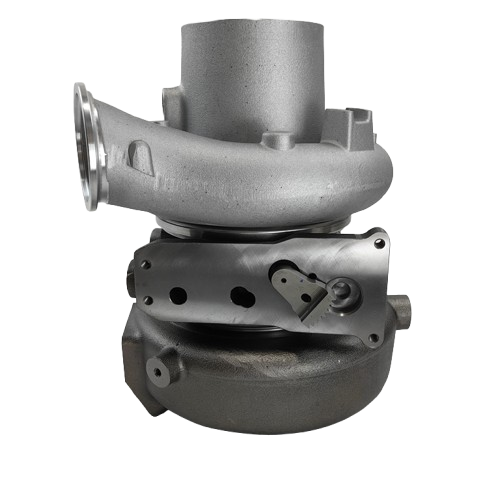
In addition, the use environment in different regions will also affect the choice. For example, for vehicles used in dusty areas such as the Middle East and Africa, special attention should be paid to the filtering performance of the intake system to protect the turbocharger blades from damage; if mainly used for long-haul, heavy-load, or plateau transportation, it is recommended to choose a variable geometry turbocharger, which is more fuel-efficient on flat roads and more powerful when climbing slopes; for short-distance and light-load transport, a fixed geometry turbocharger is more cost-effective. At the same time, attention should be paid to after-sales service to confirm whether the manufacturer has after-sales service outlets in major global logistics hubs to facilitate maintenance during cross-border transportation.
Although turbochargers are very useful, they also require daily maintenance. If not properly maintained, they are prone to breakdowns, which not only affect vehicle operation but also increase maintenance costs. Below are some simple tips that drivers can do themselves without professional tools.
First, do not drive at high speed immediately after a cold start. Allow the engine to idle for 1-2 minutes (3-5 minutes is recommended) to allow the lubricating oil to fully circulate to the turbo bearings, avoiding wear due to lack of lubrication. Second, do not turn off the engine immediately after long-haul driving. Allow the engine to idle for a few minutes (2-3 minutes is recommended) to help the turbo cool down and extend its service life. This step must not be omitted after long-haul transportation.
Third, replace the engine oil regularly. Turbochargers have high requirements for the quality of lubricating oil. The engine oil and oil filter must be replaced according to the manufacturer's specified time, and high-quality oil of the specified grade must be used. Do not buy cheap inferior oil. Generally speaking, semi-trucks need to replace the engine oil every 10,000 kilometers; if they often travel on plateaus, mountain roads, or carry heavy loads, the replacement cycle can be shortened to 8,000 kilometers. In addition, the intake and exhaust pipes and connection parts should be inspected every 50,000 kilometers to ensure tightness, avoiding affecting the supercharging effect and increasing fuel consumption.
The most common faults of turbochargers include oil leakage, abnormal noise, and insufficient boost pressure. These problems are usually related to the lubrication system, intake system, or bearing wear. Once a significant drop in power, blue smoke from the exhaust, or abnormal noise is found, the turbocharger should be inspected in a timely manner. Detecting and repairing problems early can often avoid more serious losses and reduce the impact on international transportation timelines.
Turbocharging technology is still constantly developing. In the future, the power system of heavy-duty vehicles will become more intelligent and efficient, and will better adapt to the development needs of international transportation.
First, electric turbocharging technology. It can completely eliminate the low-speed response lag of traditional turbos and provide supercharging effect at low speeds. It has now begun to be applied in high-end models and is expected to be popularized in heavy-duty trucks in the next 5-10 years, allowing vehicles to obtain the best power response in the full speed range. Second, the intelligent boost management system. In the future, it will be able to automatically adjust the boost strategy according to driving conditions, load, road conditions, and driver habits, achieving the dual effects of fuel saving on flat roads and strong power when climbing slopes.
In addition, turbocharging technology will be deeply integrated with new energy technologies, playing a role in hybrid and fuel cell heavy-duty vehicles, helping to improve efficiency and provide technical support for zero-emission heavy-duty international transportation.
Back to the original question: Do semi-trucks have turbochargers? The answer is clear — now, semi-trucks, especially those used for international long-haul and heavy-load transportation, are equipped with turbochargers as standard. They are not an optional configuration but an indispensable "power core."
It can not only increase vehicle power, making it easier for semi-trucks to carry heavy loads and climb steep slopes, but also save fuel, reduce transportation costs, meet the emission standards of various countries, and adapt to different international transportation scenarios. For friends engaged in international transportation, a semi-truck equipped with a high-quality turbocharger is a good helper to improve transportation efficiency and increase profits.