+86-18112348562
Please Choose Your Language

Views: 0 Author: Alfredturbo Publish Time: 2026-04-15 Origin: Site


For truck drivers engaged in long-distance freight transportation, the turbocharger is like the "cardiac pacemaker" of the truck. Whether you are engaged in long-distance logistics, construction site transportation, or daily freight transportation, it is the core component of the truck—it can make the engine more powerful and fuel-efficient. But once it "stops working", the truck will either have its power halved immediately, fuel consumption soar, or break down directly, which not only delays operations but also causes a headache with maintenance costs.
Many friends panic when they encounter turbocharger faults. They either blindly replace parts and waste money, or get cheated by maintenance masters. In fact, although the turbocharger is precise, its faults are traceable. Many major overhauls are caused by the accumulation of small details that are not paid attention to in daily use. Today, this blog post will use the most straightforward plain language to explain to you the common faults of truck turbochargers, simple and easy-to-operate maintenance solutions, and how to maintain them daily to reduce problems. There will be no complicated terminology throughout. Whether you are a fleet owner, maintenance worker, or foreign trade parts purchaser, understanding this knowledge can help you save a lot of money.
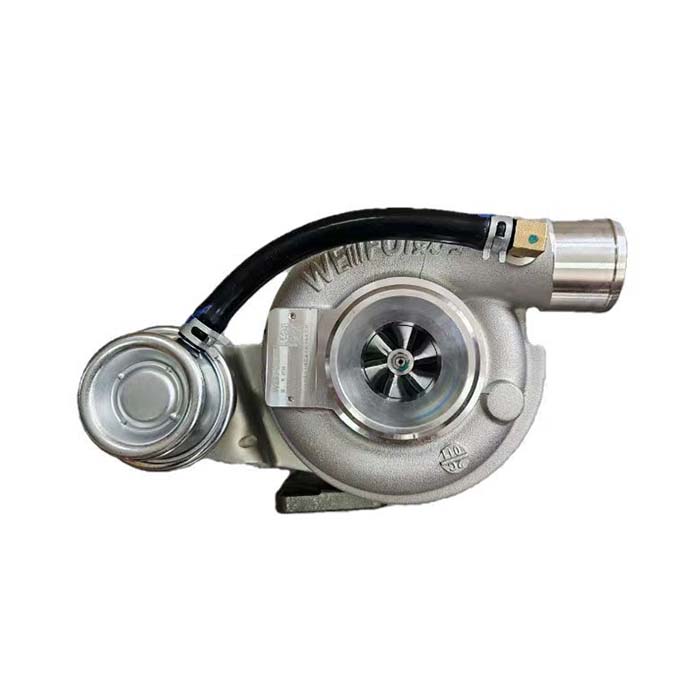
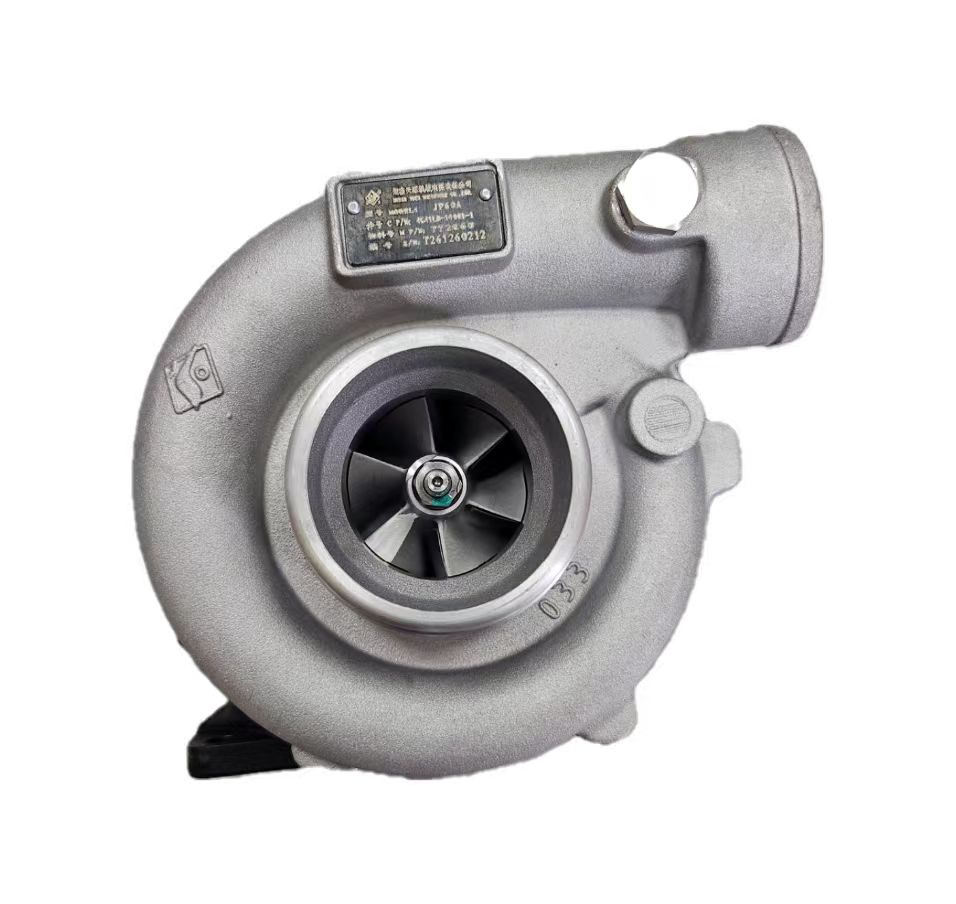
Before talking about faults, let's briefly explain the working principle of the turbocharger. You don't need to remember complex principles, just one sentence: it uses the exhaust gas discharged by the engine to blow a "small fan" (turbine), which is connected to another "small fan" (compressor) through a shaft, forcing a large amount of air into the engine cylinder. With more air, diesel burns more vigorously, and the power is naturally greater.
Precisely because it is always in a high-temperature and high-speed working environment, coupled with improper daily operation and inadequate maintenance by many friends, it is prone to faults. In fact, it has three fatal weaknesses. Understanding these three points will let you know why maintaining engine oil and filters is a top priority:
Although the turbocharger looks "durable", it is actually very "delicate". These three core weaknesses directly determine its service life:
First, the rotation speed is extremely high: the impeller can rotate at hundreds of thousands or even 200,000 revolutions per minute, much faster than the engine itself, which puts a great test on the wear of parts; second, the temperature is extremely high: the temperature at the exhaust end can reach several hundred degrees Celsius, relying entirely on engine oil for cooling and lubrication. Once there is a problem with engine oil supply, a fault will occur instantly; third, it relies on engine oil: the middle bearing is completely immersed in engine oil. The quality and supply of engine oil directly determine its life. Once there is a problem with engine oil, it will break down immediately.
Many times, turbocharger faults are not due to quality issues, but caused by improper daily operation. In particular, these three operations must be avoided. Many experienced drivers have stumbled here:
In winter or when the car has been parked for a long time, after a cold start, the engine oil has not had time to reach all parts of the turbocharger, and stepping on the accelerator hard to accelerate will cause dry friction of internal parts, which will lead to wear and oil leakage over time. This is one of the most damaging operations to the turbocharger. The correct approach is to idle for 1-2 minutes after a cold start before driving, and step on the accelerator after the engine oil pressure rises and lubrication is in place.
After the truck has run a long distance or at high speed, the turbocharger temperature is very high. If the engine is turned off directly, the engine oil circulation will stop immediately. The high temperature will bake the remaining engine oil into carbon deposits, block the pipeline, and wear parts. Over time, it will cause jamming and abnormal noise. This is the so-called "hot shutdown", which is extremely harmful. The correct approach is to idle for 3-5 minutes before shutdown to let the turbocharger cool down and slow down.
If the air filter is not replaced for a long time, the dust and impurities inside will be sucked into the turbocharger. A small sand particle hitting the high-speed rotating impeller may cause a gap and directly scrap it; if the engine oil is not replaced for a long time, it will thicken and deteriorate, losing its lubrication and cooling effect, leading to accelerated wear of internal parts of the turbocharger. These are low-cost maintenance measures that can avoid many major faults.
When a turbocharger fails, you don't need to find a professional master. You can judge the approximate problem through symptoms yourself. The following four are the most common faults. Each one clearly explains the "symptoms + causes + simple self-inspection methods". You can check them against each other to quickly find the problem and avoid being cheated by maintenance masters.
This is the most easily found fault. You feel that the car has no power, it is difficult to climb slopes, the acceleration is slow when stepping on the accelerator, it can't run fast whether loaded or empty, and the exhaust pipe emits black smoke. The fuel consumption is also much higher than usual. This is probably caused by "insufficient boost" of the turbocharger.
There are mainly three reasons, which are popularly known as "blocked lungs", "broken fan" and "leaking pressure": first, the air filter is too dirty, or the air intake pipeline is leaking, so air can't enter; second, the compressor impeller (the fan blade that blows air in) is dirty, worn, or the turbo side has too much carbon deposits and can't rotate; third, the bypass valve (exhaust gas valve) is stuck or leaking, and all the boost pressure is lost.
The inspection method is very simple: stop the engine and wait for it to cool down, open the engine compartment, check if the air filter is clean, and use a flashlight to check if there are cracks or loose hose clamps in the air intake pipeline; then check if the pipeline connected to the turbocharger is loose, damaged, or blocked by carbon deposits and debris inside. If the pipeline is loose, just tighten it; if it is blocked, clean it up, and there is no need to replace the turbocharger.
If you find blue smoke coming out of the exhaust pipe and the engine oil consumption increases significantly, there is a high probability that engine oil has leaked into the combustion chamber and the turbocharger is leaking oil. If this situation is not handled in time, it will not only waste engine oil but also lead to severe carbon deposits and even damage the engine.
There are mainly three reasons: first, the seal ring is old, the seal ring at the shaft end of the turbocharger is worn or aged, and engine oil escapes from the bearing chamber; second, poor oil return, the oil return pipe is blocked or bent, so engine oil can't be discharged, so it is trapped in the turbocharger and can only leak from the seal; third, bearing wear, the bearing clearance becomes larger, leading to seal failure.
First, check the seals of the turbocharger to see if there are signs of aging and cracking; if the seals are okay, check the oil return pipe of the turbocharger to see if it is blocked by carbon deposits and debris, or if the pipeline is bent. If it is blocked, clean it up, and the engine oil can circulate normally, and the oil leakage problem will be solved.
When driving, you can hear a sharp "whirring" or "sizzling" sound from the engine compartment, such as whistling, buzzing, or metal scraping. Especially when accelerating, the sound is more obvious. At this time, you should stop and check immediately. This fault develops very quickly. Continuing to drive may cause the impeller to break and the entire turbocharger to be scrapped.
There are mainly three situations: first, dry bearing friction, insufficient or deteriorated engine oil, and the bearing clearance becomes larger after wear, resulting in abnormal noise; second, "fan hitting the shell", the impeller is loose, or foreign objects (such as screws, stones) are sucked in and damage the blades; third, friction with the shell, the axial or radial clearance of the rotor shaft is too large, and the impeller scrapes against the shell.
Open the engine compartment, wait for the engine to cool down, gently rotate the impeller by hand to check if there is a feeling of friction, looseness, or smooth rotation; then check if the impeller has cracks, broken teeth, curling, or foreign objects stuck in it. If there are foreign objects, clean them up in time; if there is wear, further maintenance is needed.
Touching the turbocharger shell by hand (be careful not to get scalded) feels abnormally hot, or the shell shows a blue or purple oxidation color, indicating that it is severely overheated. In severe cases, it will cause the turbocharger to "seize up". After the car starts, either there is no power at all, or the engine shakes violently, or it can't start at all.
There are mainly three reasons: first, insufficient cooling, too high engine oil temperature, or poor coolant circulation; second, improper operation, turning off the engine immediately after long-term heavy load climbing, so that heat can't dissipate, baking the engine oil on the bearings; third, high exhaust temperature, poor atomization of the fuel injector, leading to high exhaust temperature.
First, check the amount of coolant to see if it has deteriorated and ensure the cooling system is normal; then check the amount and quality of engine oil to see if it has thickened or deteriorated; if it is caused by improper operation, you must develop the habit of idling to cool down before shutdown to avoid overheating again.
Many friends think that the turbocharger must be replaced entirely when it breaks down. In fact, whether to repair or replace the turbocharger depends on the degree of damage. Most minor faults can be solved by maintenance, which saves more than half the money compared to replacing the turbocharger. The following are specific maintenance solutions for the four common faults mentioned above. No complex tools are needed, even beginners can operate it, and overseas friends can easily find the parts.
If it is only a minor problem, replacing parts for repair can save more than half the money compared to replacing the assembly, which is especially suitable for overseas parts purchasers to control costs. Specifically, it can be repaired as follows:
If it is only oil leakage but the impeller and shaft are okay, the seal ring and bearing kit can be replaced, the cost is very low, and you can replace it yourself; if there is only abnormal noise and large clearance but the impeller is not damaged, the floating bearing and thrust plate can be replaced without replacing the entireturbocharger; if it is only carbon deposits that cause poor rotation and insufficient boost, the turbo end and nozzle ring can be removed and cleaned, and the carbon deposits can be dissolved with a special cleaning agent. After cleaning, it can return to normal.
Important reminder: A dynamic balance test must be done after maintenance, otherwise it will shake when installed and have a short service life. It is recommended to find a professional remanufacturing factory to do this. For foreign trade customers, choosing a reliable remanufacturing supplier (a factory that can provide quality assurance and dynamic balance testing) is more cost-effective than simply buying low-price products.
In the following cases, don't hesitate to replace it with a new one or a remanufactured part directly. Repairing it is useless and a waste of money:
First, impeller damage: the compressor or turbine impeller has cracks, broken teeth, or curling. This is like a broken fan blade, which is unbalanced when rotating and will soon damage the new bearing; second, the shaft is broken or bent, the core component is deformed and cannot be repaired; third, the shell is cracked, especially the high-temperature cracking of the turbine shell, which will leak air, affect the boost effect, and also have potential safety hazards.
Whether replacing a new turbocharger or after major maintenance, there are two key steps that cannot be omitted: first, pre-fill engine oil, before starting, you must fill the oil inlet with clean engine oil! Otherwise, the bearing is dry at the moment of starting, leading to direct dry friction and scrapping; second, check the oil circuit, before replacing the turbocharger, you must check the oil pump pressure and whether the oil return pipe is unobstructed. If you only replace the turbocharger without cleaning the oil circuit, the newly installed one will break down soon.
To summarize briefly: for insufficient boost and carbon deposit blockage, just clean the pipeline and impeller; for oil leakage and slight abnormal noise, replace the seal and bearing; once there are impeller cracks, shaft bending, or shell cracking, replace the assembly directly to avoid greater losses later. When purchasing parts, overseas friends can also choose targeted parts to reduce procurement costs.
As the old saying goes, "Three parts maintenance, seven parts upkeep", which is especially true for turbochargers. Doing the following points well can greatly extend its service life and reduce faults. For overseas truck users, maintenance parts may not be as convenient as in China, so maintenance is even more important. Doing daily maintenance well can avoid delays in operations due to turbocharger damage and reduce comprehensive costs.
The turbocharger relies on engine oil for lubrication and cooling. The quality of engine oil directly determines its service life. These two points must be done well:
Be sure to use diesel engine oil of the level specified by the manufacturer (such as CI-4, CJ-4), and do not use inferior fake oil. Inferior engine oil has poor lubrication and cooling effects, which can easily lead to dry bearing friction and increased carbon deposits, shortening the turbocharger life; it is recommended to use fully synthetic engine oil, which has better lubrication and cooling effects and can adapt to high-temperature and high-speed working environments.
Strictly change the engine oil and oil filter according to the mileage or hours. Generally, replace them every 5,000-8,000 kilometers. The metal debris in dirty engine oil will wear the bearings like sandpaper. Not changing the engine oil for a long time is equivalent to chronic "murder" of the turbocharger.
The air filter can filter dust and impurities in the air, preventing impurities from entering the turbocharger and wearing the impeller and bearings. These two points must be noted:
Generally, check the air filter every 3,000-5,000 kilometers. Clean it if it is dirty, and replace it directly if it is severe; when driving in dusty places (such as mining areas, construction sites), shorten the air filter replacement cycle to avoid dust entering the turbocharger.
Don't use inferior air filters to save a few dollars. A small sand particle entering can hit a gap in the high-speed rotating impeller and directly scrap it. At that time, the maintenance cost is dozens of times higher than the air filter, which is not worth the loss.
Many turbocharger faults are caused by improper operating habits. These two habits must be developed by both experienced drivers and beginners:
After starting the car in the morning, idle for 1-2 minutes before driving. Wait for the engine oil pressure to rise and fully reach all parts of the turbocharger to play a lubricating role and avoid dry friction. This is the most basic and effective protection method.
After running at high speed or climbing a slope, do not turn off the engine immediately. Idle for 3-5 minutes to let the turbocharger speed and temperature drop, avoiding high temperature baking the engine oil into carbon deposits, blocking the oil passage, and causing the turbocharger to seize up.
During daily maintenance, spend a few more minutes checking the turbocharger to avoid many major faults: during maintenance, gently shake the compressor impeller by hand to check the axial and radial clearance. If you feel obvious looseness or scraping when rotating, it is time to repair; usually pay more attention to the engine sound, and check early when you hear abnormal noise, do not delay.
The above are the common faults, maintenance solutions and preventive maintenance tips of truck turbochargers. It is colloquial throughout without complex professional terminology. Whether you are a novice car owner, maintenance worker, fleet owner, or foreign trade parts purchaser, you can understand and use it.
To summarize: The turbocharger does not need to be "coddled", but it must be "taken care of carefully". Pay more attention to daily operations and do a good job in regular maintenance, and most faults can be avoided; even if a fault occurs, there is no need to blindly replace parts. Repairing instead of replacing saves money and worry.
Choosing a reliable remanufacturing supplier is more cost-effective than simply buying low-price products, because the failure rate and repair cost after installation are the real hidden costs. If you encounter problems when purchasing truck turbochargers or core components, please feel free to contact us. We can provide technical support and product selection suggestions.