chris@alfredturbo.com
+86-18112348562
Language
Please Choose Your Language

Views: 12 Author: Site Editor Publish Time: 2026-02-07 Origin: Site


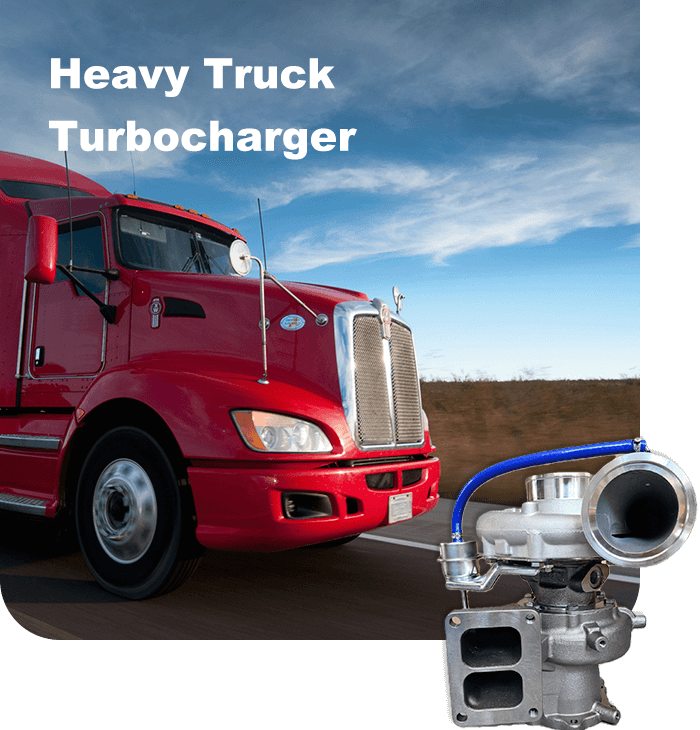
Today, let's talk about a "magic device" on long-haul trucks — the turbocharger. If you've ever noticed while driving, some trucks have the word "Turbo" marked on their engine covers; this is the symbol of turbocharging. Simply put, it's like installing a "lung capacity enhancer" on the truck's heart (the engine), making it more powerful and fuel-efficient during long-distance journeys.
When we talk about long-haul trucks, the first thing that comes to mind is their "large size and great strength" — pulling dozens of tons of cargo, traveling thousands of kilometers, and climbing mountains and crossing ridges without breaking a sweat. But many truck drivers may not know that one of the core contributors to a truck's abundant power is this turbocharger. What we usually call "this truck has a T" refers to it.
You might ask, how can something so small make a truck more powerful and dynamic? And since long-haul trucks run on highways and pull heavy loads every day, why do they have to be equipped with it?
Many truck drivers see that small, rotating device with pipes on the engine and think it's very sophisticated, fearing they might break it. In fact, it's not complicated at all. Essentially, it's a "blower that helps the engine take deep breaths". The only difference is that this blower doesn't use electricity or fuel; it's driven by the exhaust gas emitted by the engine itself, which is both worry-free and efficient. It's also often called a "free lunch" — because it recycles waste heat from the exhaust gas and consumes almost no additional energy.
Imagine this: when you're running, if you breathe normally, your speed may be average; but if you wear an oxygen mask that allows you to inhale 30% more oxygen each time, can you run faster and longer? A turbocharger does something similar — it helps the engine "take deep breaths", inhale more oxygen, and exert greater power.
Let's put aside all complex explanations and describe it in the most straightforward way: a turbocharger is a simple device consisting of two small wheels (a turbine and a compressor) connected by a shaft. These two small wheels are respectively installed in two pipes — one pipe is connected to the engine's exhaust pipe (where exhaust gas is emitted), and the other is connected to the engine's intake pipe (where air is inhaled).
When the engine is running, it emits a lot of high-temperature and high-pressure exhaust gas. This exhaust gas is not useless "garbage" but the "power source" that drives the turbocharger — the exhaust gas rushes through the small wheel (turbine) in the exhaust pipe, driving the turbine to rotate. Through the connecting shaft, the turbine then drives the other small wheel (compressor) in the intake pipe to rotate together.
When the compressor rotates, it "sucks in and presses in" outside air, forcing more air into the engine's cylinders, allowing the engine to "consume" more oxygen and burn more fuel, so its power naturally increases. To put it bluntly, it's a good helper that helps the engine "eat more, work harder, and avoid waste".
The working principle of a truck engine is actually very simple: it mixes diesel and air, ignites and explodes the mixture in the cylinders, and pushes the pistons to move to generate power. We can imagine the engine's cylinders as a "cooking stove", oxygen as "wind", and diesel as "firewood". The stronger the wind, the more vigorously the firewood burns, and the greater the firepower of the stove; similarly, the more oxygen in the cylinders, the more fully the diesel burns, and the greater the power output by the engine.
A normal engine breathes like a person does normally — the amount of air it inhales is fixed. Since the cylinder capacity is fixed, the air intake is limited, the "firewood" doesn't burn vigorously, and its power is naturally limited. A turbocharged engine, on the other hand, is equivalent to adding a "blower" to the intake pipe, forcing more air into the cylinders, making the "firewood" burn fully, and its explosive power naturally increases.
Many people are curious: who drives this "blower"? It doesn't use additional electricity or fuel. It's very clever — it uses the exhaust gas emitted by the engine itself. The exhaust gas emitted by the truck is not useless, but it still has high temperature and pressure, just like the hot air sprayed from the spout of a boiling kettle, which has considerable impact.
There is a small fan (turbine) inside the turbocharger. When exhaust gas rushes against it, it rotates extremely fast — sometimes reaching over 100,000 revolutions per minute. Although we can't see it with the naked eye, it is indeed rotating frantically. When it rotates, it drives the compressor fan (compressor) on the other end to rotate together, and the compressor forcibly "shoves" fresh air into the engine. In this way, the "waste heat" of the exhaust gas is recycled and turned into a helper for increasing power, consuming almost no additional energy — hence the name "free lunch".
You might ask, old trucks used to run without turbochargers, so why do almost all modern long-haul trucks have them? The answer is simple: long-haul trucks have "too heavy a job" — without a turbocharger, they simply can't handle it.
Think about it: long-haul trucks pull cargo ranging from a dozen tons to dozens of tons, and they also have to run on highways and climb mountains. The engine needs a steady supply of power to drive such a heavy vehicle. Without a turbocharger, the engine can only "inhale air slowly" on its own. There isn't enough air in the cylinders, so the amount of fuel burned is limited, and its power is very small — when pulling heavy cargo uphill, it may not even reach 20 km/h, no matter how hard you step on the gas pedal. When driving on the highway, overtaking is very difficult, which not only wastes time but also is unsafe.
Moreover, long-haul trucks have to travel thousands of kilometers, and fuel consumption is one of the biggest concerns for truck drivers. Without a turbocharger, if the engine wants to output sufficient power, it has to "step hard on the gas pedal and inject more fuel". But with insufficient air, the fuel doesn't burn fully — it's not only fuel-intensive but also emits more exhaust gas, failing to meet current environmental protection requirements. Therefore, for long-haul trucks, turbochargers are not an "optional configuration" but a "must-have configuration" — they not only make the truck more powerful but also more fuel-efficient and environmentally friendly, killing multiple birds with one stone. That's why modern long-haul trucks can't run without them.
Many truck drivers may say, "My car also has a T — is it the same as a truck's turbocharger?" In fact, they are very different. Let's briefly talk about two of the most obvious differences to avoid confusion.
A car's turbocharger is very small, roughly the size of a fist; a long-haul truck's turbocharger, however, is several times larger than a car's — some are even as big as a small watermelon and heavier. Why? Because a truck's engine is larger and has a higher displacement, requiring more air. The turbocharger must be "sturdier" to withstand the large amount of exhaust gas emitted by the engine and drive the compressor to press in sufficient air.
A car's turbocharger mainly runs in cities, with frequent starts and stops but low load. A long-haul truck's turbocharger, however, once started, may run continuously for more than ten hours or hundreds of kilometers, and it operates at full load throughout — pulling heavy cargo and driving at high speeds, the exhaust gas emission is always large, and the turbine keeps rotating at high speed. Therefore, in terms of materials and design, truck turbochargers are more durable and robust than car ones, able to withstand higher temperatures and pressures. Generally, they don't need to be replaced for hundreds of thousands of kilometers — as long as they are properly maintained, they basically won't have problems.
Many old truck drivers, who haven't been in contact with turbochargers before, may have heard that "cars with T are fuel-intensive" and "turbochargers are prone to breakdown and expensive to repair". In fact, these are outdated views — modern turbochargers have long solved these problems.
First, the misconception of "being fuel-intensive": turbochargers are not only not fuel-intensive but also save fuel. Because they can increase the amount of air in the engine, making the fuel burn more fully — with the same fuel consumption, they can output more power; on the contrary, to output the same power, a turbocharged engine is more fuel-efficient than a non-turbocharged one. For example, when pulling 30 tons of cargo, a non-turbocharged truck may consume about 40 liters of diesel per 100 kilometers, while a turbocharged one may only consume about 35 liters. You can save a lot of fuel money on a single long trip.
Second, the misconception of "being prone to breakdown": modern turbocharger technology is very mature. As long as they are properly maintained — changing engine oil on time and checking pipelines — they won't break down even after hundreds of thousands of kilometers. Old turbochargers were prone to breakdown because the technology was immature, but this has long been improved. Moreover, truck turbochargers are designed to withstand high-intensity operation, so they are very durable. Repairing them is not as expensive as you might think — as long as you go to a regular repair shop, the price of replacing parts is reasonable.
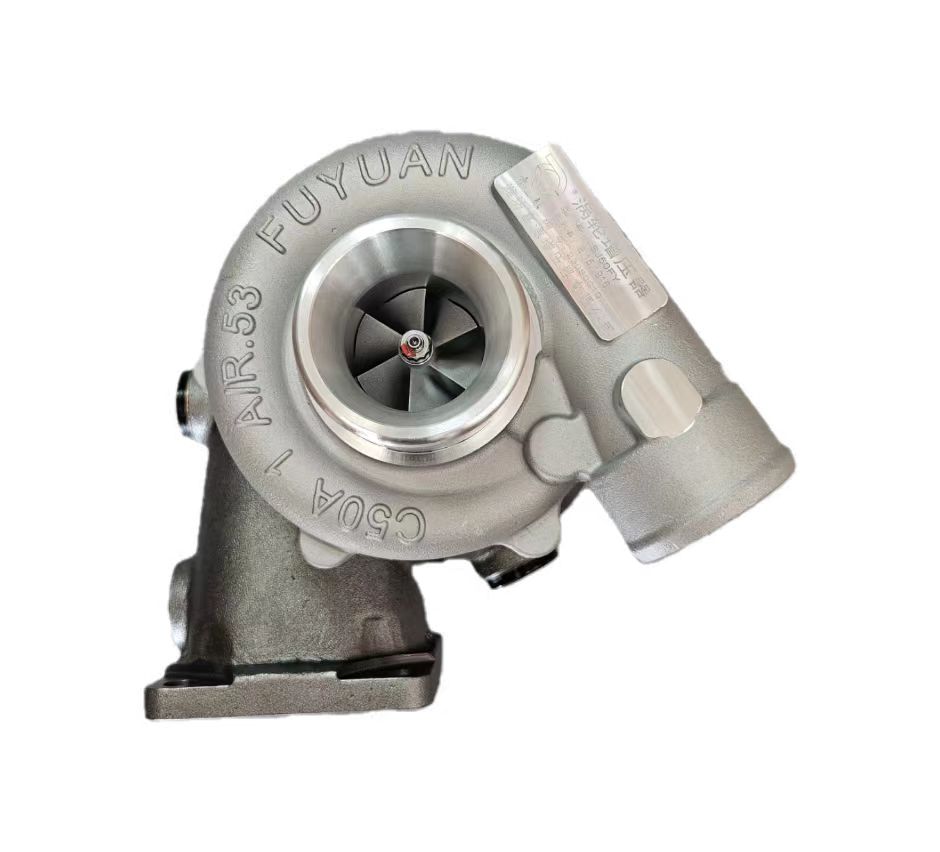
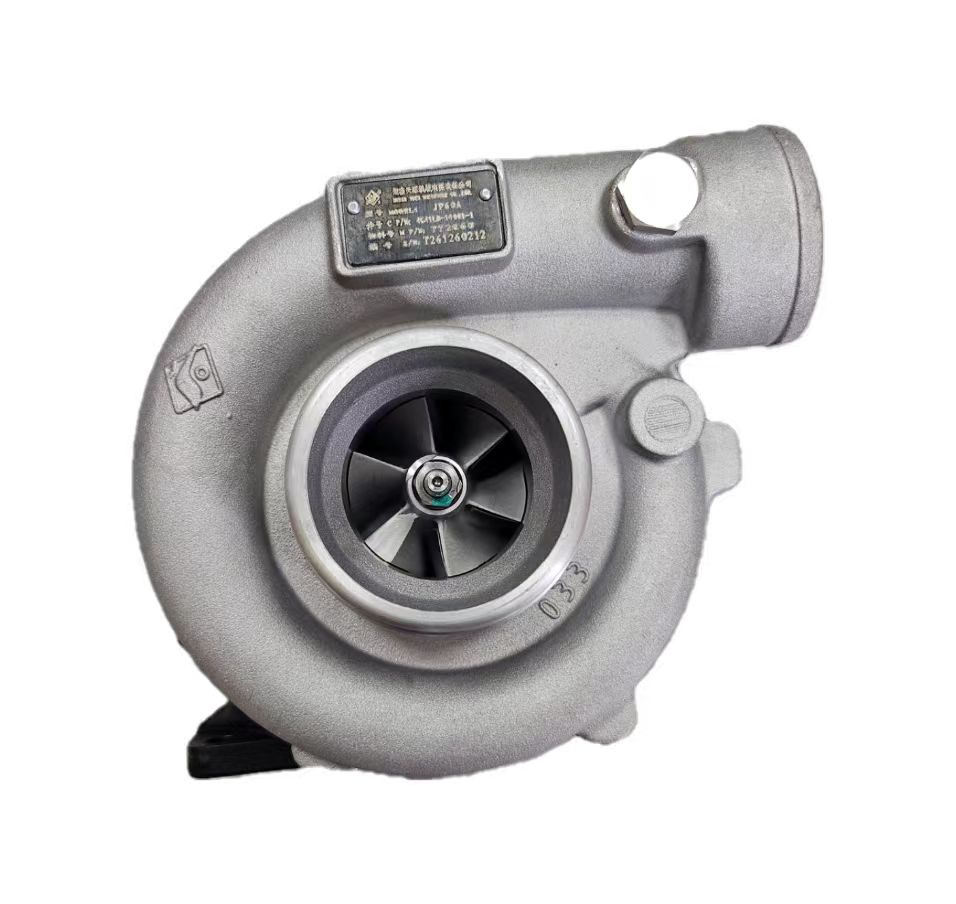
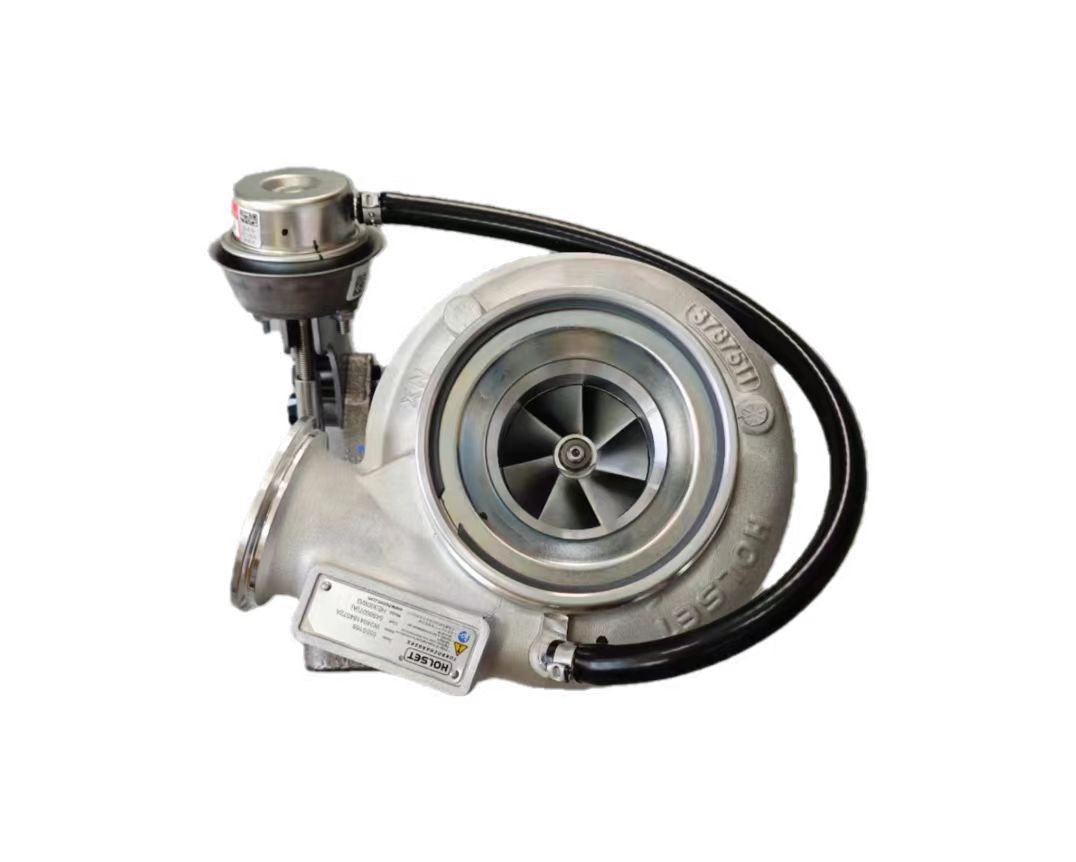
We'll break this process into steps: from exhaust gas driving the turbine, to air being compressed, to power and torque increasing. We'll explain each step in detail, combining it with the actual usage scenarios of long-haul trucks, so everyone can understand at a glance. What do truck drivers care most about? First, having enough power when climbing hills and overtaking; second, not being "sluggish" when starting with heavy loads or driving at low speeds (i.e., having high torque). Turbochargers excel in both aspects — they even have a hidden advantage: not failing at high altitudes.
As we all know, when the engine is running, it burns diesel (or gasoline) to generate power and emits a lot of exhaust gas at the same time. This exhaust gas is high-temperature and high-pressure — in old trucks, this exhaust gas was directly emitted into the air, wasted. In turbocharged trucks, however, this exhaust gas is "collected" and used to drive the turbocharger — this is what we call the "free lunch" mentioned earlier.
The engine's exhaust pipe is connected to the "turbine end" of the turbocharger (where the turbine wheel is installed). When the engine is running, high-temperature and high-pressure exhaust gas rushes quickly through the exhaust pipe to the turbine wheel — just like blowing on a small windmill with your mouth to make it rotate. The impact of the exhaust gas drives the turbine wheel to rotate at high speed, sometimes reaching over 100,000 revolutions per minute. Although we can't see it with the naked eye, it is indeed rotating frantically.
You might ask, car exhaust gas can also drive a turbine, so why is the power boost more obvious in trucks? Because long-haul trucks have larger-displacement engines. When pulling cargo, the engine needs to output more power, burn more fuel, and emit more exhaust gas with higher pressure — this is sufficient to drive the turbine to rotate at high speed, which in turn drives the compressor to press in more air. For example, when a truck is climbing a hill with heavy cargo, the driver steps deeply on the gas pedal, the engine burns more fuel, the exhaust gas emission increases, the turbine rotates faster, more air is pressed in, and the engine's power becomes greater, allowing it to climb the hill easily.
The turbine and compressor are connected by a shaft — just like two gears, when one rotates, the other rotates together. When the turbine is driven by exhaust gas to rotate at high speed, it drives the compressor wheel in the intake pipe to rotate at high speed through the connecting shaft.
Many people think that the compressor helps the engine suck air, but that's not true — the engine can suck air on its own. The core role of the compressor is to "compress air": it sucks in outside air, compresses it to be denser through high-speed rotation, and then forcibly presses it into the engine's cylinders.
Here's a simple example: without a turbocharger, the engine's cylinders can only inhale "1 cup" of air each time they take a breath; with a turbocharger, the compressor compresses the air and can forcibly press "2 cups" or even "3 cups" of air into the cylinders, equivalent to allowing the engine to "take deep breaths" and consume more oxygen. A non-turbocharged engine has a fixed cylinder capacity and thus a fixed air intake; with turbocharging, the same size cylinders can squeeze in 30%-50% more air, or even more.
That's right — the denser the air, the more oxygen there is in the cylinders, and the more diesel can be burned. With more air, the engine's electronic control system will inject a corresponding amount of more diesel, making the explosion energy of the mixture more intense. Long-haul trucks need a lot of "firepower" when pulling heavy cargo. Without a turbocharger, the "wind" is too weak, the "firewood" doesn't burn vigorously, and the power is small; with aturbocharger, the "wind" is stronger, the "firewood" burns more vigorously, and the power is naturally greater.
The ultimate goal of the previous two steps — exhaust gas driving the turbine, the turbine driving the compressor, and the compressor pressing in more air — is to make the engine output more power and torque. Let's discuss them separately: how power and torque are increased, and what they mean for long-haul trucks. The power mentioned here, technically called horsepower, is like describing how capable a horse is; torque, which you can simply understand as the engine's "raw strength", is the initial force that makes the vehicle rotate and pull heavy loads, measured in Newton-meters. This is crucial for heavy-duty trucks.
Power, simply put, is the "strength with which the engine pulls the truck". The greater the power, the faster the truck accelerates and runs. In old non-turbocharged trucks, pulling heavy cargo, it might take 1 minute to accelerate from 0 to 60 km/h; with a turbocharger, it might only take 30 seconds. Moreover, when driving on the highway, it can easily reach 80 or 90 km/h, and overtaking is smooth — no need to occupy the opposite lane for a long time, making it safer.
Why does power increase? Because with more air in the cylinders, the diesel burns more fully, and the energy generated by each combustion is greater. The engine's pistons are pushed more forcefully, which increases the strength to drive the wheels, so power naturally increases. It's like two workers of the same build: one works normally, and the other works while breathing oxygen — obviously, the latter is more efficient and stronger. The direct benefit of this is that when the truck is cruising on the highway, if the driver steps on the gas pedal to overtake, the power comes more quickly, because the engine "does work" more powerfully each time and can exert more energy per unit time.
For long-haul trucks, torque is more important than power! Many truck drivers may not know what torque is. Simply put, torque is the "strength with which the engine rotates". The greater the torque, the greater the strength of the truck when pulling heavy cargo and climbing hills, and the more powerful it is when starting — no more "being unable to pull or climb".
For example, take two trucks: one with a turbocharger and one without. Both pull 30 tons of cargo. The non-turbocharged one, when climbing a hill, even if the gas pedal is stepped on all the way, the wheels still rotate slowly, and the engine may even "stall"; the turbocharged one, however, has high torque, the wheels rotate powerfully, and it can climb the hill easily. Moreover, when starting, there's no need to step hard on the gas pedal — it can start smoothly without "rolling backward".
Early turbochargers had a flaw called "turbo lag": when the exhaust gas pressure was insufficient, the turbine couldn't rotate, resulting in weak power at low speeds. But now the technology is much more advanced — for example, using small turbines, electronic assistance, or variable geometry turbines, allowing it to start working when the engine speed is very low (such as over 1,000 revolutions per minute), completely solving the problem of low-speed "sluggishness".
When a truck starts from a standstill with dozens of tons of cargo, it needs a lot of torque at low speeds. The turbocharger works in advance, providing sufficient boosted air at low speeds, allowing the engine to output high torque at low speeds. The truck feels more "confident" when starting and climbing hills — it won't just roar without moving, and it also reduces the driver's operational burden.
Long-haul trips are not all on flat roads. When encountering long uphill sections and mountainous roads, continuous and powerful torque output can ensure that the truck climbs at a stable speed, without the need for frequent gear shifting, reducing the driver's operational intensity and making it safer. This is especially evident in the southwest and northwest regions, where there are many mountain roads and steep slopes — the advantages of turbocharging are more prominent.
Trucks often travel to high-altitude areas. At high altitudes, the air is thin, making normal engines "out of breath" — their power drops significantly, and they may even be unable to pull cargo or climb hills. But turbochargers are like "air compensators": they can compress the thin air before sending it into the cylinders, largely compensating for the power loss caused by high altitude. This allows trucks to maintain most of their power performance at high altitudes, without worrying about "breaking down" and ensuring smooth long-haul transportation.
Many truck drivers may find that when they first start the truck, or when driving at low speeds without stepping on the gas pedal, theturbocharger seems to have no effect — the truck's power is similar to that of a non-turbocharged one. This doesn't mean the turbocharger is broken; it has a "start-up process".
Because the turbocharger is driven by the engine's exhaust gas. When the truck is first started, the engine speed is very low, emitting little exhaust gas with low pressure — this is not enough to drive the turbine to rotate at high speed, so the compressor won't press in more air, and the turbocharger is in a "dormant" state. When you step on the gas pedal, the engine speed increases, the exhaust gas emission and pressure increase, the turbine slowly starts to rotate at high speed, presses in more air, and the truck's power gradually increases.
This start-up process is very fast — about one or two seconds. When driving normally, we can hardly feel it; only when stepping on the gas pedal suddenly will we feel a slight "delay", which is a normal phenomenon and not a problem with the turbocharger. Moreover, modern turbocharging technology has been trying to reduce this delay, making power output smoother.
We've talked about the principle of turbochargers earlier. You might say, "I understand the principle, but what actual benefits does it bring to my long-haul trips? Can it save money, save worry, or make pulling cargo easier?" The answer is yes — and there are more benefits than one. Let's explain them one by one, combining them with the actual needs of truck drivers — all practical tips. Having power is not enough; those in transportation also need to calculate economic accounts. Turbochargers bring an improvement in comprehensive benefits.
What truck drivers care most about is "being able to pull and run". The most direct benefit of a turbocharger is making the truck more powerful, making cargo pulling easier and long-haul trips more worry-free. You no longer have to step on the gas pedal all the way when pulling heavy cargo uphill, only to have the truck move like a snail — or even need help from others to tow it.
During long-haul trips, it's inevitable to encounter mountain roads — especially in the southwest and northwest regions, where there are many mountain roads and steep slopes. Pulling heavy cargo uphill is a great test of the truck's power. Non-turbocharged trucks need frequent gear shifting when climbing hills — shifting from high gears to low gears. Even with the gas pedal stepped on all the way, the engine still "buzzes" but doesn't run fast, and the driver gets tired from stepping on the gas pedal continuously.
Turbocharged trucks, however, have high torque when climbing hills — no need for frequent gear shifting. As long as the driver maintains a steady gas pedal, the truck can climb smoothly at a reasonable speed, making the driver much more relaxed and not having to stay tense all the time. Coupled with good adaptability to high altitudes, even when driving on high-altitude mountain roads, it can maintain sufficient power without frequent stops for rest.
Truck drivers make money by pulling cargo on long hauls — the more cargo they pull, the more money they earn. But the more cargo they pull, the greater the truck's load, and the greater the power and torque required. Without a turbocharger, trucks can't pull too heavy cargo at all; even if they barely pull it, they can't run fast and are prone to damaging the engine.
With a turbocharger, the truck's power and torque are greatly improved, allowing it to pull more cargo — for example, it could only pull 20 tons before, but now it can pull 30 or 40 tons, and it runs smoothly without "being unable to pull or run". This way, on each long-haul trip, you can earn more money — over time, this adds up to a considerable income.
For long-haul trips, operational costs are one of the biggest concerns for truck drivers — among them, fuel consumption and maintenance costs account for a large proportion. Turbochargers not only boost power and torque but also help truck drivers save fuel and maintenance costs, reducing operational costs and allowing them to earn more and spend less. Some people think that more power must mean more fuel consumption — on the contrary, for long-haul trucks, reasonable use of turbocharging actually saves fuel.
As we mentioned earlier, turbochargers can increase the amount of air in the engine, making diesel burn more fully — with the same fuel consumption, they output more power; on the contrary, to output the same power, a turbocharged engine is more fuel-efficient than a non-turbocharged one. There's also the advantage of "small displacement, large power output".
Without turbocharging, to get large power, you need to build a large-displacement, large-size engine — it's heavy, and fuel consumption is high at idle and low load. Turbocharging, however, allows a medium-displacement engine to output power close to that of a large-displacement engine. A lighter engine reduces the truck's own weight, allowing it to pull more cargo. More importantly, in common working conditions such as highway cruising, a medium-displacement engine is inherently more economical and fuel-efficient than a large-displacement one.
Here's a real example: a long-haul truck without a turbocharger consumes about 40 liters of diesel per 100 kilometers; with a turbocharger, it consumes about 35 liters per 100 kilometers, saving 5 liters of diesel per 100 kilometers. Based on the current diesel price of about 7 yuan per liter, this saves 35 yuan per 100 kilometers. When truck drivers go on a long-haul trip of about 1,000 kilometers, they can save 350 yuan. If they make 10 trips a month, that's 3,500 yuan saved — over a year, that's tens of thousands of yuan in savings, which is real profit.
After turbocharging, the air in the cylinders is more abundant and denser, so diesel can mix more evenly, burn more fully, and more cleanly. This means that the energy released by every drop of fuel is used more effectively, with less waste. At the same time, full combustion also reduces carbon deposits, which is beneficial to engine maintenance and indirectly reduces maintenance costs.
Non-turbocharged trucks have to step hard on the gas pedal and inject more fuel to output sufficient power. But with insufficient air, diesel doesn't burn fully, producing a lot of carbon deposits. Carbon deposits adhere to the engine's cylinders and pistons — over time, this wears down the engine, causing malfunctions. Repairs are not only expensive but also time-consuming, delaying deliveries.
Turbocharged trucks, however, have sufficient air, so diesel burns more fully, producing little carbon deposits. This reduces engine wear, extends the engine's service life, and makes the engine less prone to malfunctions — fewer repairs mean lower maintenance costs. In addition, modern turbochargers are very durable. As long as they are properly maintained (changing engine oil on time and checking pipelines), they won't need to be replaced for hundreds of thousands of kilometers, and maintenance costs are low, not adding an extra burden to truck drivers.
Nowadays, the country's environmental protection requirements are becoming stricter and stricter. As large vehicles, long-haul trucks emit a lot of exhaust gas. If they fail to meet environmental protection requirements, they are easily inspected, fined, or impounded — delaying cargo delivery and causing significant losses. Turbochargers make diesel burn more fully, reducing exhaust gas emissions and making the truck's exhaust cleaner, meeting national environmental protection requirements. Truck drivers don't have to worry about being fined during inspections on long-haul trips, nor do they have to spend money frequently modifying exhaust gas treatment devices — it's worry-free and effortless.
With full combustion, harmful substances in the exhaust gas — such as carbon monoxide, hydrocarbons, and particulate matter — are naturally reduced. Coupled with the complex after-treatment systems (such as SCR) installed in modern trucks, turbochargers have made great contributions to meeting strict emission standards such as National VI and Euro VI. They are a key link in meeting environmental protection standards, ensuring truck drivers don't have to worry about being penalized for excessive exhaust emissions.
Trucks need to undergo annual inspections every year, and exhaust gas testing is an important item. If exhaust gas exceeds the standard, the truck will fail the inspection and be unable to drive on the road — you'll have to spend money on repairs, delaying cargo delivery. Turbocharged trucks have full diesel combustion and low exhaust gas emissions, making them less likely to exceed standards. They can pass annual inspections smoothly without additional repair costs or delays.
In summary, a modern turbocharged long-haul truck can comprehensively improve transportation efficiency — and for truck drivers, efficiency is real money. Specifically, the advantages are reflected in four aspects: first, faster speed — higher average operating speed, allowing timely delivery of goods and more trips; second, stronger load capacity — more confidence when facing heavy loads and steep slopes, no delays due to insufficient power; third, longer range — fuel-saving means being able to travel farther with the same amount of fuel, or lower fuel costs for the same distance, reducing operational costs; fourth, better adaptability — maintaining good performance from plains to high altitudes, no need to avoid high-altitude routes, expanding the transportation scope.
For fleets and drivers, time is money, and fuel consumption is the biggest cost. Turbochargers optimize both aspects, directly improving transportation efficiency and profits — this is one of the core reasons why they have become a must-have configuration for modern long-haul trucks.
Although turbochargers are durable, they still need regular maintenance to avoid malfunctions. The maintenance methods are simple and don't cost much — truck drivers can do them themselves. Here are the key points to note:
The turbocharger's connecting shaft needs engine oil for lubrication and cooling. Insufficient oil, deteriorated oil, or low-quality oil can cause wear on the connecting shaft and damage the turbocharger. Therefore, be sure to change the engine oil on time and use high-quality oil that meets the requirements. Don't use low-quality oil to save money — it will only lead to higher repair costs in the long run.
When the truck is first started, the engine oil hasn't fully circulated yet, so the turbocharger's connecting shaft isn't fully lubricated. Stepping hard on the gas pedal immediately will cause wear on the connecting shaft. Therefore, after starting, let the engine idle for 1-2 minutes to allow the oil to circulate before stepping on the gas pedal to drive.
After the truck has been running for a period of time, the turbocharger's temperature is very high. Turning off the engine immediately will stop the oil circulation, and the turbocharger's heat won't dissipate, which can damage the turbine and connecting shaft. Therefore, before shutting down, let the engine idle for 1-2 minutes to allow the turbocharger's temperature to drop before turning off the engine.
If the turbocharger's intake or exhaust pipes have air leaks or looseness, it will affect the turbocharger's performance, leading to reduced power and increased fuel consumption. Therefore, during each refueling stop or break, simply check the pipelines — if you find any air leaks or looseness, tighten or repair them in time, which doesn't cost much.
In summary, a turbocharger is a "money-saving, worry-saving, and effort-saving" good helper for long-haul trucks. Its principle is simple: it helps the engine "take deep breaths", consume more air, burn more fuel, greatly boosting the engine's power and torque. This makes the truck pull heavier cargo, run faster, climb hills more easily, and even avoid breakdowns at high altitudes.
It's like installing a "lung capacity enhancer" on the truck's heart, or an efficient "air pump" and "energy recycler". It cleverly uses exhaust gas to press more air into the engine, exerting significant performance improvements without additional energy consumption. It not only makes the truck more powerful with higher torque but also saves fuel, reduces maintenance costs, meets environmental protection requirements, and comprehensively improves transportation efficiency — helping truck drivers earn more money.
For truck drivers, installing a turbocharger not only allows you to pull more cargo and earn more money but also saves fuel and maintenance costs, meets environmental protection requirements, and eliminates the fear of inspections. As long as you pay attention to simple maintenance, it can accompany you for hundreds of thousands of kilometers, creating more profits for you. In the past, many truck drivers had misunderstandings about turbochargers, thinking they were high-tech, prone to breakdown, and fuel-intensive. In fact, modern turbocharger technology is very mature — durable and fuel-efficient, it has long become a "must-have magic device" for long-haul trucks.
It has become a standard configuration for modern heavy-duty trucks and one of the key technologies to improve transportation efficiency in the logistics era. So, the next time you see those heavy-duty trucks roaring past on the highway, you can think — there may be a turbine rotating rapidly inside, silently contributing a powerful force to the efficient flow of goods. We hope this article helps you fully understand turbochargers, figure out how they boost the power and torque of long-haul trucks, and learn simple maintenance methods to make it better serve you, the truck drivers.