chris@alfredturbo.com
+86-18112348562
Language
Please Choose Your Language

Views: 38 Author: Site Editor Publish Time: 2026-02-05 Origin: Site


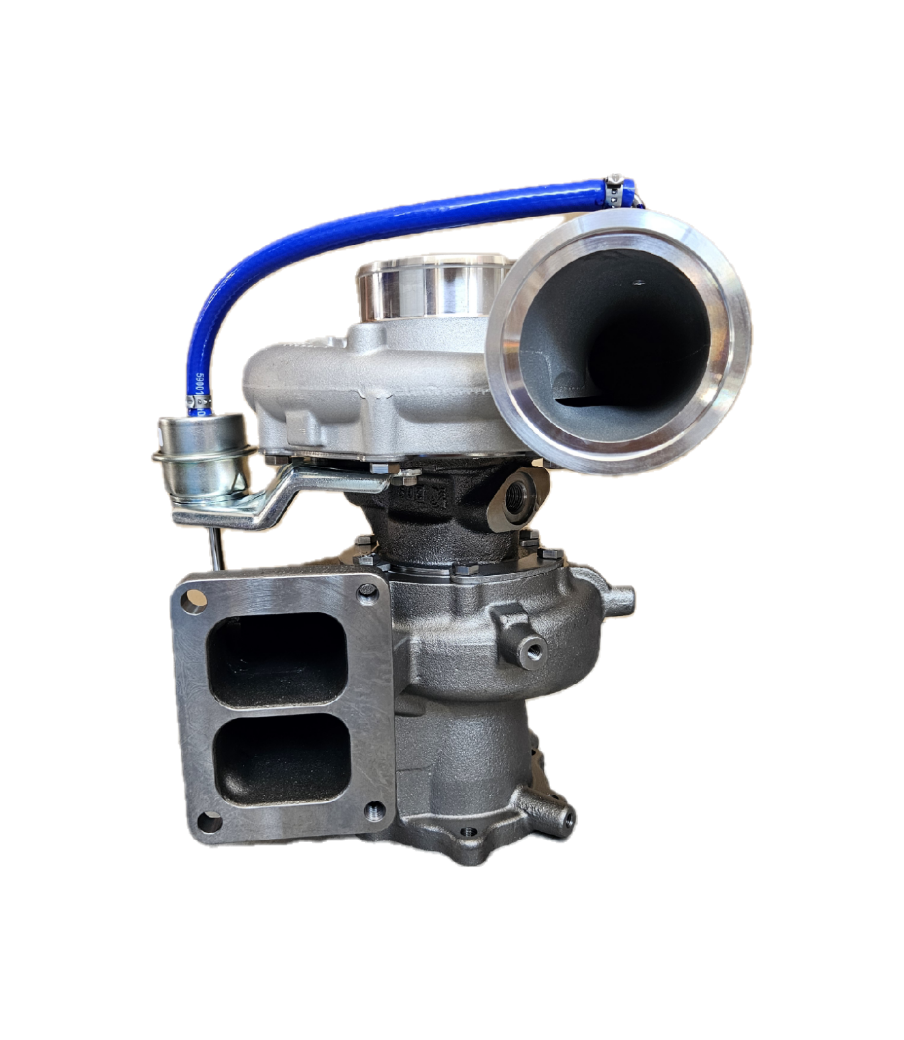
When it comes to turbochargers, many people first think of "T-equipped cars" with strong power and fast acceleration. However, if you visit a truck market or construction vehicle yard, you will find that almost all those large vehicles are also marked with "turbocharged". Today, we will use plain language to clarify the core differences between the two types of turbochargers used in trucks.
Both have the core functions of improving power and saving fuel, but the essential difference lies in: HDT turbochargers focus on long-term endurance and are suitable for long-term high loads; LCV turbochargers focus on instant power burst and are suitable for stop-and-go urban traffic, just like the equipment differences between marathon runners and sprinters.
The core function of a turbocharger is very simple: to "pump air" into the engine, improve power, and save fuel consumption. The engine needs to inhale air and mix it with fuel for combustion to generate power. A turbocharger is like a "forced blower" that actively presses more air into the engine. The more air there is, the more fully the fuel burns, and the stronger the power becomes—similar to blowing up a balloon with an air pump being faster than blowing with your mouth.
The turbocharger must ensure sufficient torque at medium and low speeds and be able to work stably for a long time. Fuel efficiency, durability, and reliability are more important than instant power burst, to avoid vehicle breakdown due to turbocharger failure during long-distance driving.
Heavy-duty trucks mostly operate under long-term, high-load, medium-to-high speed conditions: carrying 30 tons of goods on the highway, driving continuously for 8-10 hours at a time, with the engine cruising at 1500-2000 rpm; when climbing slopes, the speed increases but does not frequently hit the red line. The demand for power is "stability" rather than "violence", and the core is to maintain speed while climbing.
Light commercial vehicles mainly focus on urban distribution, with frequent starts, stops, and waiting at traffic lights. The engine speed fluctuates greatly (idle speed → 2000 rpm → idle speed cycle), and the load changes frequently (alternating between no-load and full-load).
The design focuses on efficiency at medium and high speeds, with relatively gentle response at low speeds. During high-speed cruising, the boost pressure is stable, fuel-efficient and noise-reducing. The start-up is not abrupt but has sufficient reserve power, making climbing and overtaking smooth.
Heavy-duty truck engines have large displacements (10-13 liters) and high air intake requirements. The turbocharger housing is large, the intake and exhaust channels are thick, and the turbo impeller has a large diameter—similar to a large fan—capable of pushing a large amount of air at low speeds.
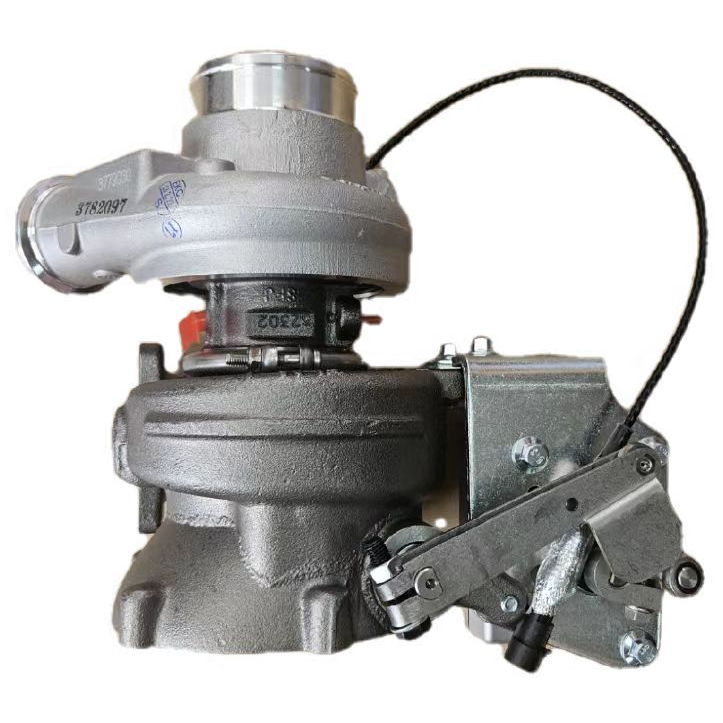
Light commercial vehicle engines have small displacements (2.0-3.0 liters) and limited exhaust gas volume. The turbocharger housing is small, the channels are thin, and the impeller is small-sized, lightweight, and low-inertia, which can be quickly driven by a small amount of exhaust gas.
The design focuses on low-speed response, sacrificing part of the high-speed efficiency. The turbo lag is small, and the start-up is brisk. It is prone to "exhaustion" at high speeds, with relatively obvious noise and insufficient power when carrying heavy loads and climbing slopes.
The working environment of HDT turbochargers is extremely harsh: long-term high load, exhaust gas temperature up to 900℃ or higher, requiring 10 years/1 million kilometers of reliability, which places extremely high requirements on the high-temperature resistance and wear resistance of materials.
The turbo-side impeller is made of nickel-based superalloy (high-temperature resistant and creep-resistant), the bearing system is full-floating bearings + high-strength alloy shafts, and the housing is made of high-nickel cast iron or heat-resistant steel. Although the cost is high, it can adapt to extreme operating conditions and is an "industrial-grade" durable equipment.
The working temperature of LCV turbochargers is relatively mild (below 800℃), the peak load time is short, and the service life requirement is usually 5-8 years/200,000-300,000 kilometers, which does not require the "high-hardness" performance of HDT turbochargers.
The turbo-side impeller is made of heat-resistant stainless steel, the bearing system is semi-floating bearings, and the housing is made of ordinary cast iron, balancing cost and performance. This is not cutting corners but a reasonable choice adapted to urban operating conditions.
After the HDT turbocharger stops, the core temperature can still reach above 600℃. If the engine is turned off immediately, the oil circulation will stop and carbonize, leading to turbocharger damage. Therefore, a fully protective cooling and lubrication system is required.
An independent water cooling jacket is standard, with cooling liquid continuously dissipating heat; an delayed shutdown system is equipped, and the electric pump continues to cool down after shutdown; high-flow oil takes into account both lubrication and cooling, ensuring the safety of the turbocharger during frequent starts and stops.
LCV turbochargers have low load and little heat accumulation, so the cooling system does not need to be complex, just simple and sufficient.
Oil cooling is the main method, and independent water cooling jackets are rarely equipped to control costs; it is recommended to idle for 1-2 minutes to cool down after intense driving. It can meet the needs under normal use, but extra attention is needed when carrying heavy loads and driving on mountain roads.
Designed around long-term stable work: theturbocharger intervenes at 1000-1200 rpm, reaches the maximum torque at 1500-2000 rpm and maintains it for a long time, with conservative boost pressure, leaving sufficient margin for durability.
The start-up is gentle, and the power is continuous after the speed increases. Equipped with a 12-16 speed gearbox, the engine can be kept running efficiently through gear shifting, balancing power and fuel economy.
Focusing on flexible urban shuttling: reaching the peak torque at around 1200 rpm, with a narrow torque platform (1500-2500 rpm), and aggressive boost pressure to tap the potential of small-displacement engines.
It is brisk to start and flexible to shuttle in the city when under light load; however, when carrying heavy loads or climbing slopes, it is necessary to downshift frequently to increase speed, otherwise, the power will be insufficient. This is also why many LCV users complain that "carrying heavy loads is not as good as large-displacement naturally aspirated engines".
Most faults are caused by improper maintenance: inferior oil leads to bearing wear, air filter blockage leads to turbocharger overheating, and failure of the delayed shutdown system leads to oil carbonization.
By changing the oil and air filter on time, it can be used for hundreds of thousands of kilometers or even millions of kilometers; maintenance mostly involves integral replacement, with high single cost (thousands to tens of thousands of yuan), but low fault frequency.
Most faults are related to operating conditions: long-term low-speed driving is prone to carbon deposition, frequent rapid acceleration is prone to thermal stress, and untimely oil replacement is prone to wear. Common faults include abnormal noise, oil leakage, and insufficient boost pressure.
Maintenance is simple with slightly higher frequency; the single maintenance cost is low (hundreds to thousands of yuan), and the turbocharger or intercooler can be replaced separately. The fault rate is higher than that of HDT turbochargers, but it is generally economical and worry-free.
(I) If You Drive an HDT: Focus on Protecting "Durability"
(II) If You Drive an LCV: Focus on Protecting "Response"
Use the oil grade specified by the manufacturer and replace it regularly; shorten the air filter replacement cycle in poor environments; idle for 1-2 minutes to cool down before shutting down; stop and check immediately when the instrument alarms, do not force driving.
Occasionally increase the speed to remove carbon deposits; downshift in time when carrying heavy loads, do not step on the accelerator hard; accelerate after the oil circulates during cold start; it is recommended to choose a model with a larger displacement if you often carry heavy loads and drive on mountain roads.
Do not privately modify the boost pressure (the original factory matching balances power, fuel consumption and service life); when the turbocharger is damaged, find out the root cause (oil, air intake, etc.) to avoid secondary faults; inspect in time when abnormal noise, power reduction or blue smoke occurs.
Understanding these differences can help you choose a car more wisely and use it more worry-free. Remember: a turbocharger is not "the more powerful the better"; the one that adapts to your own driving scenario is the most durable and cost-saving choice.
Both have the same working principle, but due to different operating scenarios, service life requirements and cost constraints, core differences have formed: HDT turbochargers are large-sized, high-temperature resistant, fully water-cooled, and born for durability; LCV turbochargers are small-sized, fast-response, cost-optimized, and born for urban operating conditions.