+86-18112348562
Please Choose Your Language

Views: 0 Author: Alfredturbo Publish Time: 2026-01-05 Origin: Site


Selecting a turbocharger manufacturer requires striking a precise balance between technical capability, product quality, reliability, and business compatibility. Below is a practical guide distilled from 20 years of industry experience, designed to help you avoid costly trial-and-error and establish long-term, stable partnerships.
Prioritize a proven industry track record, quality management system certifications, and targeted technical expertise in your application field, rather than blindly chasing low prices or trusting vague claims of "high performance". The core goal of collaboration is to find a partner that can accurately deliver on technical specifications, strictly adhere to delivery schedules, and take full responsibility for product quality.
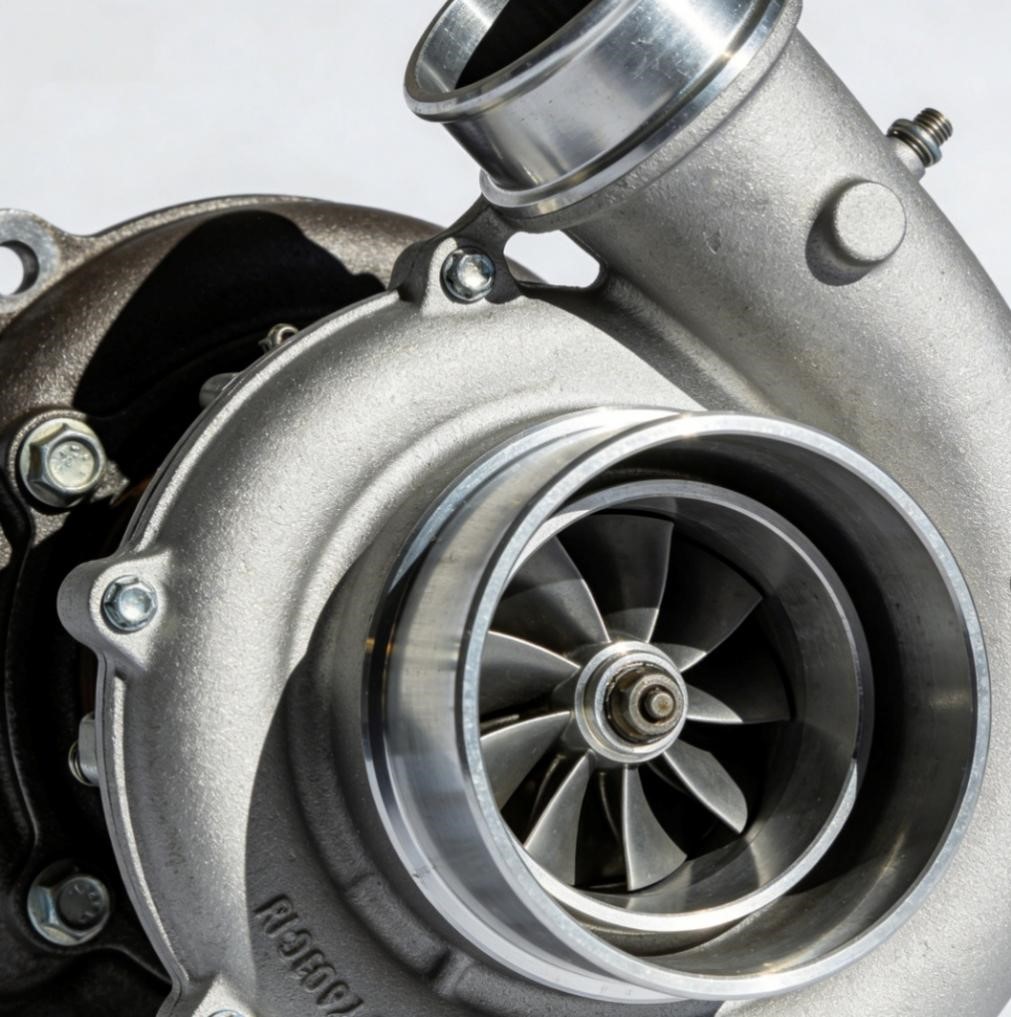
Prioritize enterprises with over 10 years of focused experience in the turbochargersector (rather than general auto parts manufacturers). Manufacturers capable of supplying both Original Equipment Manufacturer (OEM) and aftermarket markets often demonstrate stronger adaptability and quality control capabilities.
Verify if they supply well-known brands such as Garrett, BorgWarner, and Holset, or if they have established partnerships with major automakers and engine manufacturers. Be wary of fly-by-night companies that cannot provide verifiable customer lists.
Request 3–5 recent cooperation cases that match your application scenarios (e.g., diesel trucks, performance sports cars, industrial engines), and proactively contact reference customers to confirm their on-time delivery performance, after-sales service quality, and product failure rates.
Consideration Factors | Key Verification Points | Red Flags |
Design and Testing Capability | Equipped with in-house dynamometers, thermal cycle testing and durability laboratories; possesses Finite Element Analysis (FEA)/Computational Fluid Dynamics (CFD) tools for customized development | Outsourcing all engineering processes; inability to provide test data tailored to your application scenarios |
Materials and Manufacturing Processes | Utilizes certified alloy materials (e.g., Inconel, titanium), deploys precision CNC machining equipment, and ensures that the turbocharger’s core component—the Center Hub Rotating Assembly (CHRA)—meets dynamic balance accuracy standards | Poor surface finish; lack of material traceability systems; reliance solely on manual assembly |
Customization Capability | Capable of customizing components such as compressor wheels, turbine housings, and wastegates based on your boost/torque targets | Adopting a "one-size-fits-all" product strategy; excessively long lead times even for simple design adjustments |
Compliance Certifications | Products meet emission standards (e.g., Euro 6, EPA) and safety regulations | Inability to provide compliance certification documents |
IATF 16949 (automotive industry-specific), ISO 9001 quality management system certification, and ISO 14001 environmental management system certification are fundamental prerequisites for ensuring standardized production processes and reducing product defect rates.
Must cover incoming material inspection, in-process Statistical Process Control (SPC), and 100% final factory testing (including dynamic balance, air tightness, and pressure resistance tests).
Each turbocharger should be assigned a unique serial number linked to complete production data (manufacturing date, batch number, inspector information), enabling precise traceability during warranty periods or product recalls.
Confirm whether the manufacturer can meet your order volume requirements (whether 10 units per month or 10,000 units per month) with an on-time delivery rate exceeding 95%. Request a detailed production schedule and contingency plans for component shortages.
Verify if the manufacturer maintains inventory of critical wearing parts such as bearings and seals to shorten lead times. Avoid manufacturers with frequent stockouts.
Understand the procurement channels for core components like bearings and impellers. Prioritize manufacturers that collaborate with reputable suppliers (e.g., SKF, Schaeffler) or possess in-house R&D and production capabilities for core components. Supply chains overly reliant on low-cost overseas components typically entail higher product failure risks.
The warranty period for new turbochargers should be no less than 6 months. The warranty scope must explicitly cover parts replacement (excluding failures resulting from human operational errors).
Ensure 24/7 access to professional engineers for troubleshooting guidance (e.g., abnormal boost pressure, oil leaks). Be cautious of manufacturers that only offer email support with extremely long response times.
Manufacturers with local or authorized service centers can provide faster repair services; for multinational enterprises, a global service network is an added advantage.
When comparing costs, do not focus solely on upfront prices. Instead, take the following factors into comprehensive consideration:
Product failure rate (target rate: below 2%)
Energy efficiency (lower fuel consumption translates to long-term cost savings)
Maintenance costs (e.g., oil change frequency, bearing replacement expenses)
Turbochargers priced 30% below the market average most likely use inferior materials or skip essential testing procedures, ultimately costing you more in terms of frequent failures and downtime losses.
Can the partner accurately understand your core requirements (e.g., performance improvement, emission compliance, cost control)? A partner willing to listen to your needs can effectively avoid cooperation risks arising from cognitive deviations.
Can they provide regular updates on order progress, production issues, and price changes? Hidden additional fees and frequent unforeseen delivery delays are red flags to watch out for.
Is the partner willing to invest in R&D resources to support your future business needs (e.g., integration of hybrid/electric turbo technologies)?
Conduct on-site or virtual audits of the manufacturer's production facilities to verify manufacturing quality.
Purchase sample turbochargers and perform bench tests on your engine to measure key indicators such as turbo spool-up time, boost pressure stability, and oil consumption.
Carefully review contract terms, with a focus on confirming warranty coverage, penalties for delayed deliveries, and intellectual property protection clauses.
Place a small initial order (5–10 units) to validate product performance before scaling up procurement volume.
In today's era of global supply chain restructuring and technological upgrading, choosing a turbocharger manufacturer is not just about selecting a product—it is about partnering with a reliable, innovative collaborator with exceptional synergy capabilities. Hailing from China, Alfredturbo is emerging as the preferred choice for numerous engine manufacturers and tuning brands worldwide, thanks to its profound manufacturing heritage and forward-looking technological layout. Below are our core advantages:

China boasts the world's most complete and responsive automotive parts supply chain network. Alfredturbo deeply integrates into this ecosystem, ensuring full independent control and cost optimization across the entire value chain—from special alloy materials and high-precision casting/forging to cutting-edge dynamic balancing and testing equipment. This enables us to deliver the following benefits to our customers:
Strong supply chain resilience guarantees on-time order fulfillment, even amid global market fluctuations.
Our cost advantage does not merely rely on labor costs; it stems from value engineering benefits derived from efficient supply chain integration and large-scale production.
Leveraging our geographical and industrial proximity to supply chain hubs, we can quickly respond to customer demands for material or process modifications.
Amid China’s manufacturing transformation from "quantity growth" to "quality upgrading", Alfredturbo is a steadfast practitioner. We possess over 20 years of specialized turbocharger manufacturing experience and have established an internal quality control system that exceeds international standards.
A full-process digital traceability system ensures the entire lifecycle of each turbocharger—from raw materials to finished products—is fully trackable.
In our national-level laboratories, every product undergoes bench durability testing, thermal shock cycle testing etc. This ensures turbochargers match the engine’s service life and adapt to harsh operating conditions worldwide.
As the global automotive industry transitions toward electrification and low-carbonization, Alfredturbo’s technological reserves are geared toward the future.
We allocate a significant proportion of annual revenue to R&D, ensuring our product portfolio not only meets current needs but also empowers you to address future technological challenges.
Choosing Alfredturbo means partnering with a reliable collaborator that combines scale with flexibility, quality with value, and experience with innovation. We do not just supply products—we provide a guarantee: a guarantee of supply chain stability, enhanced product competitiveness, and future-proof technological evolution for your business.
Welcome to contact us to share your specific requirements, and let us demonstrate how Alfredturbo can serve as the strongest backbone for your global business growth.


