chris@alfredturbo.com
+86-18112348562
Language
Please Choose Your Language

Views: 7 Author: Site Editor Publish Time: 2026-01-23 Origin: Site


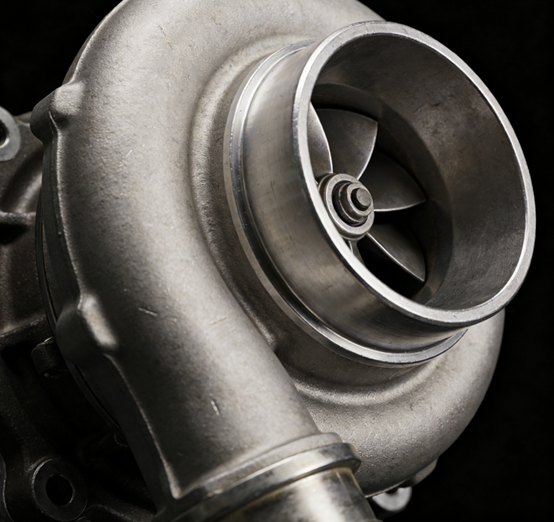
Global attention to environmental protection is growing, and emission regulations around the world are becoming increasingly stringent. Whether it's Europe's Euro VI Emission Standard, North America's EPA Heavy-Duty Vehicle Regulations, or China's National VI Emission Standard, all set higher requirements for exhaust emissions from diesel trucks. Amid such industry changes, turbocharger technology has become a core technology for diesel engines to achieve efficient and clean combustion, as it can both boost power and reduce emissions. As a key component in automotive power systems, turbochargers not only make engines more powerful but also play an irreplaceable role in reducing pollutant emissions and facilitating the industry's green transition.
Essentially, a turbocharger is an efficient "air compression + energy recovery" system. Its core idea is to reuse the energy from exhaust gas emitted by the engine, pressurize the intake air through precise mechanical transmission, and thereby achieve more complete combustion. Many people think turbochargers are only used to boost power, but that's not the case. The concept of recovering and efficiently utilizing exhaust gas energy is the key to achieving environmental protection and emission reduction.
Specifically, the working process of a turbocharger has three steps:
exhaust gas drive. When a diesel engine operates, it emits high-temperature exhaust gas with a temperature of up to 750-1050℃. This exhaust gas enters the turbine housing of the turbocharger through the exhaust pipe, impacting the turbine blades to rotate at high speed—rotational speed can reach tens of thousands or even hundreds of thousands of revolutions per minute.
synchronous supercharging. Since the turbine blades and the compressor impeller are mounted on the same shaft, when the turbine rotates, the compressor impeller rotates along with it, drawing in and compressing fresh air filtered by the air filter.
efficient air intake. The compressed fresh air has higher density and more oxygen, which is delivered to the engine cylinders through the intake pipe. In this way, in cylinders of the same displacement, sufficient oxygen allows more fuel to burn fully. This not only enhances engine power but also improves combustion efficiency, laying the foundation for emission reduction.
It should be noted that the working effect of a turbocharger mainly depends on whether exhaust gas energy can be fully utilized and how well the supercharging system matches the engine. High-quality turbochargers can maximize the recovery of exhaust gas energy while precisely controlling boost pressure and intake air volume, avoiding over-supercharging or insufficient supercharging. This is also the key to achieving both "power enhancement + emission reduction."
Turbochargers improve diesel truck emissions not by optimizing just one aspect, but by comprehensively reducing major pollutants such as carbon monoxide, hydrocarbons, particulate matter, and nitrogen oxides through various methods such as improving combustion efficiency and optimizing the combustion environment.
Carbon monoxide and hydrocarbons emitted by diesel engines are mainly due to incomplete fuel combustion. If there is insufficient oxygen in the cylinders, some fuel cannot be completely oxidized and decomposed, eventually being emitted as harmful pollutants. Turbochargers solve the problem of incomplete combustion at the source by compressing intake air to increase air density and providing sufficient oxygen for fuel combustion.
Data shows that diesel engines equipped with high-quality turbochargers can increase power by 30%-100% and reduce fuel consumption by 3%-8%. With enhanced power, smaller-displacement engines can be used to meet the same transportation needs, naturally reducing pollutant generation. Lower fuel consumption means less total fuel usage, and the pollutants produced per unit of power also decrease significantly. Actual tests have found that compared with diesel engines without turbochargers, those equipped with turbochargers can reduce carbon monoxide emissions by more than 40% and hydrocarbon emissions by about 30%, showing a significant emission reduction effect.
Black smoke emitted by diesel trucks is mainly formed by unburned fuel particles and engine oil residues. In engines without turbochargers, residual exhaust gas after combustion cannot be completely discharged, which dilutes fresh air, leading to uneven mixing of fuel and air and more black smoke.
By increasing intake pressure, turbochargers can completely "push out" residual exhaust gas after combustion, reducing the dilution of fresh air by exhaust gas. At the same time, sufficient oxygen allows fuel particles to burn fully, and engine oil residues can also decompose in a high-temperature and oxygen-rich environment, thus greatly reducing black smoke. Studies have found that diesel engines equipped with turbochargers can reduce smoke density by more than 50%, fully meeting the requirements for black smoke emissions in strict standards such as National VI and Euro VI.
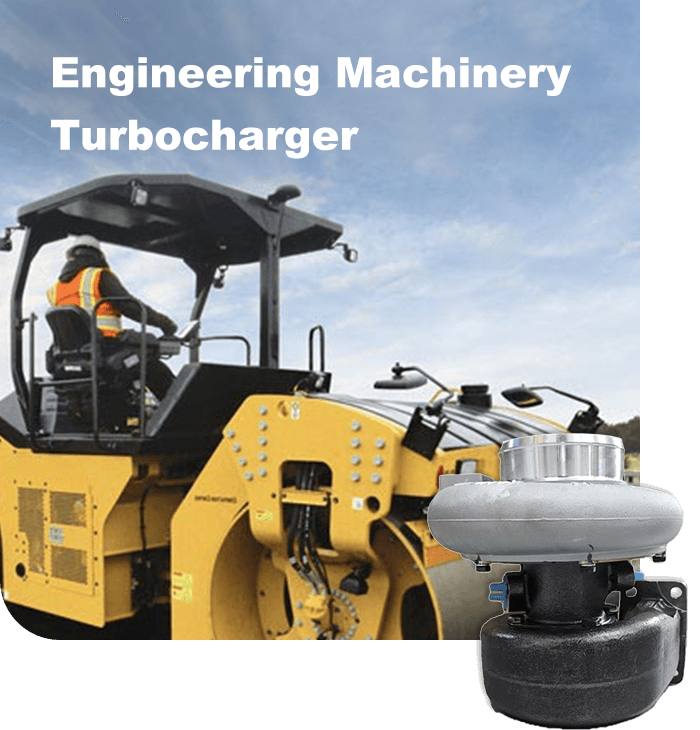


In the field of turbochargers, technical strength and manufacturing processes directly determine the emission reduction effect and reliability of products. Alfredturbo has deep roots in this industry for many years, accumulating profound technical experience and forming core advantages in multiple aspects, and is capable of providing efficient and reliable turbocharger solutions for diesel truck manufacturers around the world.
Traditional turbochargers have a common problem: "turbo lag"—when the engine runs at low speeds, the turbo responds slowly, making the vehicle lack power, which affects driving experience and the stability of power output. Alfredturbo adopts advanced turbine blade design and innovatively develops a variable guide vane structure, which can automatically adjust the size of the air flow channel according to different engine speeds, achieving the best supercharging effect under various working conditions.
The working environment of turbochargers is particularly harsh. The turbine end is in a high-temperature environment of 750-1050℃ for a long time, and the rotor speed is as high as more than 200,000 revolutions per minute, which places extremely high requirements on the high-temperature resistance, wear resistance and strength of materials. To address this problem, Alfredturbo uses high-end high-temperature materials such as nickel-based single crystal alloys to make turbine blades, enabling the turbine to withstand temperatures exceeding 1000℃ and stably resist long-term erosion by high-temperature exhaust gas.
At the same time, the company adopts precision processing technology and strict dynamic balance testing standards to ensure that the rotational balance accuracy of the rotor assembly reaches the industry-leading level, greatly reducing vibration and wear during high-speed operation and extending the service life of the product. For diesel trucks that operate in complex road conditions and harsh environments all year round, the high durability of Alfredturbo turbochargers can reduce the trouble and cost of after-sales maintenance and ensure transportation efficiency.
In addition, Alfredturbo's products also has the characteristics of light weight and miniaturization, which can precisely match the engine compartment layout of different models of diesel trucks, reducing the difficulty of vehicle assembly and making installation easier.
This intelligent regulation method not only improves the operational stability of the turbocharger and extends its service life but also makes supercharging more precise under various working conditions, ensuring that the engine is always in the optimal combustion state and further reducing pollutant emissions. At the same time, this system also has a fault diagnosis function, which can monitor the operating status of the equipment in real time, provide accurate data support for after-sales maintenance, and make maintenance more convenient.
Although new energy vehicles are developing rapidly, the market space for turbochargers in the diesel truck field is still large. On one hand, diesel trucks are core equipment in fields such as logistics transportation and engineering construction. Their endurance, load capacity, and ability to adapt to complex environments cannot be replaced by new energy trucks in the short term; on the other hand, global environmental regulations are becoming increasingly strict, forcing the diesel truck industry to continuously upgrade its technology. As a core emission reduction technology, turbochargers have always had strong market demand.
According to market research data, the global turbocharger market size has reached 168.3 billion yuan in 2024. Among them, the Chinese market accounts for about 32% of the global share with a size of 54.5 billion yuan, making it the world's largest turbocharger market. It is expected that by 2032, the global market size will reach 46.65 billion US dollars, with an average annual growth rate of 8.27%.
This growth trend mainly stems from three core reasons: first, the utilization rate of turbochargers in hybrid vehicles is increasing. Turbochargers can improve the thermal efficiency of the engine, make up for the lack of low-speed torque of motors, and achieve a balance between power and energy saving; second, almost all heavy-duty trucks in the commercial vehicle field are equipped with turbochargers, which are core technologies to meet strict emission standards such as National VI and Euro VI; third, the demand for turbocharging technology in fields such as shipping and aviation is also growing, further expanding the market space.
Against the background of global green development, the environmental transformation of the diesel truck industry is an inevitable trend. As a core technology of diesel engines, turbochargers can precisely control the emission of various pollutants through various methods such as improving combustion efficiency, optimizing the combustion environment, and matching intercoolers, helping diesel trucks meet strict emission requirements. At the same time, they can also ensure power and fuel economy, making them the "core driving force" for the industry's green transition.
With its core advantages in efficient turbine design, advanced material technology, complete cooling system, and intelligent control system, Alfredturbo provides efficient and reliable turbocharging solutions for diesel truck manufacturers around the world. It not only helps enterprises successfully pass environmental standards but also improves the market competitiveness of their products. In the future, with the application of new materials and processes and the upgrading of intelligent control technology, turbochargers will have greater potential in emission reduction and efficiency improvement. Alfredturbo will also continue to focus on technological innovation, work with industry partners around the world to promote the green and sustainable development of the diesel truck industry, and contribute to the cause of environmental protection.