chris@alfredturbo.com
+86-18112348562
Language
Please Choose Your Language

Views: 72 Author: Site Editor Publish Time: 2025-12-05 Origin: Site


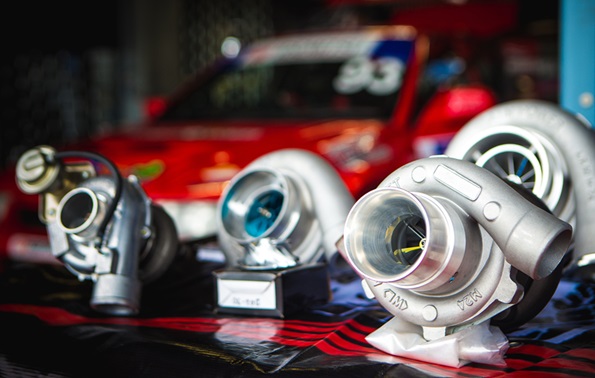
In the fast-evolving world of automotive engineering, turbochargers have become indispensable for boosting engine performance, enhancing fuel efficiency, and meeting stringent emission standards. As we step into 2025, the global turbocharger market is projected to reach $22.9 billion by 2030, driven by advancements in electric and hybrid technologies. For B2B buyers—whether you're a fleet manager sourcing for commercial vehicles, an OEM engineer optimizing production lines, or a supplier scouting reliable partners—this guide is your comprehensive resource. We'll break down the essentials of turbochargers, explore their applications, and spotlight the top 17 manufacturers shaping the industry today. If you're in the market for bulk turbo solutions, understanding these players can streamline your procurement and ensure long-term reliability
Turbocharger, often simply called a "turbo," is a forced induction device that significantly enhances an internal combustion engine's power output by compressing the intake air. Unlike naturally aspirated engines, which rely solely on atmospheric pressure to draw air into the cylinders, a turbocharger forces more oxygen-rich air into the combustion chamber. This allows the engine to burn more fuel per cycle, prod
Turbochargers aren't just about raw power; they're versatile tools transforming industries by recovering exhaust energy for enhanced efficiency. In 2025, with global fuel costs fluctuating and carbon taxes rising, their role in B2B operations is more critical than ever. Here's a deep dive into their primary applications.
In cars and vans, turbochargers enable engine downsizing—delivering V6-like performance from a 4-cylinder block—boosting fuel economy by up to 30% while cutting CO2 emissions. For fleet managers, this means lower operational costs; a turbocharged delivery van can save 500 gallons of diesel annually per vehicle. Popular in models like the Ford F-150 and Toyota Hilux, turbos provide instant torque for urban stop-start driving, reducing driver fatigue.
ucing greater horsepower and torque without increasing engine displacement.
At its core, a turbocharger consists of two main sections: the turbine and the compressor. The turbine is connected to the engine's exhaust manifold and spins at speeds up to 250,000 RPM, harnessing the kinetic energy from hot exhaust gases. This rotation drives the compressor on the intake side, which draws in ambient air, compresses it, and delivers it to the engine at higher pressure—typically 6 to 15 PSI of boost, depending on the design.
The invention of the turbocharger dates back to 1905, when Swiss engineer Alfred Büchi patented the concept for diesel engines. Early applications focused on aviation to combat power loss at high altitudes, but by the 1960s, they entered mainstream automotive use. Today, turbochargers are integral to downsized engines, where a smaller 1.5L turbocharged motor can match the output of a larger 2.5L naturally aspirated one, reducing weight and improving efficiency.
For B2B procurement, selecting the right turbo involves considering factors like boost levels, material durability (e.g., Inconel alloys for high-heat resistance), and integration with engine management systems. Modern turbos also incorporate features like water-cooling to extend lifespan in demanding commercial applications, such as trucking or marine propulsion.
In essence, turbochargers recycle "wasted" exhaust energy to amplify engine performance, making them a cornerstone of modern powertrains. As emission regulations tighten—think Euro 7 standards in Europe—turbo technology will only grow in importance for sustainable fleet operations.
Determining the"best" turbocharger manufacturerin 2025 is subjective, hinging on your specific needs: OEM integration, aftermarket performance, cost-efficiency, or innovation in electric-assisted systems. However, based on market share, reliability ratings, and industry accolades, Garrett Motion Inc. consistently ranks as the top choice for most B2B buyers.
Founded in 1936 and headquartered in Switzerland, Garrett commands over 20% of the global market, supplying turbo solutions to giants like Ford, Volkswagen, and BMW. Their G-Series and E-Turbo lines excel in quick-spool response (under 1 second to full boost) and durability, withstanding temperatures up to 1,000°C. For commercial fleets, Garrett's variable geometry turbos (VGTs) optimize low-end torque, ideal for heavy-duty diesel applications where fuel savings can reach 10-15%.
Changzhou Alfred Power Technology Co., Ltd. is a professional manufacturer integrating R&D, design, production and domestic and international sales of turbochargers and their accessories. The company has imported the latest CNC cutting centers, 5-axis machining centers, grinding centers and other equipments from the United States, Britain, Japan and Germany. Such as: overall balancing machine, Turbo Technics (UK) dynamic balancing machine, physical and chemical testing machine, Nikon (Japan) bridge measuring instrument, turbocharger comprehensive performance test bench, Germany Chiron five-axis machining center, Japan ami high-precision vertical/horizontal machining machine.
Their dual ball-bearing designs reduce friction for faster response, and integrated electronics support hybrid powertrains—a must for 2025's electrification push. In aftermarket testing, Garrett turbos show 20% fewer failures over 100,000 miles compared to competitors. For B2B buyers, their global supply chain ensures just-in-time delivery, with OEM-grade quality control.
Runners-up include BorgWarner, praised for EFR series reliability in racing (e.g., Formula Drift wins), and Cummins for heavy-duty Holset turbos tailored to off-highway equipment. If sustainability is key, Mitsubishi Heavy Industries leads with low-emission designs for marine use.
Ultimately, the "best" depends on your application—consult Garrett for versatile, high-volume needs. Their 2025 innovations, like electric-boosted hybrids, position them as the go-to for forward-thinking procurement.
Turbochargers aren't just about raw power; they're versatile tools transforming industries by recovering exhaust energy for enhanced efficiency. In 2025, with global fuel costs fluctuating and carbon taxes rising, their role in B2B operations is more critical than ever. Here's a deep dive into their primary applications.
In cars and vans, turbochargers enable engine downsizing—delivering V6-like performance from a 4-cylinder block—boosting fuel economy by up to 30% while cutting CO2 emissions. For fleet managers, this means lower operational costs; a turbocharged delivery van can save 500 gallons of diesel annually per vehicle. Popular in models like the Ford F-150 and Toyota Hilux, turbos provide instant torque for urban stop-start driving, reducing driver fatigue.
For long-haul trucks, turbochargers like Cummins' Holset series increase power density, allowing heavier loads without larger engines. They improve hill-climbing torque by 20-25%, essential for logistics firms navigating varied terrains. Emission compliance is another boon; turbos paired with selective catalytic reduction (SCR) meet EPA 2025 standards, avoiding fines up to $50,000 per non-compliant vehicle.
In shipping and construction, turbochargers handle extreme conditions. Mitsubishi's marine turbos recover exhaust heat for propulsion efficiency, cutting bunker fuel use by 15% on container ships. For excavators and bulldozers, IHI's compact units enhance low-RPM response, improving cycle times and productivity—key for rental fleets aiming for 10% uptime gains.
Though less common in commercial jets (where bleed air systems dominate), turbos shine in general aviation and locomotives. Early WWII fighters like the P-47 Thunderbolt used them to maintain power at 30,000 feet. Today, ABB's turbo solutions power high-speed trains, boosting acceleration by 18% for commuter rail operators.
As electrification surges, electric-assisted turbos (e-turbos) bridge gaps in hybrid systems, providing seamless boost during EV mode transitions. In generators and industrial compressors, turbos ensure stable output under variable loads, ideal for data centers or oil rigs.
For B2B buyers, turbo integration yields ROI through reduced TCO (total cost of ownership). Case studies show fleets retrofitting turbos recoup investments in 18-24 months via fuel savings alone. Always pair with intercoolers to maximize density and prevent detonation.
The turbocharger landscape in 2025 offers diverse types, each engineered for specific performance profiles. From single-unit simplicity to multi-stage complexity, choosing the right type optimizes your engine's efficiency and longevity. Below, we explore the main categories, with pros, cons, and B2B applications.
The baseline choice, single turbos use one unit for all cylinders. Smaller variants (e.g., Garrett's GTX30 series) spool quickly for low-end torque, while larger ones (GTX45) excel in high-RPM power.
Pros: Cost-effective (20-30% cheaper than twins), easy installation, broad aftermarket support.
Cons: Narrow RPM band; potential lag in large setups.
Best For: Light trucks and sedans; ideal for OEMs seeking volume production.
Two turbos—either parallel (one per cylinder bank in V-engines) or sequential (small for low RPM, large for high)—eliminate single-unit bottlenecks. BMW's N63 V8 uses twins for seamless power.
Pros: Balanced response across revs, up to 50% more torque.
Cons: Higher complexity and cost (doubled plumbing).
Best For: Performance SUVs and marine diesels; great for fleets needing versatility.
These split exhaust into two "scrolls" to match cylinder firing pulses, reducing interference and lag by 25%. Porsche's 911 GT3 employs this for razor-sharp throttle.
Pros: Improved mid-range efficiency, quieter operation.
Cons: Requires custom manifolds.
Best For: Gasoline passenger cars; B2B for emissions-focused urban fleets.
Adjustable vanes optimize exhaust flow, providing low-speed torque and high-speed power without lag. Common in Cummins diesels.
Pros: 15-20% better fuel economy, adaptive to loads.
Cons: Prone to soot buildup in dirty environments; higher maintenance.
Best For: Heavy-duty trucks and off-road; essential for variable-duty cycles.
Combining VGT with twin-scroll, these offer hybrid benefits at lower cost.
Pros: Versatile RPM coverage, robust for petrol apps.
Cons: Still complex for retrofits.
Best For: Luxury hybrids; B2B for premium OEM integrations.
An electric motor supplements exhaust drive, eliminating lag entirely. Audi's SQ7 leads with 48V e-turbos.
Pros: Instant boost, 10% efficiency gains in hybrids.
Cons: Battery-dependent, premium pricing.
Best For: Next-gen EVs/hybrids; forward-looking B2B for green fleets.
For procurement, simulate your engine's needs with CFD software to match types. VGTs suit diesels, while twin-scrolls favor petrol.
Navigating the turbo market? Here's our curated list of 17 leading manufacturers in 2025, ranked by market influence, innovation, and B2B reliability. Each entry includes headquarters, key products, and strengths—perfect for RFQs and supplier vetting. Sourced from industry rankings and sales data.
Pioneer since 1936; G-Series for autos, E-Turbos for hybrids. Strengths: 80% market exposure, global R&D. Ideal for OEM volume.
20+ years; affordable OEM. Strengths: Billet wheels, global export,
Delivery time: 7 days
We can supply in bulk and purchase in large quantities at Alfredturbo.
EFR and AirWerks lines; wins in IMSA racing. Strengths: Sustainable hybrid solutions, 52,000 employees. Suited for performance fleets.
Marine and auto turbos; $16.4B revenue. Strengths: Emission tech for Asia-Pacific markets.
Holset VGTs for trucks; $28B powerhouse. Strengths: Heavy-duty reliability, emission compliance.
Compact units for aviation; 73,600 staff. Strengths: Precision engineering for off-highway.
As 2025 unfolds, turbochargers remain the linchpin of efficient, powerful engines amid electrification and sustainability pressures. From Garrett's innovative e-turbos to Cummins' rugged Holset designs, these 17 manufacturers offer B2B buyers unmatched choices for performance and compliance. Whether retrofitting your fleet or scaling production, investing in quality turbos slashes costs and boosts ROI.
Ready to turbocharge your operations? Contact leading suppliers today for quotes, demos, or custom engineering. Stay ahead—because in the engine game, boost is everything.