chris@alfredturbo.com
+86-18112348562
Language
Please Choose Your Language

Views: 0 Author: Alfredturbo Publish Time: 2026-09-21 Origin: Site


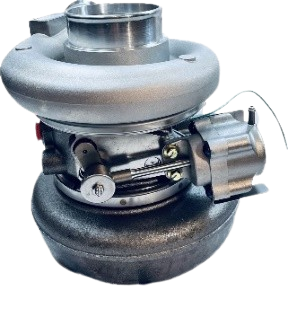
For operators of long-haul European and American fleets, construction equipment owners, and ordinary overseas passenger car owners, hearing the phrase “turbo problem” usually triggers the same immediate reaction: the vehicle needs major repairs and a full turbocharger assembly replacement, which comes with extremely high maintenance costs. With years of experience deeply engaged in the foreign trade production and export market of turbochargers, we have handled numerous cases from overseas repair shops, logistics fleets and individual vehicle owners. We have found that most people fall into a misunderstanding: they attribute all power loss and increased fuel consumption issues directly to a failed turbocharger core.
In truth, a turbocharger is a very “straightforward” core automotive component. It rarely fails completely and suddenly to leave the vehicle stranded. Before total failure, it sends continuous warning signals through multiple telltale signs including power output, abnormal noises, exhaust smoke and oil consumption. Many hefty repair bills stem from vehicle owners ignoring early mild warning signs of the turbocharger, allowing minor faults to escalate into irreversible major component damage.
This article breaks down various pre-failure symptoms of turbochargers in plain language understandable to overseas vehicle owners and mechanics. It focuses on distinguishing turbo system faults from turbocharger core faults, helping readers accurately avoid pitfalls and unnecessary over-repair.
The core operating principle of a turbocharger is simple: it recovers energy from engine exhaust gas to compress fresh air and feed it into the cylinders, enabling full fuel combustion to boost power and optimise fuel economy. Simply put, a turbocharger acts as an air pump for the engine. Once abnormalities occur in the turbo system, the most obvious symptom is reduced vehicle power, or what vehicle owners often describe as “sluggish performance”. However, most power weakness issues do not stem from damage to the turbocharger core itself, but minor faults in supporting turbo components.
Under normal operating conditions, turbocharged vehicles deliver instant power when the accelerator is pressed, with crisp and responsive acceleration. When the turbo system malfunctions, the accelerator pedal shows obvious dead travel with no explosive power when pressed, feeling like stepping on a soft cushion.
A typical case involves a Volkswagen Golf owner in Canada. The vehicle had only travelled tens of thousands of kilometres and originally climbed hills and overtook smoothly. Later, throttle response kept deteriorating, acceleration required a long wait, and speed climbed slowly. The owner initially suspected a transmission fault. After inspection ruled out transmission and fuel line issues, the root cause was identified: ageing turbo exhaust hoses and a stuck wastegate actuator, resulting in insufficient boost pressure and failure of the turbocharger to pump air normally.
This type of fault has clear characteristics: low-speed driving remains mostly normal, while power drops completely above 2000–3000 RPM; pressing the accelerator produces only engine roar without corresponding speed gains; no warning lights illuminate on the vehicle, yet power noticeably declines. In most cases, the trouble code P0299 (boost pressure insufficient) appears, making it the most common early warning signal of turbo system faults in overseas vehicles.
All turbocharged vehicles have slight normal turbo lag, with power delivery kicking in roughly half a second after heavy throttle application, requiring no maintenance. However, persistent worsening of lag is a clear fault warning.
Many overseas vehicle owners report that their vehicles used to deliver strong power at 1800 RPM, yet now power remains weak even at 3500 RPM, behaving almost like a naturally aspirated car. Heavy throttle produces only engine roar with barely any speed increase, and repeated release and application of the accelerator still results in sluggish power response.
When encountering this situation, do not immediately conclude that the turbocharger is ruined. 90% of such problems arise from cracked turbo intake pipes, loose intercooler hoses, stuck wastegate linkages or faulty vacuum solenoid valves. These are low-cost repairable minor issues rather than damage to the turbocharger core.
Power degradation of turbochargers is a frequent issue within the European and American heavy-duty truck transport sector. Mainstream long-haul heavy trucks such as Volvo FH and Scania R Series operate continuously at high speed under full load. Poor turbocharger performance directly hurts transport efficiency. Many fleet drivers report that their vehicles could originally maintain stable 90 km/h while climbing hills under full load, yet struggle even at 70 km/h.
Do not simply replace the air filter to address this symptom. Targeted inspection of key turbocharger components is required: check whether turbo blades are damaged by foreign objects, whether turbo shaft clearance exceeds specifications, whether VGT variable geometry turbo blades seize, and whether oil supply and return lines remain unobstructed. To sum up, seven out of ten cases of sluggish vehicle performance relate to the turbo system, yet a full turbocharger assembly replacement is usually unnecessary.
A properly functioning turbocharger emits only soft low-frequency wind noise, barely noticeable while driving. If abnormal noises emerge from the engine bay, these are not normal operating sounds — they are high-alert warning signals from the turbocharger. Different abnormal noises correspond to distinct turbocharger faults, enabling quick and accurate fault location.
During acceleration and loaded driving, a siren-like, whistling or dental drill-like sharp noise comes from the engine bay, growing shriller with higher RPM. This is a prominent visible symptom of turbocharger faults.
Accompanied by “siren noise” from the engine bay during acceleration is a highly reported fault among Audi A3 and Volkswagen Jetta owners in Europe and America. Statistics from extensive overseas repair shop diagnostics show three main root causes: initial wear of turbo bearings, compressor wheel rubbing against the housing, and air leakage from cracked intake pipes. Most cases are pipe damage issues; only a small proportion involve turbocharger core wear, with vastly different repair costs.
A rhythmic metallic “clattering” sound from the engine bay at idle is often misdiagnosed as a valve fault, yet it most likely points to turbocharger component abnormalities. Primary triggers include compressor blades damaged and deformed by gravel or plastic debris, excessive turbo shaft clearance, and wobbling impellers during operation.
A turbocharger spins at up to hundreds of thousands of revolutions per minute. Even tiny damage or deformation of the blades will completely break dynamic balance at high speed. Continued driving allows shed metal fragments to enter the intake and oil passages, which will not only destroy the turbocharger completely but also score engine bearings and trigger more severe mechanical failures.
Heavy throttle acceleration produces an obvious hissing air-release sound, followed by vehicle shuddering and instant power loss — a frequently encountered fault scenario for overseas vehicles. Many vehicle owners and small repair shops immediately judge that “the turbo blew”, yet the issue mostly stems from simple component failures.
Common fault points include damaged intercooler pipes, disconnected hoses near the throttle valve, broken wastegate actuator linkages and abnormal boost pressure sensor signals. Such problems do not require turbocharger assembly replacement; often the issue can be resolved by replacing pipes and parts costing only dozens of US dollars. This is also one of the most common over-repair pitfalls we help overseas customers avoid in our foreign trade business.
Inside a turbocharger, sealing oil seals and bearing structures precisely isolate the exhaust side from the intake side, and separate engine oil from airflow. Once the turbo sealing system ages or fails, the balance between oil and airflow breaks down, immediately causing abnormal exhaust colour and oil consumption. This serves as the most reliable core indicator to judge damage to the turbocharger core.
Slight blue smoke during cold start is normal. However, persistent blue-grey smoke when pulling away or pressing the accelerator hard signals a high-risk turbocharger fault. It is accompanied by two key features: no oil leaks underneath the vehicle and noticeably increased oil consumption. Removing the intercooler pipe reveals oil residue and carbon deposits adhering to its inner walls.
Senior mechanics maintaining CAT construction machinery and Komatsu excavators in North America follow a unified inspection logic: when equipment emits blue smoke and consumes oil rapidly, inspect turbo oil seals first instead of blindly replacing air filters or engine oil. This is a typical symptom of worn turbo shaft seals, where engine oil leaks from the bearing chamber into the intake duct and burns under high temperature, indicating irreversible wear of the turbocharger core.
Under heavy load, acceleration or uphill conditions, thick black exhaust smoke appears. Most people assume excessive carbon build-up or faulty fuel injectors, yet the main cause is insufficient turbocharger performance.
Deteriorated turbocharging efficiency reduces intake volume below the engine’s operating requirements. The ECU automatically increases fuel injection to compensate for power shortage, creating a vicious cycle of insufficient air and excess fuel, which eventually generates large amounts of carbon deposits and black smoke alongside a sharp rise in fuel consumption. Simple inspection method: read boost pressure data. If the factory specification is 1.5 bar while the actual reading is only 0.9 bar, a turbocharger fault can be confirmed.
White exhaust smoke is one of the most misdiagnosed symptoms. Most people immediately suspect a blown head gasket. For European and American vehicles fitted with water-cooled turbochargers, however, white smoke is most likely caused by faults in the turbo cooling system.
Water leakage from the turbo centre housing allows coolant to seep into the exhaust passage and vaporise into white mist under high-temperature exhaust gas, with a faint sweet odour from the exhaust. Official technical bulletins for multiple 4.0T Audi models overseas clearly state that abnormal turbo cooling and oil supply systems rapidly wear turbo bearings and trigger white smoke and overheating faults. Inspect the turbocharger first before checking the engine head gasket.
If engine oil needs topping up every 1000–2000 kilometres with no oil leaks under the vehicle or along pipework, this counts as a hidden turbocharger fault even without obvious blue smoke. The root cause is slow leakage through turbo oil seals, with engine oil seeping quietly into the intake duct and burning continuously.
The standard inspection sequence adopted by the overseas repair industry: first test the turbo sealing system and clean oil deposits inside the intercooler, then check piston rings and crankcase ventilation valve faults. This avoids unnecessary engine disassembly and cuts inspection costs significantly.


In the later stages of turbocharger faults, the vehicle illuminates warning lights and activates protection modes as its final self-rescue warning. Many vehicle owners simply clear the warning lights and keep driving to save trouble, eventually turning minor faults into total turbocharger failure and secondary engine damage.
Overseas Volkswagen and Audi owners frequently encounter illuminated EPC and engine warning lights. The light flashes under heavy acceleration and stays lit continuously in later stages. The main triggers are mostly turbo pressure system abnormalities: rusted wastegate shafts, stuck actuators, and mismatch between actual boost pressure and factory-rated pressure.
Simply clearing fault codes without fixing the root cause and continuing to drive will lead to fully seized wastegates, long-term under-boost operation of the turbocharger, and excess fuel injection by the engine. This further triggers a chain of faults including carbon accumulation, DPF blockage and degraded engine oil, pushing repair costs up exponentially.
Sudden power limitation, capped engine RPM and locked throttle response, known as “limp mode” among overseas vehicle owners. Many drivers dislike this mode, yet it is a core ECU protection logic designed specifically for turbocharger faults.
Limp mode effectively prevents turbocharger overspeeding and catastrophic failure, avoids excessive fuel injection under oxygen shortage inside cylinders, and stops metal fragments from a damaged turbo from entering the engine. The correct response: refrain from heavy throttle and high-RPM driving, drive slowly to the nearest repair shop for data reading and troubleshooting. Do not cut power to clear fault codes and resume driving.
The most severe cases seen in the overseas repair market are not direct turbocharger failure, but secondary damage caused by vehicle owners ignoring warning signs and continuing operation with faults. Aluminium shavings produced when turbo impellers rub against the housing and broken blade fragments enter the intercooler and DPF exhaust system. Metal debris from worn bearings mixes into the oil passages and directly scores engine bearings.
In such cases, replacing the turbocharger assembly is only the basic repair step. Additional work includes cleaning or replacing the intercooler, changing all engine oil, repairing the DPF and inspecting the engine. The total cost far exceeds the price of the turbocharger itself. This is why we repeatedly remind overseas customers of the importance of early inspection and component replacement.
Drawing on years of foreign trade service experience, the vast majority of overseas turbocharger faults are not caused by product quality defects, but improper vehicle maintenance habits. Meanwhile, original OEM turbo parts for European and American vehicles come with high prices and long lead times. High-quality compliant replacement parts have become the mainstream choice in the overseas aftermarket.
First is delayed engine oil maintenance. A turbocharger operates at tens of thousands of revolutions per minute and relies entirely on engine oil for lubrication and heat dissipation. Some long-haul overseas fleets extend oil change intervals to meet transport schedules. Dirty oil directly wears bearings and blocks oil passages, making it the primary cause of turbocharger damage. Second is immediate engine shutdown after high-temperature operation. After heavy-load hill climbing or long high-speed journeys, the turbocharger remains at extreme temperatures. Instant shutdown stops oil circulation, and high heat burns sealing components and bearings, gradually causing various turbocharger faults over time.
The European and American aftermarket is flooded with low-quality non-standard turbocharger parts that look identical to OEM units, yet fail to meet standards for impeller dynamic balance, sealing precision and high-temperature resistant materials. After installation, they quickly redevelop abnormal noise, oil leakage and insufficient power, resulting in wasted investment.
As a professional turbocharger manufacturer for foreign trade exports, all our exported products strictly follow OEM parameters for mainstream European and American models including Volvo, Mercedes-Benz, Cummins and Komatsu. Dynamic balance accuracy, sealing performance and high-temperature resistance fully meet specifications, perfectly matching original vehicle operating conditions to resolve all types of turbocharger faults. They deliver far better cost performance than OEM parts, supporting bulk overseas orders and customised adaptation.
A turbocharger almost never fails suddenly. Every instance of reduced power, screaming abnormal noise, abnormal exhaust smoke and accelerated oil consumption is a life-saving warning signal from the unit. For overseas vehicle owners, auto parts distributors and repair shops, recognising these fault symptoms helps avoid 90% of over-repair cases and massive financial losses.
Remember the core judgement logic: poor vehicle performance, abnormal noises and fault codes usually point to minor turbo system issues that do not require full assembly replacement. Only when multiple symptoms including blue smoke, whistling noise and insufficient boost pressure appear simultaneously does damage to the turbocharger core occur. Routine maintenance of engine oil and air filters, alongside good habits of engine warm-up and idle-down before shutdown, can greatly extend turbocharger service life.
We specialise in exporting high-quality turbochargers for European and American heavy-duty trucks, construction machinery and passenger vehicles, with deep roots in the overseas aftermarket. We do not mislead customers into unnecessary over-repair, and aim to provide global customers with high-performance, reliable turbocharger solutions, dependable supply and long-term win-win cooperation.