chris@alfredturbo.com
+86-18112348562
Language
Please Choose Your Language

Views: 0 Author: Alfredturbo Publish Time: 2026-08-30 Origin: Site


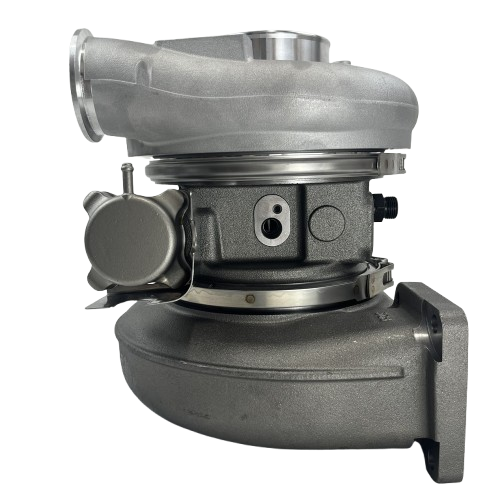
If you are deeply involved in truck modification and freight‑transport industries, or have long‑term exposure to foreign‑trade auto‑parts and turbo‑modification businesses, you must be familiar with “cargo‑box‑mounted turbochargers”. Many vehicle owners and modification practitioners share a common view: traditional engine‑bay turbocharger modifications are often constrained by space, heat dissipation and component interference, featuring high modification difficulty and high failure rates. In contrast, the cargo‑box‑mounted turbocharger modification solution perfectly avoids these pain points and has become a mainstream option for power upgrades on heavy‑duty trucks and special‑operation trucks in recent years. After reading this article, you will get practical know‑how and easily steer clear of modification pitfalls.
A common mistake many people make in turbocharger modification is rushing to install components as soon as they get them, which is the root cause of most modification failures. Cargo‑box‑mounted turbocharger modification is completely different from conventional engine‑bay turbocharger retrofits. It imposes higher requirements on installation space, fixing methods, heat‑dissipation conditions and component compatibility. Inadequate pre‑work will very likely trigger subsequent issues such as insufficient power, vibration and abnormal noise, air‑oil leakage, and premature turbocharger failure. To achieve a one‑shot successful modification, pre‑site survey, model selection and component preparation are all indispensable.
Many vehicle owners in the industry hold the misconception that a larger‑sized turbocharger delivers better power output. Drawing on our years of foreign‑trade service experience, blind selection of an oversized turbocharger will backfire. Not only will the engine fail to drive it, it will also increase vehicle load, raise fuel consumption and waste modification costs. For cargo‑box‑mounted turbocharger selection, only two key points matter.
Cargo boxes of different trucks vary drastically in dimension, structure and load‑bearing capacity, which directly determine the applicable turbocharger specifications. For small‑size ordinary freight cargo boxes, large‑flow turbochargers are unnecessary. The small‑and‑medium‑sized turbochargers we promote for foreign‑trade purposes are fully sufficient. They feature compact size and convenient mounting, do not occupy cargo‑carrying space, and meanwhile reserve adequate room for heat dissipation and maintenance. For large heavy‑duty cargo boxes and engineering‑special cargo boxes, high‑performance large‑flow turbochargers are acceptable. However, do not pack components tightly. Ventilation and maintenance clearance must be reserved to facilitate later‑stage servicing and repair.
Before modification, clarify your real‑world application scenarios and select models accordingly. For refrigerated trucks and special constant‑temperature cargo boxes, where the main goals are to optimize equipment energy consumption and stabilize unit operation, prioritize low‑rpm, high‑torque turbochargers. They deliver stable performance and fuel‑saving efficiency. For engineering‑operation trucks and heavy‑haul transport vehicles pursuing fast acceleration and ample power, choose turbochargers with fast response. They deliver instant power output and adapt to high‑intensity operating scenarios. When serving overseas clients, we always confirm operating conditions first before matching turbocharger models one‑on‑one to eliminate compatibility failures from the source.
Modification should never be done with tools and parts sourced on‑the‑fly. This not only slows down modification progress but also causes installation defects stemming from mismatched components or improper tools. Preparing complete tools and OEM‑grade components lays the foundation for efficient modification and fault prevention.
Conventional hand tools are sufficient, including open‑end wrenches, socket wrenches, Phillips and flat‑head screwdrivers, sealant, fixing cable ties and a spirit level. The spirit level is an easily overlooked yet critical tool. It guarantees level and neat turbocharger installation, and fundamentally prevents uneven lubrication, vibration and abnormal noise caused by tilted mounting.
Besides the turbocharger main body, special intake pipes, high‑temperature‑resistant exhaust pipes, reinforced mounting brackets, sealing gaskets and anti‑corrosion hose clamps must be fully prepared. Important reminder: Do not opt for low‑cost inferior sealing components. Inferior gaskets and sealing strips feature poor high‑temperature resistance. They tend to deform and crack under long‑time operation, resulting in pipeline air leakage, direct deterioration of turbocharger power output and secondary disassembly and repair work. The complete turbocharger kits we export for foreign‑trade purposes are all supplied with OEM‑grade matching components. Their sealing performance, high‑temperature resistance and anti‑vibration capability have passed strict testing, completely helping clients avoid component‑related pitfalls.

Once pre‑modification preparation is finished, proceed to core installation. The key focuses of cargo‑box‑mounted turbocharger modification lie in fixing, pipeline connection and wiring & commissioning. Each step follows strict practical standards. Follow the procedures step‑by‑step to ensure long‑term stable turbocharger operation.
A turbocharger is a high‑precision high‑speed rotating component operating at extremely high rotational speeds. Poor fixing will trigger severe resonance, which not only generates abnormal noise but also causes pipeline loosening and cracking, and even direct damage to core turbocharger components.
Prioritize flat, high‑load‑bearing side‑wall areas at the bottom of the cargo box. Keep well clear of cargo‑box door opening‑closing zones and core cargo‑stacking zones to prevent turbocharger impact and squeezing by cargo. If the cargo‑box bottom surface is uneven, install thickened steel plates for levelling to ensure even force bearing on the turbocharger and avoid component wear caused by localized stress.
Fasten the custom reinforced bracket onto the reference position of the cargo box with screws. After confirming no bracket wobble, mount the turbocharger main body onto the bracket. Tighten screws with moderate torque — secure fastening suffices; avoid over‑tightening which causes thread stripping. After installation, manually shake the turbocharger. Qualified fixing means no obvious displacement or wobble. Many overseas‑client failure cases stem from loose bracket screws leading to pipeline fracture, which demonstrates the great importance of this step.
Intake‑and‑exhaust pipelines serve as core channels for turbocharger power transmission. Poor sealing or unreasonable pipeline layout directly leads to turbocharger power attenuation and higher energy consumption, representing the most common post‑modification failure points.
During intake‑pipe installation, insert the pipe mouth deep into the turbocharger intake port, lock and secure with special hose clamps, and thinly apply sealant at joints for double‑layer leakage prevention. Arrange pipelines flat and smooth without bending or squeezing. Connect the other end precisely to the equipment intake port to ensure unobstructed air intake and maximize turbocharging performance.
Exhaust pipes work at extremely high temperatures. During installation, keep them far away from flammable items such as plastic parts and cartons inside the cargo box. For areas where avoidance is impossible, wrap high‑temperature‑resistant thermal‑insulation cotton for thermal‑protection purposes. Fit high‑temperature‑resistant sealing gaskets at pipe nozzles. After tightening hose clamps, carefully inspect joint gaps to rule out exhaust leakage. This ensures stable power output and eliminates safety hazards.
Wiring and commissioning constitute key closing‑off steps for modification. Poor attention to details may cause short‑circuits, startup failures and unstable power output. Rigorous commissioning allows pre‑emptive hazard identification.
Before any wiring work, fully cut off power supply to equipment and the turbocharger to eliminate short‑circuit and electric‑shock risks. Route power cables and control cables strictly in accordance with the wiring diagram in the product manual. Wrap joints tightly with insulating tape for waterproof and leakage‑proof protection, adapting to complex outdoor operating conditions.
After wiring completion, do not run under load directly. Conduct a 5‑to‑10‑minute no‑load test. Thoroughly check for turbocharger abnormal noise, air leakage and oil leakage. After confirming smooth operation, connect equipment and gradually increase load. Observe rotational speed and power‑output status to guarantee stable performance under both high‑and‑low‑load working conditions.
Drawing on our years of foreign‑trade modification‑service experience, most turbocharger failures encountered by clients are not product‑quality defects, but arise from modification‑operation and daily‑usage mistakes. The following high‑frequency pitfalls deserve special attention from all modification users.
Turbochargers working under high temperatures are prone to overheat protection and component burnout. Cargo boxes are relatively enclosed spaces with far poorer ventilation than engine bays, so heat dissipation must be prioritized. For enclosed cargo boxes, install small cooling fans to accelerate air circulation and assist turbocharger temperature reduction. Never mount the turbocharger in dead corners of the cargo box. Reserve at least 30 centimetres of clearance all around. Do not stack cargo or sundries nearby, so as to avoid forming a closed high‑temperature “heat trap” that causes turbocharger carbon deposition and component aging.
High‑intensity violent operation is one major cause of shortened turbocharger service life. After equipment startup, run at low speed for 1‑2 minutes to allow engine oil to fully lubricate internal bearings and gears before gradually increasing rotational speed. Never run at full load immediately after startup. Before power‑off upon operation completion, keep low‑speed operation for 30 seconds to 1 minute to allow turbocharger cooling and oil return before cutting power supply. This prevents poor lubrication and component wear caused by sudden shutdown.
Turbochargers do not require frequent complex maintenance, yet regular inspection and servicing are indispensable. Perform weekly routine inspections on turbocharger fixing screws and pipeline conditions; retighten loose components and repair deformed pipelines in a timely manner. Monthly, clean dust and debris off the turbocharger surface, check engine‑oil level and replenish compatible oil as needed to maintain normal lubrication and heat‑dissipation systems. Use low‑cost routine servicing to avoid expensive repair costs.
As an original‑equipment manufacturer specialising in turbocharger R&D, production and foreign‑trade export, we have accumulated years of industry experience and served truck‑modification clients across the globe. We have thorough knowledge of industry pain points and client requirements. Many generic turbochargers available on the market suffer from poor compatibility and insufficient durability, leading to frequent failures after modification. Our cargo‑box‑mounted turbochargers are custom‑developed for heavy‑duty truck operations and complex outdoor working conditions.
In terms of product quality, all our turbochargers adopt high‑precision machining technology with upgraded core components. They feature high‑temperature resistance, anti‑vibration performance and corrosion resistance, perfectly adapting to special cargo‑box‑mounted operating conditions with low failure rates and longer service life. In terms of compatibility, customisation is supported. We develop one‑on‑one dedicated turbocharger solutions according to different vehicle models, cargo‑box dimensions and operating scenarios, delivering stable power improvement without damaging the original vehicle engine.
In terms of services, we provide one‑stop foreign‑trade supporting services. Besides high‑quality complete turbochargerunits and OEM‑grade components, we offer professional modification guidance, technical Q&A and after‑sales adaptation support, helping domestic and overseas clients completely resolve difficulties in modification, compatibility and unreliable after‑sales services.
In summary, cargo‑box‑mounted turbochargers represent one of the most cost‑effective and best‑compatible power‑upgrade solutions for trucks at present. Free from engine‑bay space constraints, they deliver superior heat‑dissipation performance and stable power output. As long as you get model selection, installation and maintenance right, you can maximise turbocharger performance, boost transport‑operation efficiency and cut long‑term operating costs. If you have requirements or questions regarding cargo‑box‑mounted turbocharger modification, feel free to consult us. With years of expertise in foreign‑trade turbocharger businesses, we rely on product quality and market reputation to help you steer clear of all modification pitfalls.