chris@alfredturbo.com
+86-18112348562
Language
Please Choose Your Language

Views: 0 Author: Alfredturbo Publish Time: 2026-08-14 Origin: Site


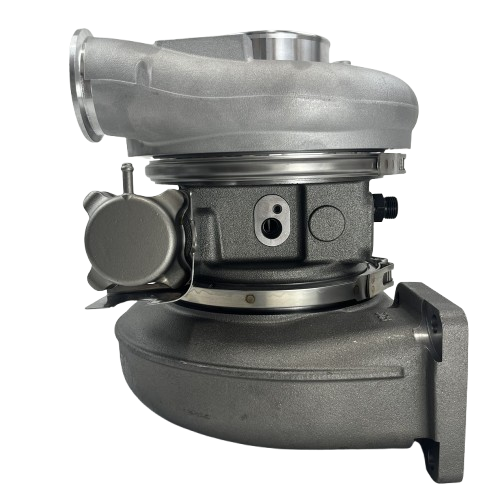
The engine is the heart of a truck, and the turbocharger is the "lung" of this heart. The greater the lung capacity and the more sufficient the air intake, the easier the heart operates, enabling the truck to run fuel‑efficiently, deliver strong power, and avoid excessive wear‑and‑tear.
Yet most truck users have fallen into pitfalls in real‑world operations: the turbocharger malfunctions frequently after short‑term use, with symptoms such as blue smoke, abrupt power drop, unexplained sharp rise in fuel consumption, and in severe cases, sudden breakdown on the road. Replacing a turbocharger costs at least several thousand and up to over ten thousand yuan, plus transport schedule delays. The combined downtime and maintenance costs make it a losing proposition in every calculation.
We are an original‑source foreign‑trade manufacturer specializing in truck turbochargers with over ten years of industry experience. We serve fleets and repair manufacturers worldwide and have witnessed countless cases of premature turbocharger failure and engine deterioration. 90% of these failures stem not from product quality defects, but from users’ poor vehicle usage and maintenance practices due to lack of understanding of turbocharger principles. Today we comprehensively break down the core value of turbochargers, elaborate on how they help trucks save fuel, boost efficiency and extend overall vehicle service life, and share easy‑to‑learn vehicle usage, maintenance and product‑selection tips to help users avoid pitfalls and cut operating costs while improving efficiency.
Many people only know that turbochargers "increase power", yet this is merely their basic function. For heavy‑duty trucks, the real core value of turbochargers lies in re‑utilizing waste energy, optimizing combustion and reducing engine load, fundamentally improving vehicle operating efficiency and extending equipment service life. No complex technical parameters are required; grasp its working logic and core advantages in plain language.
In a conventional naturally‑aspirated engine, combustion exhaust gas is discharged directly into the atmosphere, wasting massive thermal and pressure energy. Truck‑specific turbochargers feature an ingenious design: they are entirely driven by exhaust gas from the engine without consuming any extra fuel, achieving true waste‑energy recycling. Inside the turbocharger are two sets of impellers connected respectively to the exhaust pipe and intake pipe. Exhaust gas strikes the turbine impeller to rotate, which in turn drives the compressor impeller. The whole process delivers high conversion efficiency with zero additional energy consumption and excellent cost‑performance.
The key to engine power and fuel consumption lies in the mixing ratio of fuel and air. Naturally‑aspirated trucks rely on piston negative pressure for air intake, resulting in limited air supply. Fuel tends to burn incompletely, which not only wastes fuel but also generates substantial carbon deposits. The turbocharger actively forces sufficient fresh air into cylinders through pressurization, enabling full mixing and complete combustion of diesel and oxygen. For engines of the same displacement, trucks fitted with high‑quality turbochargers can achieve a 30%‑50% power increase, while eliminating black smoke and carbon deposits. This is the core logic behind the turbocharger’s energy‑saving and efficiency‑enhancing performance.
Trucks frequently operate under heavy loads, climbing slopes and running long‑distance continuous trips, exposing components to harsh conditions of high temperature, heavy load and intense vibration. This imposes extremely high requirements on turbocharger quality. Our foreign‑trade‑grade truck‑specific turbochargers abandon simple materials used in ordinary civil turbochargers. They adopt heat‑resistant, wear‑resistant and vibration‑resistant precision‑engineered materials, with structurally optimized designs for heavy‑duty truck applications. They can stably withstand long‑term high‑temperature and high‑pressure operation without premature wear, oil leakage or functional failure.
Many trucks suffer insufficient power and weak climbing performance when running on plateaus or mountainous areas due to thin air. Naturally‑aspirated engines experience severe performance degradation under oxygen‑deficient conditions. High‑quality truck turbochargers actively boost and supplement oxygen. Whether on plain highways, mountainous steep slopes or oxygen‑poor plateaus, they maintain stable power output and perfectly adapt to diverse complex transport conditions worldwide.
Turbocharging realizes the effect of "small horse pulling a large cart". A 2.8‑liter diesel engine fitted with a high‑quality turbocharger delivers power comparable to a 4‑liter naturally‑aspirated engine. The smaller‑displacement engine has lighter weight and lower baseline fuel consumption. Coupled with complete fuel combustion that eliminates waste, under identical load and road conditions, the truck’s comprehensive fuel consumption can be reduced by 3%‑8%. For long‑haul fleets, the fuel savings translate into considerable returns.
Most users hold the misconception that turbochargers "overstress" engine service life, yet the opposite holds true. Without a turbocharger, trucks must run at high engine speeds under sustained overload to maintain heavy‑duty power, accelerating component aging. Assisted by turbocharging, sufficient torque is available at low rotational speeds, keeping the engine operating steadily under light load and greatly mitigating wear on core components including pistons, cylinders and crankshafts. Meanwhile, complete combustion cuts exhaust particulate matter, easing operating pressure on DPF and SCR after‑treatment systems, lowering failure frequency and comprehensively extending overall equipment service life.
With years of experience in the foreign‑trade industry, we have handled numerous after‑sales inquiries from global customers. Many users complain about short service life and frequent failures of turbochargers and question product quality. Actual troubleshooting reveals that 90% of premature turbocharger scrapping is unrelated to product quality, but caused by improper vehicle‑usage and maintenance practices. The following high‑frequency misconceptions are top‑ranked turbocharger killers that all truck operators must avoid.
A turbocharger operates at rotational speeds of hundreds of thousands of revolutions per minute, relying entirely on engine oil for lubrication and heat dissipation. Immediately after a cold start, engine oil has not fully reached turbocharger bearings, leaving them under insufficient‑lubrication dry‑grinding conditions. Aggressive throttle input and high‑speed operation at this stage spin the turbocharger rapidly, causing violent friction on bearings lacking lubrication and resulting in irreversible wear. Repeated abuse leads to premature turbocharger aging, abnormal noise and oil leakage. The correct practice: allow 30 seconds‑1 minute of idling after cold start; extend idling to 2‑3 minutes in cold winter conditions until oil pressure stabilizes and bearings are fully lubricated before driving off.
Shutting down the engine right after high‑speed driving or heavy‑load climbing is a common habit among drivers. At this point, the turbocharger has just completed heavy‑duty work with local temperatures exceeding 900℃ and large residual waste heat inside. Immediate shutdown stops the oil pump and interrupts oil circulation. Heat inside the turbocharger cannot dissipate, and residual engine oil is baked into hard carbon deposits by high temperature. Accumulated carbon deposits seize bearings and block oil circuits, eventually causing turbocharger failure. The correct practice: maintain idling for 1‑2 minutes after heavy‑duty operation to provide heat‑dissipation buffer for the turbocharger. Vehicles equipped with new automatic delay cooling systems may relax this requirement appropriately; older vehicles must follow manual idling procedures.
Turbochargers operate under harsher conditions than engines. High temperature, high pressure and high rotational speed impose stringent requirements on oil quality. Conventional mineral oils feature poor high‑temperature resistance and oxidation resistance. Under turbocharger operating conditions, they deteriorate easily and generate sludge, triggering lubrication failure and bearing wear. To protect turbochargers, use full‑synthetic engine oil complying with original‑equipment manufacturer specifications. It delivers superior high‑temperature stability and fluidity and provides sustained premium lubrication protection for turbocharger bearings.
Many users delay oil‑change cycles or fit low‑quality aftermarket oil filters to cut costs, which constitutes a major trigger for turbocharger damage. Turbocharger bearings feature extremely small clearances. Even tiny metallic impurities and sludge particles scratch bearings, destroy dynamic balance and trigger turbocharger vibration, oil leakage and power degradation. Replace engine oil and high‑quality original‑spec filters strictly per manufacturer standards. Shorten maintenance intervals appropriately for heavy‑duty and dusty operating conditions. Develop the habit of checking engine‑oil level and condition before trips, and investigate turbocharger faults promptly upon detecting abnormal oil consumption.
The air filter acts as the "face mask" for the turbocharger. A heavily soiled, long‑unchanged air filter permits dust and particulate matter to enter the turbocharger with airflow. High‑speed rotating impellers are continuously abraded by particles, leading to blade deformation and destroyed dynamic balance, which further causes violent vibration and bearing damage. For dusty working conditions such as mining zones, construction sites and dirt roads, increase the frequency of air‑filter inspection and replacement. Inspect intake pipelines during every maintenance cycle to eliminate pipeline cracking and loose joint air leakage, preventing unfiltered air from entering the turbocharger and ensuring clean and stable air intake.

Most fleets focus maintenance efforts on major assemblies such as engines and gearboxes while overlooking turbocharger care. Turbocharger maintenance is not complicated. With targeted periodic inspections, a high‑quality turbocharger can easily achieve 200,000 to 300,000 kilometres of reliable service. Daily maintenance centres on three core priorities: identifying early warning signs, inspecting components and performing proper cleaning.
A properly‑functioning turbocharger only produces low, steady airflow noise. Sharp whistling sounds or metallic grinding noise usually indicate impeller deformation, excessive bearing clearance or impeller‑to‑housing contact. Stop the vehicle for immediate inspection to prevent fault escalation leading to total turbochargerfailure.
Blue exhaust smoke is a typical symptom of worn turbocharger seals allowing engine oil to seep into combustion chambers. Increased black smoke signals incomplete combustion and reduced turbocharging efficiency. If the vehicle exhibits sluggish acceleration, weak climbing performance, obvious power drop and simultaneous fuel‑consumption increase of over 10%, prioritize testing turbocharging pressure, impeller condition and wastegate valve status instead of first troubleshooting the engine. Most such issues originate from turbocharger aging and failure.
Turbocharger oil supply‑return pipes and wastegate valves are vulnerable components frequently overlooked in service. Blockage or leakage of oil supply‑return pipes causes insufficient turbocharger lubrication or accumulated oil leakage. Sticking or leaking wastegate valves result in excessively high or insufficient boost pressure, triggering power anomalies and engine faults. During routine maintenance, inspect oil pipes for deformation, blockage and leakage. Verify free wastegate‑valve linkage movement and actuator integrity without air leakage to guarantee stable turbocharger operation.
Oil sludge and dust tend to accumulate on the compressor intake side. Use dedicated turbocharger cleaner for gentle cleaning, assisted with soft brushes and compressed‑air drying. Never use hard tools such as steel wool for scrubbing, to avoid scratching precision impellers and damaging dynamic balance. Hard carbon deposits on the high‑temperature exhaust side are not recommended for disassembly and cleaning by end‑users, as improper handling may damage seals and upset dynamic balance. Entrust such work to professional repair facilities to avoid counter‑productive outcomes.
Even optimal vehicle‑usage and maintenance habits cannot compensate for inherent defects in inferior turbochargers. Low‑cost turbochargers available on the market generally suffer from poor‑grade materials, crude craftsmanship, inaccurate dynamic balance and inferior sealing performance. Even with careful maintenance, they will soon develop oil leakage, abnormal noise and power degradation. For durable, fuel‑saving turbochargers that protect engines, selecting high‑quality products from original‑source manufacturers is critical.
Given the hundreds‑of‑thousands‑RPM operating speed of turbocharger rotors, dynamic‑balance precision requirements are extremely stringent. Deviations of merely several milligrams trigger violent vibration and accelerated bearing wear. Every one of our foreign‑trade turbochargers undergoes single‑component and complete‑assembly dual dynamic‑balance testing before delivery, with tightly controlled tolerances. This fundamentally avoids vibration, abnormal noise and premature aging and ensures long‑term stable performance.
Core components adopt high‑end special materials. Compressor impellers are manufactured from aerospace‑grade forged aluminium alloy for light weight, wear resistance and impact resistance. Turbine‑side impellers are made of nickel‑based superalloy, capable of long‑term operation above 900℃ without deformation or aging. Matching seals employ high‑temperature‑resistant and wear‑resistant special alloys that maintain reliable sealing under high‑pressure and high‑temperature conditions and eliminate common oil‑leak failures.
Turbocharger costs are determined by materials, craftsmanship and testing procedures. Products priced more than 30% below mainstream market prices inevitably feature downgraded materials or workmanship with no guarantee of service life and reliability. Also reject "universal‑fit" turbochargers. Genuine turbochargers correspond to dedicated engine models and OEM replacement part numbers for precise vehicle‑application matching. All our products are supplied with complete model‑matching lists to prevent faults caused by incorrect fitting or poor compatibility. Furthermore, warranty serves as solid proof of quality. Our full product range comes with a 12‑month or 100,000‑kilometre warranty, far exceeding short‑term warranties offered by inferior alternatives and fully demonstrating product reliability.
As an original‑source manufacturer focused on truck turbochargers, we do not produce low‑cost universal accessories. We focus on R&D and production of turbochargers for heavy‑duty trucks, light‑duty trucks and construction vehicles. Our products fit all mainstream engine brands including Weichai, Yuchai, Cummins and Sinotruk and comply with emission standards across multiple countries worldwide. We provide one‑on‑one technical model‑selection services to accurately match turbocharger specifications according to customer vehicle and engine numbers. Supported by multiple overseas warehouse centres, we deliver fast global shipments. Regular‑specification items are shipped directly from stock to minimise vehicle downtime losses for customers. We also maintain a professional after‑sales technical team. We pursue long‑term stable supply‑chain partnerships with global clients rather than one‑off transactions.
Although the turbocharger appears to be a small truck accessory, it constitutes a core lifeline controlling fuel consumption, boosting power and safeguarding engine service life. It does not involve highly complex technical barriers, yet it is highly dependent on proper maintenance and product quality. Standardised start‑stop procedures, strict engine‑oil management, periodic maintenance and correct product selection enable turbochargers to operate stably long‑term and continuously deliver fuel savings, efficiency gains and vehicle protection for fleets. For all transport practitioners, investing in high‑quality turbochargers represents the lowest‑input, highest‑return approach to cut operating costs and improve efficiency.
If you are sourcing foreign‑trade‑specification turbochargers in bulk, or troubled by frequent failures and high fuel consumption stemming from inferior turbochargers, please feel free to contact us. Direct supply from original factory with controllable quality and complete after‑sales support, enabling every one of your trucks to travel farther, serve longer and generate greater profits.