chris@alfredturbo.com
+86-18112348562
Language
Please Choose Your Language

Views: 0 Author: Alfredturbo Publish Time: 2026-10-27 Origin: Site


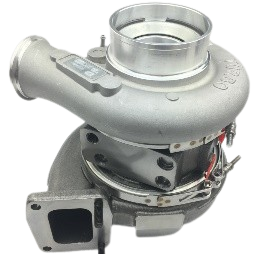
Turbocharger Actuator Fault Symptoms: Don’t Rush to Replace the Turbocharger. First Check If “The Hand That Pushes the Vanes” Is Worn Out. Many customers come to aftersales with the same complaints:
“No boost.”
“Turbo not working.”
“Check engine light, change turbo?”
But when we inspect, the turbocharger itself is often perfectly fine: no broken impeller, no loose shaft, no cracked housing.
This article is written in language repair shops can easily understand. It explains what symptoms show when the turbocharger actuator fails, what damage the turbocharger suffers as a result, when to perform repairs, when only the actuator needs replacement, and when the actuator and turbocharger must be replaced together.
Fixed-geometry turbochargers have no adjustable vanes. Many older turbochargers use vacuum capsule actuators that pull the wastegate open via vacuum suction, with simple logic. However, for modern VGT turbochargers, the ECU must continuously control vane opening, and the actuator handles the pushing action.
You can think of it this way: the ECU is the boss, the vanes are movable doors, and the actuator is “the hand that pushes the doors”. When the boss commands “open 20%”, the hand must push the door to 20%; when the boss says “open 80%”, the hand pulls back. Inaccurate movement leads to erratic boost pressure.
The advantage of VGT is: at low engine speed, the vanes narrow, speeding up exhaust gas flow so the turbocharger spools quickly. At high engine speed, the vanes open wide for smooth exhaust flow and prevent the turbocharger from being choked. The actuator itself does not blow air; it controls **the angle and speed at which exhaust gas hits the turbocharger**. Therefore, if the actuator malfunctions, boost pressure does not simply “disappear”, it becomes uncontrolled — boost fails to arrive when needed, or excess boost appears unexpectedly.
Electronic VGT actuators are widely fitted on diesel vehicles exported to Europe, America, the Middle East and South America. They contain not only connecting rods, but also small electric motors, reduction gears, position sensors, control circuit boards, plastic/aluminum alloy housings and a thin wiring harness.
Where do they work? Right next to the exhaust manifold. They are exposed to exhaust gas above 600°C, engine vibration, oil vapor, moisture and salt spray. So an actuator is not indestructible just because it has metal components. It operates in a high-heat, high-vibration environment with precision internal parts. Many overseas repair shops immediately order a new turbocharger once they see codes P2563 and P003A — but checking the actuator first can cut costs by half in many cases.
This is the most critical point: Actuator bad ≠ turbo bad.
There are three failure scenarios for a faulty actuator: First, the hand stops moving — vanes lock in one position. Second, the hand moves erratically — actual vane position mismatches ECU commands. Third, the hand receives movement instructions but cannot push — carbon deposits jam the vanes and drag the actuator into failure.
The third scenario is the most unfair: the turbocharger gets blamed, the actuator fails first, yet the root cause lies in poor engine maintenance. So when actuator fault codes pop up, do not condemn the turbocharger right away. Distinguish whether “the hand is sick” or “the door is seized up”.


A normal VGT vehicle should deliver strong power at 1200–1500 RPM. If the actuator fails to return correctly and the vanes do not narrow during takeoff, exhaust gas velocity cannot build up and the turbocharger refuses to spool. Customer descriptions are usually: “Like NA engine now.” “No bottom end.” “Pulling trailer feels dead.”
When measuring boost pressure in this case, you will often find: the ECU targets 1.4 bar, yet actual boost is only 1.1 bar and builds extremely slowly.
Power falls flat at high speed, even with the pedal floored
Conversely, if the actuator locks in the closed position and the vanes cannot open: performance may be acceptable at low RPM, but under heavy load, exhaust cannot escape freely, creating high backpressure and high exhaust temperature, and power hits a ceiling. The vehicle behaves like this: no reserve power when climbing; power remains suppressed even with full throttle; intercooler pipes may burst or clamps pop off; the ECU triggers overboost or high exhaust temperature faults and enters limp mode.
Many drivers assume “the turbocharger is too big”, but the real issue is the actuator locking the vanes shut.
Jerky acceleration, similar to transmission slip
When the position sensor of the actuator drifts, this occurs: the ECU commands 30% opening, but the sensor feeds back 45%; the ECU adjusts to 35%, and the feedback jumps to 50%. The result is fluctuating boost pressure and intermittent power delivery.
Overseas customers frequently misdiagnose this as: faulty transmission valve body, defective injectors, unstable fuel supply from the fuel pump, or dirty throttle valve. Use a scan tool to view “VGT command %” and “VGT actual %” — the two traces conflict instead of matching.
Electronic actuators run a self-check on power-up: a sequence of clicks as it cycles back to its home position; this is normal. But if the clicking lasts a long time every startup, continues when hot, or occurs during acceleration, watch for these issues: slipping gears, position mismatch, excessive play between the lever and unison ring, or sticky vane shafts that push back after the actuator moves them into place.
This noise does not come from the cylinder head; it originates beside the turbocharger housing. Experienced technicians can identify it immediately once they listen closely: “Actuator fighting the vanes.”
This is the classic early-stage actuator fault pattern: no issues when cold; P2563/P003A/P2262 codes trigger once hot; codes can be cleared for temporary operation; the fault returns after roughly 100 km; sometimes limp mode activates, sometimes full power remains available.
Why? The position sensor has not completely failed, only drifted; gears are not broken, just stiff. The ECU detects “I commanded 20%, feedback is 27%” and lights the warning lamp. Under different operating conditions, the system may barely pass checks again. This is the most cost-effective stage: carbon cleaning, recalibration, and inspection of power supply and ground circuits may resolve the problem without part replacement. Once full seizure happens, turbocharger replacement becomes part of the repair scope.
A practical field test: turn off the ignition, unplug the actuator connector, and gently push the turbocharger lever.
If it slides smoothly through the full travel, the vane mechanism is still serviceable. If it will not move, the vanes/unison ring are seized. If the lever moves freely but the actuator does nothing when powered, the fault lies with the actuator itself or its power/signal wiring. If the actuator hums but does not move, the motor spins while gears slip or jam.
We tell our overseas agents: Don’t blame the turbo before you touch the lever.
If the actuator cannot close the vanes sufficiently, boost pressure fails to build at low RPM, leading to insufficient air for the fuel quantity and black smoke. This is especially obvious during towing, hill climbing and hard acceleration: DPF soot loading rises rapidly, regeneration cycles increase, fuel consumption visibly climbs. Drivers suspect low common rail pressure, while the real root cause is the turbocharger failing to deliver enough air.
When the actuator locks closed and exhaust cannot evacuate freely, exhaust temperature spikes: turbocharger housing glows red; vane pivot points coke up faster; oil gums inside the bearing housing. Even a newly fitted turbocharger will seize quickly under these conditions. So do not assume “the actuator is only a control component and its failure won’t hurt the turbocharger”. If an actuator fault persists long-term, the turbocharger will inevitably suffer collateral damage.

This tops our rework failure statistics. Soot clogs vane pivots and stiffens the unison ring. The actuator must apply extra force for every movement, overheating the motor, wearing gears and creating position offset before finally throwing fault codes.
Customers say: “I bought your actuator 3 months ago, dead again.” When we disassemble the old turbocharger, we find the vanes cannot even be pried loose with a screwdriver. In this case, replacing a second actuator will not fix it. The correct steps are cleaning turbocharger vanes, inspecting the EGR system, air filter, oil consumption and sustained low exhaust temperature. Short-trip city vehicles are most prone to carbon buildup.
In short: The actuator is the first component to fail, not the first to develop the underlying fault.
No matter how heat-resistant the actuator housing is, these conditions will break it: exhaust manifold gasket leakage spraying hot exhaust directly onto the actuator; missing heat shield; aftermarket engine wiring with the actuator harness routed against coolant pipes; heavy hauling in summer heat in the Middle East and North Africa with exhaust temperature constantly peaking. Circuit boards and plastic parts inside electronic actuators drift in position, motor torque drops and gear grease dries out once temperatures exceed design limits. The actuator may power on normally but cannot push the vanes.
We have seen countless overseas cases: corroded green pins from water inside connectors; harness insulation melted by exhaust piping; cranking repeatedly with a weak battery; alternator voltage spiking to 15.8V; auxiliary loads such as spotlights, cabin heaters and refrigeration units fitted with messy grounding points. The actuator contains a sensitive small motor and fails first under unstable power supply. Symptoms include rough idle, surging acceleration and random fault codes. A brand-new actuator fitted without checking power supply and grounding is like pairing a new smartphone with a faulty power bank.
Most electronic VGT actuators require Actuator learn, VGT calibration and stop/max travel learning after replacement. Some also need coordination adaptation with the transmission and exhaust aftertreatment systems. Skipping calibration means the ECU cannot identify the zero reference position.
Result: The new actuator reaches 0% travel, but the ECU reads 15%; full pedal travel leaves the ECU believing there is still remaining stroke. The customer drives away and comments: “Same problem, your parts garbage.” The only missing step is calibration. Some actuators require pre-alignment before installation onto the turbocharger to let internal gears find the home position, followed by final calibration once assembled. Skipping this step makes a brand-new unit behave like a faulty one.

Do not rush to order parts. Follow this sequence first: 1. Power and signal: stable voltage, dry connectors, good grounding; 2. Vane mechanism: can the lever move? Heavy carbon buildup? Grooved unison ring? 3. Oil system: blocked supply filter, collapsed return pipe, coking in the center housing.
If these three areas have issues, replacing only the actuator is equivalent to pouring water into a leaking bucket.
You may replace only the actuator if all these apply: turbocharger wheel does not contact the housing; shaft clearance stays within specification; vanes move freely; the only fault is inoperative actuator, position drift or abnormal self-check noise; power supply and oil systems are healthy; post-replacement calibration can be completed.
This is the most cost-effective solution for customers: retain the original turbocharger body and replace only “the hand”. The prerequisite is that “the door” moves freely, and the new “hand” must learn its full travel limits.
Do not fit only a new actuator under these conditions: fully seized vanes; grooved unison ring; heavy coking lining the turbocharger housing; loose shaft or wheel-to-housing contact; oil leaking into the exhaust side with sludge covering the turbo end; two previous actuator replacements already performed with repeated failures.
Even ten new actuators will wear out rapidly if the vanes cannot move. The correct solution is overhaul or full replacement of the turbocharger assembly, paired with service for the EGR, air filter, engine oil and oil return lines at the same time.
Do not treat the actuator as a trivial small component, and do not use it as a scapegoat. When it fails, the vehicle behaves as if the turbocharger is broken — but actuator failure does not always mean the turbocharger is written off. Repeated actuator failure usually traces back to pre-existing faults in the vanes, EGR system, oil circuit or wiring harness. We sell turbochargers, yet we do not want you to discard an entire turbocharger just because of an actuator fault. Neither do we want you to cut corners on the actuator and pay dearly for vehicle downtime and repeat repairs. Replace only the actuator when appropriate, fit a full assembly when required, and clean the supporting systems first where needed. A reliable turbocharger supplier will not simply say “buy new”. Our first questions are always: Does the lever move? Is voltage stable? Are the vanes seized?
The actuator is the turbocharger’s hand. Numbness in the hand causes the vehicle to lose mobility.
Modern turbocharger bodies are highly durable: premium steel, precise balancing and bearing designs far superior to those from ten years ago. But within the VGT system, the actuator is the delicate component that always takes the blame. Loss of power gets blamed on it, black smoke gets blamed on it, check engine lights get blamed on it. Yet after disassembly, we often find vanes caked solid with soot, partially blocked return lines, a torn air filter and connector pins corroded green like old copper coins. The actuator is merely the first part to surrender.
That is why we often tell our customers: If the turbocharger is the heart, the actuator is the hand. When the hand hurts, don’t cut off the arm.
If you have fault codes, failed turbocharger cores, or repeat failures after actuator replacement, send us the following information: model/year, turbocharger part number, fault codes, whether the lever moves freely, black smoke or blue smoke, number of prior actuator replacements, and vehicle type (pickup/light truck/heavy truck/agricultural machinery/generator set). We will help you judge whether carbon cleaning, actuator-only replacement or full turbocharger assembly replacement is needed. Do not let “the hand that pushes the vanes” take the blame for faults originating from the whole engine system, and do not let a small actuator trigger costly fleet downtime.