chris@alfredturbo.com
+86-18112348562
Language
Please Choose Your Language

Views: 0 Author: Alfredturbo Publish Time: 2026-07-31 Origin: Site


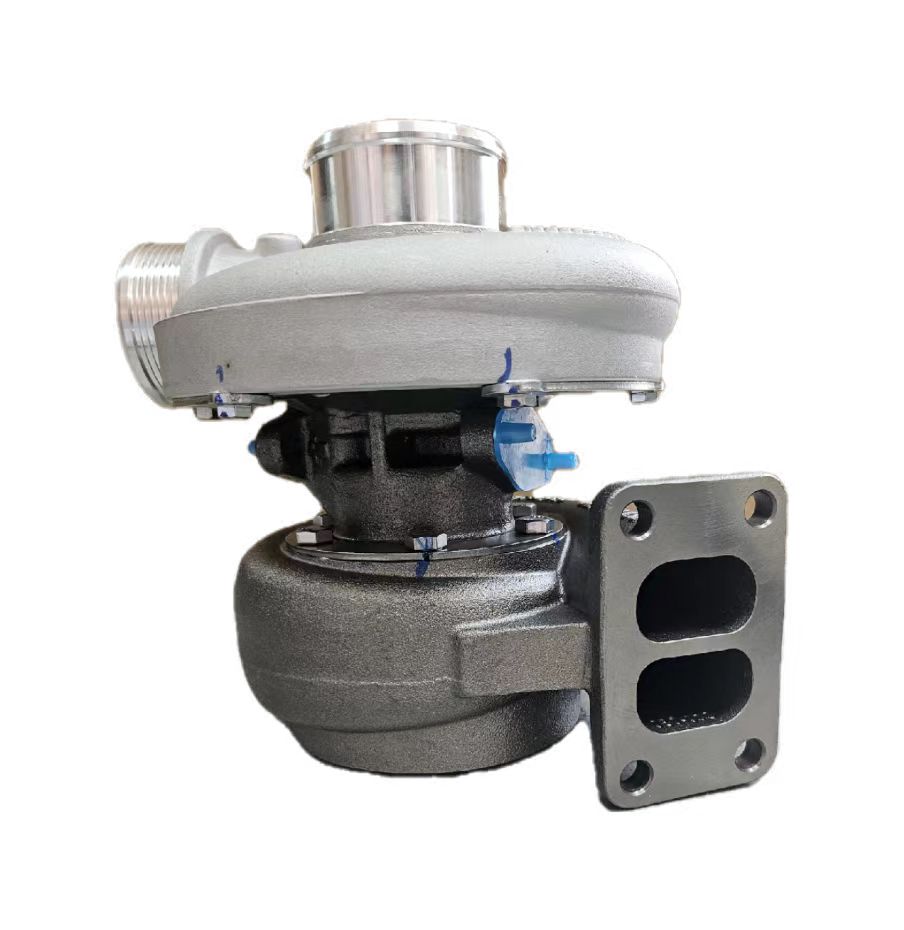
Most long-haul truckers have had this experience: while driving, an unusual noise suddenly comes from the engine compartment, triggering instant anxiety. It is hard to tell whether the sound is normal operational noise or a distress signal from faulty components. Among all parts, the turbocharger is most prone to misjudgment. It idles at tens of thousands of revolutions per minute and can exceed 100,000 RPM under heavy load, naturally generating more noticeable noise than ordinary components.
Many drivers either mistake normal turbocharger noise for faults and waste money on unnecessary garage visits, or overlook subtle abnormal sounds. Minor issues are left unattended until the turbocharger suffers complete failure, causing roadside breakdowns, delayed transport schedules and substantial financial losses. As an original manufacturer specializing in the production and export of truck turbochargers, we have dealt with countless truck repair cases worldwide. We fully understand that most premature turbocharger failures stem from misjudged abnormal noises, improper maintenance and delayed inspections. Today we will help you accurately distinguish normal turbocharger sounds from faulty noises, so you can self-inspect vehicle conditions easily and avoid operational risks.
Many truckers hold a misconception that a turbocharger should produce barely any noise, and they grow worried at every sound they hear. In fact, as a precision boosting component rotating at extreme speeds, noise during operation is completely normal. Normal turbocharger sounds share consistent features: steady, regular, non-shrill and free of stray noise, and they will not grow louder over time. There are three common types:
When the vehicle speeds up, climbs gradients or travels under heavy load, you can hear an even, mild high-frequency whistle similar to soft whistling. The sound becomes clearer with higher engine RPM and gradually fades after lifting off the accelerator. No miscellaneous noise occurs throughout the process.
This is the standard operating sound of a turbocharger. Essentially an air compressor, the turbocharger relies on exhaust gas to drive impellers to spin at high speed and compress intake air. Massive airflow rushing through pipelines naturally generates airflow whistling, acting as the "operation reminder" of the turbocharger. Smooth sound indicates the turbocharger is in good working condition.
After cold startup or while idling, faint airflow hissing may be heard near the turbocharger. This does not signal an air leak. In most cases, it originates from adaptive pressure adjustment of the turbocharger wastegate or residual airflow inside intercooler pipelines.
As long as the sound is faint and non-shrill, with no abnormal power output or fuel consumption, it is a normal physical phenomenon requiring no maintenance.
After turning off the engine, intermittent ticking noises come from the engine bay, which novice drivers often mistake for loose components. In reality, this is the normal thermal contraction of the turbocharger housing and exhaust pipe after high-temperature operation. It has nothing to do with internal component wear or turbocharger faults, and occurs on all truck turbochargers.


Fault noises differ fundamentally from normal sounds: they are abrupt, shrill and irregular, tend to intensify continuously, and are mostly accompanied by secondary symptoms such as power loss, surging fuel consumption and abnormal exhaust emissions. These are critical distress signals indicating severe turbocharger damage. The three most common abnormal noises are listed below. Truckers must memorize them and take timely action to avoid total turbocharger failure or even secondary engine damage.
A harsh, noisy "rustling" or "clicking" metal friction sound emanates from the turbocharger, entirely different from smooth airflow noise. The friction grows louder with higher engine RPM and heavier loads.
This noise mainly arises from worn floating bearings and insufficient lubrication. Turbocharger bearings operate continuously under extreme high temperature, high pressure and ultra-high rotational speeds, with the rotor suspended on an oil film. If engine oil is not replaced on schedule, inferior oil is used, or the oil filter becomes clogged, the oil film cannot form. The rotor will then rub directly against the bearing housing and create metallic scraping noise.
At the early stage, the noise only appears during hard acceleration and can be remedied with timely maintenance. If the noise is clearly audible even at idle, wear has reached an advanced stage. Continued driving may lead to rotor fracture, sending metal fragments into engine cylinders and resulting in exorbitant repair costs.
Distinct from the mild normal whistle, this screech is piercing and high-pitched, comparable to fingernails scraping a blackboard or a siren. It persists continuously and does not fade quickly after releasing the throttle; some vehicles produce this noise even at idle.
Two primary causes exist:
First, damaged intake pipelines, loose clamps or pipeline leaks allow pressurized boost air to escape and create sharp screeching, leading to insufficient boost pressure, weak climbing performance and higher fuel consumption.
Second, deformed rotor shafts, excessive bearing clearance or foreign objects entering the impeller cause impeller offset and contact with the housing. This fault carries extreme risks. Long-term impeller contact with the housing can trigger blade fracture, and debris sucked into the engine will cause irreversible damage. Do not continue driving once this symptom appears.
The original clean airflow sound of the turbocharger turns turbid and dull, accompanied by irregular muffled thumping, most noticeable when decelerating. Meanwhile, the vehicle suffers slow acceleration and weak performance under heavy loads.
It is mostly caused by carbon buildup clogging the turbocharger, stuck wastegate, or cracks and leakage on the turbo housing or exhaust pipe. Long-term use of inferior fuel and inefficient filters result in airway blockage and poor turbocharger operation. Exhaust cracks and leakage disrupt exhaust backpressure and reduce boosting efficiency. Delayed maintenance will expand cracks and eventually require full replacement of the turbocharger housing.
Judging faults solely by sound is prone to errors due to engine bay ambient noise and cab sound insulation. Experienced drivers diagnose turbocharger failures by combining sound, vehicle performance and operating status to accurately locate faults, preventing unnecessary expenses and hidden risks.
The core function of a turbocharger is to compress intake air and boost power. If abnormal noise coincides with obvious power drop: slower acceleration under full load, sluggish response during overtaking and unresponsive throttle, a turbocharger fault is highly likely. If the sound is normal with no power loss, excessive worry is unnecessary.
This is a classic diagnostic benchmark for turbocharger faults. Worn turbocharger sealing rings allow engine oil to seep into intake and exhaust channels and burn, resulting in blue exhaust smoke. Blue smoke during acceleration generally indicates intake-side seal failure, while smoke at idle signals more severe damage.
In addition, if oil consumption rises sharply without obvious external oil leakage, damaged turbocharger sealing components and oil ingestion can be confirmed.
Based on years of experience in turbocharger manufacturing and after-sales support for export businesses, the vast majority of turbocharger abnormal noises and failures are not caused by product quality defects, but improper daily maintenance. Proper basic maintenance can eliminate over 90% of minor turbocharger faults and significantly extend service life.
Engine oil acts as the core protective layer for the turbocharger. The ultra-high rotating speed imposes far higher requirements on oil than other engine components. Always use qualified fully synthetic oil, and replace engine oil, oil filters and air filters strictly according to mileage. Do not extend maintenance cycles. Inferior oil and overdue filters directly lead to insufficient lubrication and foreign particle ingress, triggering bearing wear and impeller damage – the top cause of turbocharger breakdowns.
Bear two critical operating rules in mind:
After cold startup, let the engine idle for 30 seconds to 1 minute before moving off, to allow full oil circulation and lubrication for the turbocharger and prevent dry friction under low temperature.
After long-distance high-speed or heavy-load driving, do not shut down the engine immediately. Maintain idle operation for 1 minute to let the turbocharger cool down and release pressure gradually, avoiding carbon buildup of high-temperature oil blocking oil passages and protecting core turbocharger components fundamentally.
Listen to the operational sound of the turbocharger before departure and after finishing runs. Once you detect sudden sound changes or unfamiliar stray noises, inspect pipelines and filter conditions promptly. Timely repair of minor faults can save huge maintenance costs and prevent roadside breakdowns during transport, safeguarding operational efficiency.
The sound emitted by a turbocharger directly reflects the power condition of your truck. Distinguishing normal operational noise from faulty sounds, mastering comprehensive diagnosis methods and adhering to scientific maintenance enable long-term stable operation of the turbocharger and substantially cut operational and maintenance costs.
As an established original manufacturer engaged in the truck turbocharger industry, we focus on R&D, production and export of turbochargers compatible with light, medium and heavy-duty trucks. Our products meet international quality standards, feature low failure rates and strong compatibility. We support bulk procurement and customized services, with products exported to numerous global markets.
If you are a trucker struggling to identify turbocharger abnormal noises, need a replacement for a damaged turbocharger, or have bulk purchasing demands, feel free to contact us. We provide professional technical support and high-quality turbocharger products to safeguard the power of every truck on the road.