chris@alfredturbo.com
+86-18112348562
Language
Please Choose Your Language

Views: 0 Author: Alfredturbo Publish Time: 2026-11-02 Origin: Site


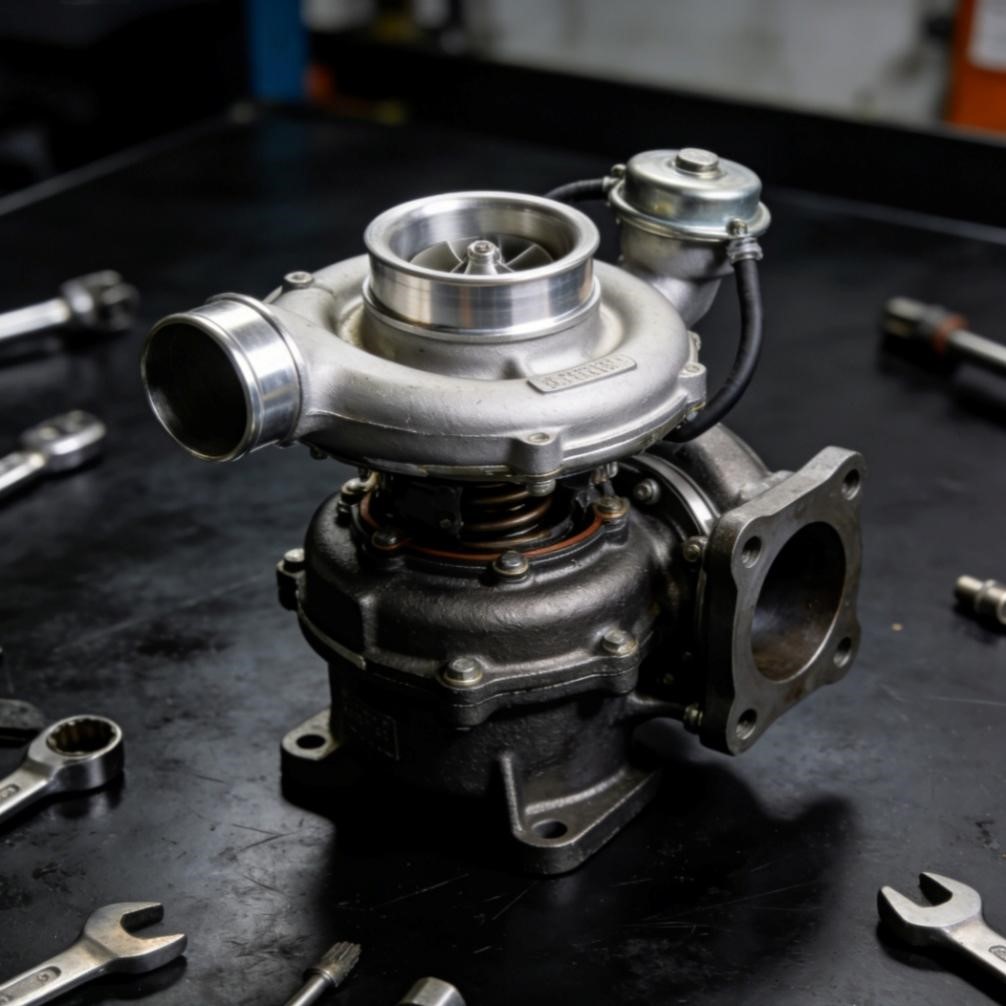
Most buyers simply define "proper fitment" as matching part numbers, tight flange connections and aligned bolt holes. As long as the part can be bolted onto the engine successfully, they consider the job done.
However, with more than a decade of experience manufacturing and exporting turbochargers, we have encountered countless field failures. The turbocharger fits perfectly on the engine, yet the vehicle suffers from sluggish takeoff, slow acceleration, black smoke, continuous overheating, and even premature oil leakage, whistling noise and bearing wear. The root cause always boils down to one single issue: they only ensured the turbocharger "can be installed", but never made sure it is "properly matched".
A turbocharger acts just like the lungs of an engine. If the lungs are too small, air intake becomes insufficient and the engine struggles to breathe. If the lungs are oversized, exhaust gas cannot spin the impeller under regular operating conditions. This is a classic case of "using a big horse to pull a small cart", which forces the turbocharger to run inefficiently most of the time, leading to high fuel consumption and accelerated damage. Perfect matching means the turbocharger operates right within the engine’s most frequently used RPM range, delivering snappy throttle response, steady air supply, and reliable performance even under prolonged heavy loads without overheating.
Today we will break down the complete logic of turbocharger-to-engine matching, helping you avoid costly selection mistakes and cut down on repair work and after-sales losses.
A turbocharger cannot generate power on its own. Its sole function is to use engine exhaust gas to spin the turbine wheel, forcing more fresh air into the cylinders. Better air-fuel mixing leads to more complete combustion and stronger power output. Therefore, the first step of matching is never picking turbochargerdimensions, but figuring out exactly how much intake air the engine requires under normal operation.
The industry has a common rule of thumb: fit small turbochargers to small-displacement engines and large turbochargers to large-displacement engines. This only serves as a preliminary reference and cannot be used directly for model selection. Take two 2.0L engines with completely different operating scenarios, and you will get drastically different turbocharger selections: Scenario 1: Light trucks and pickup trucks for urban delivery, mostly running between 1500–3000 RPM with frequent start-stop cycles. The core requirement is strong low-end torque and instant throttle response. Scenario 2: Construction machinery and generator sets, running steadily above 3000 RPM under continuous heavy load, prioritizing sustained high-RPM air supply without sudden power drop-off.
Selecting a turbocharger purely based on displacement will inevitably result in either an under-sized unit struggling to keep up or an over-sized unit lacking low-speed power. Displacement is only the starting point; the actual operating conditions determine the correct turbocharger model.
An engine spends 90% of its working life within a narrow RPM band, and only rarely reaches its maximum rated speed. Turbocharger matching must prioritize high-frequency operating conditions instead of tuning purely for peak horsepower.
Low-RPM focused equipment: agricultural machinery, diesel pickups, short-haul freight trucks. The turbocharger must build boost quickly at low RPM with virtually no lag, delivering sufficient torque for takeoff and hill climbing.
High-RPM focused equipment: racing builds, high-speed generator sets. The turbocharger can be tuned for later boost onset, sacrificing partial low-speed response to maintain continuous high-flow air supply at high revs.
When we prepare selection proposals for clients, we always first confirm application details: What RPM range does this engine operate in most of the time? Is it mostly short urban trips or long-distance heavy haulage? This is the fundamental premise of proper matching.
Before selection, you need to lock in your power upgrade goal: are you simply replacing the original turbocharger to maintain factory power output, or aiming for a 15%–20% horsepower increase? If you blindly crank up boost pressure to the maximum limit, even if the turbocharger can deliver sufficient airflow, the engine’s fuel supply system, cooling system, crankshaft and connecting rod assembly may not withstand the strain. Consequences include excessive intake temperature, engine knock, cylinder overheating and premature engine failure.
As a manufacturer, we always advise our customers to set boost pressure conservatively. Stick to mild, reliable power upgrades based on factory specifications instead of chasing peak power figures. Fix your boost target first, then select a turbocharger with the corresponding airflow capacity; this keeps your matching plan on track.

Once you have defined the engine’s air intake requirements, you can start selecting the right turbocharger unit. Three key factors determine fitment reliability; you do not need to memorize complex technical parameters, only understand the operating traits of the turbocharger.
The impeller is the rotating heart of the turbocharger. Impeller diameter directly determines boost build speed and maximum airflow capacity.
Small impellers: Low rotational inertia; only a small volume of exhaust gas is needed to spin the wheel. They deliver ultra-fast low-RPM boost with minimal turbo lag. The downside is that airflow quickly hits the ceiling at high RPM; power falls off when you step further on the gas pedal, just like a long-distance runner running out of stamina in the final stretch.
Large impellers: Capable of handling much higher exhaust gas flow, delivering sustained airflow and ample top-end power at high RPM. The downside is insufficient exhaust gas thrust at low revs; there is a noticeable delay before the turbocharger kicks in, which is commonly known as turbo lag.
Simple selection rule: Urban commuting, light-duty short-distance hauling, frequent start-stop → choose a small impeller for instant throttle response. Heavy-duty trucks, construction machinery, continuous high-speed heavy loads → choose a large impeller for sustained high-load power.
The A/R ratio is a critical parameter of the turbine housing. You do not need to dive deep into technical definitions; only focus on real-world performance outcomes.
Small A/R (narrow exhaust passage): Exhaust gas is concentrated to strike the impeller, so boost builds much earlier and low-end torque is significantly stronger. The drawback is restricted exhaust flow at high RPM, creating excessive backpressure, trapping heat and causing rapid temperature spikes inside the turbocharger.
Large A/R (wide exhaust passage): Exhaust gas flows freely without restriction, eliminating high-RPM backpressure and delivering strong top-end power. The downside is dispersed exhaust gas flow at low RPM, delaying turbocharger engagement and making the vehicle feel sluggish in city driving.
Our consistent selection principle: For regular road driving, opt for a moderately small A/R ratio. For long-distance highway hauling with continuous high loads, select a larger A/R ratio.
Every turbocharger has an optimal working window, commonly referred to as its "comfort zone". When the turbocharger operates within this range, air compression efficiency stays high, intake temperature remains low, bearing wear is minimized and service life is maximized. If the engine spends most of its working time on the left side of this efficient zone, insufficient airflow will trigger compressor surge and violent shaking. If operation stays on the right edge of the zone, airflow hits the maximum limit; no extra power can be generated even with more throttle input, and the turbocharger will overheat from overspeed.
The core of turbocharger matching is placing nearly all of the engine’s operating points right inside the turbocharger’s efficient range. If you only check whether the flange fits and ignore working condition matching, even the highest-quality turbocharger will fail prematurely.

We supply turbochargers to European and American performance shops, agricultural equipment distributors and heavy-duty truck parts wholesalers. We adopt completely different matching strategies for different customers; one-size-fits-all solutions never work for all engine models.
Applicable scenarios: Urban delivery vans, SUVs, light trucks and regular daily-driven vehicles.
Gasoline engines are highly sensitive to high temperatures. Excessively hot intake air will easily cause engine knock and cylinder damage. Turbocharger matching for gasoline engines must include sufficient safety margins: never set boost pressure to the absolute maximum. Do not skimp on intercooler specifications, and calibrate the wastegate to maintain stable pressure and avoid sudden pressure spikes.
Diesel engines are naturally better suited for turbocharging and deliver strong low-end torque. However, an overly small turbocharger will create excessive exhaust backpressure and trap excess heat; an overly large unit will result in weak low-speed power. For agricultural machinery and generator sets, we generally recommend Variable Geometry Turbochargers (VGT). Adjustable vane angles automatically adapt to operating conditions, ensuring strong low-end torque without high-RPM overheating, balancing responsiveness and durability perfectly.
Applicable scenarios: Modified racing cars, drag racing vehicles and competition-only machinery. These engines spend most of their time running at high RPM. Customers can tolerate moderate turbo lag, with the primary goal of maximizing peak horsepower and sustaining high airflow at high revs. We select large impellers and large A/R turbine housings for these builds, paired with upgraded intercoolers and reinforced fuel systems. For overseas performance aftermarket clients, we offer competition-spec turbochargers built to racing standards, not the specifications used for regular road vehicles.
Applicable scenarios: Long-haul heavy-duty trucks, construction machinery, marine auxiliary engines, running continuously under heavy loads for thousands of hours. These customers do not care about peak horsepower numbers; their top demand is tens of thousands of hours of continuous operation without breakdowns. Selection focus shifts away from pure airflow capacity toward heat resistance, dust resistance and sealing stability. High-temperature turbine housing materials, high-precision rotor balancing and reliable oil lubrication structures matter far more than raw airflow volume. Only by controlling exhaust backpressure and stabilizing bearing and oil seal performance can we drastically cut down on repair rates.
We have seen many cases where the turbocharger model was selected correctly, yet the engine still suffered from poor power, overheating and abnormal noise after installation. Troubleshooting revealed that the problem was not with the turbocharger itself, but poorly designed intake, cooling and pressure relief auxiliary systems.
Air temperature rises sharply after being compressed by the turbocharger. An undersized intercooler cannot lower intake temperatures effectively, reducing oxygen density and negating most power gains. If the intake piping has excessive bends or narrow pipe diameters, airflow becomes restricted, killing throttle response completely. When we deliver full solution packages to overseas clients, we always verify intercooler, air filter and intake pipe specifications to ensure the perfectly matched turbocharger is not held back by inadequate piping components.
The turbocharger rotor spins at up to hundreds of thousands of revolutions per minute, relying entirely on pressurized engine oil for lubrication and cooling. Insufficient oil pressure will cause rapid dry bearing wear. If you shut down the engine immediately after heavy-duty operation, trapped heat will bake carbon deposits onto the rotating shaft, seizing the turbocharger entirely. Our installation manual always includes strict operating guidelines: let the engine idle briefly after cold startup, and keep it idling for 1–2 minutes after long heavy loads before shutting down. Always use fully synthetic engine oil that meets OEM specifications. Proper lubrication and maintenance can double the service life of a turbocharger.
These two small valves directly determine operational stability.
Exhaust wastegate: Bleeds excess exhaust gas at high RPM to cap boost pressure at the set value and prevent over-boost engine damage.
Compressor blow-off valve: Releases high pressure instantly when the throttle is closed, protecting the compressor impeller from compressor surge and whistling noise.
Most cases of erratic boost pressure, whistling and vibration stem from improperly calibrated valves. Even the best turbocharger will suffer premature failure if these valves are not tuned correctly.
To avoid mismatches caused by only cross-checking part numbers, our factory follows a standardized inquiry verification process; we never quote or ship orders based solely on one part number. Every order requires confirmation of the following details one by one:
Basic engine parameters: Displacement, cylinder count, factory rated power and original factory boost pressure.
Daily operating conditions: Regular RPM range; short urban trips, long-distance heavy haulage or continuous industrial operation.
Power upgrade target: Direct OEM replacement to retain factory power, or horsepower increase (with specified percentage).
Fuel type: Gasoline, diesel or biofuel; high-altitude and high-temperature operating environments.
Physical installation dimensions: Flange type, oil inlet/outlet ports, cooling water ports and sensor mounting positions.
Auxiliary hardware conditions: Intercooler size, air filter grade, fuel system capacity and ECU tunability.
Operating environment: Dusty construction sites, high-temperature mining areas or regular highway use, plus continuous daily operating hours.
Once we receive this complete set of information, we deliver far more than just a part number: we provide a full matching solution. We specify whether to select a small or medium housing, prioritize low-speed response or sustained high-RPM power, and confirm whether the original mounting interface allows direct bolt-on installation without modification.
The best turbocharger is never the largest one, but the one perfectly tailored to your engine.
Let us circle back to our core point: never equate "boltable installation" with "proper matching". We can condense the entire matching logic into three simple rules: First, the turbocharger must build boost quickly within the RPM range where the engine spends most of its working life. Second, avoid undersizing the turbocharger (which creates exhaust backpressure and heat buildup) and oversizing it (which causes weak low-end power). Third, fully align intake, cooling and pressure relief auxiliary systems; only then can matching be fully realized.
As a direct manufacturer and exporter of turbochargers, we do not merely sell metal components to overseas distributors; we deliver complete engine air intake solutions. Our goal is to help our partners minimize after-sales repair work and customer complaints, ensuring every installed turbocharger delivers consistent long-term reliability and continuous revenue.
If you have engine specifications or original turbocharger part numbers on hand, send them over anytime. Our technical team will immediately analyze your requirements: whether to choose a small or medium turbine housing, whether to prioritize low-speed response or sustained high-load power, and whether the original flange can be fitted without modification.
Correct matching turns a turbocharger into a performance upgrade for your engine. Poor matching, even with the lowest purchase price, will lead to sky-high long-term repair costs that eat into your profit margins completely.