chris@alfredturbo.com
+86-18112348562
Language
Please Choose Your Language

Views: 0 Author: Alfredturbo Publish Time: 2026-10-30 Origin: Site


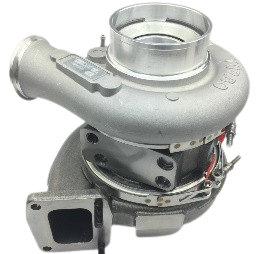
Many customers open their inquiry with one line: “Send me a cheap, bigger turbocharger.” But our usual response is to ask back: Where will this turbocharger be fitted? How is it used on a daily basis? What problem are you trying to fix?
A turbocharger is not a case of “bigger is better, more expensive is right”. It is much like a pair of shoes. No matter how impressive its specifications look, it is useless if it does not fit. Nine out of ten problematic orders stem not from poor product quality, but from an incorrectly selected model. Today we will break down clearly how to pick the right turbocharger.
The worst habit when choosing a turbocharger is copying what others use or simply picking one that looks large. After installation, you may face severe turbo lag, or the engine will feel choked at high revs. The root cause is skipping the first critical step: defining the selection scope based on the engine’s own data and real-world usage.
Direct replacement: The old turbocharger has failed, and you only want the vehicle restored to factory condition, with no engine modifications or ECU remapping. This is straightforward — buy the identical unit by referencing the original OEM part number.
Mild upgrade: The factory setup feels sluggish. You want snappier throttle response and stronger climbing power without major modifications. Choose an upgraded reinforced version for the same platform; do not blindly fit a larger turbocharger.
Performance tuning: Chasing higher horsepower, and ready to upgrade the intercooler, oil supply system, exhaust and ECU at the same time. This is the only scenario where we discuss fitting a larger turbocharger and adjusting the A/R ratio.
We have seen countless cases where a truck only needed a replacement part after breaking down, yet the owner fitted a high-flow turbocharger on advice. After installation, the vehicle lacked low-end torque, the malfunction indicator lamp stayed on, and the DPF triggered frequent regeneration cycles. No power gain was achieved, but new troubles arrived. For routine repair replacement, stick to original specifications. If upgrading, avoid jumping to an oversize unit.
A turbocharger’s operating personality matters more than its horsepower rating:
Urban driving / light delivery trucks: Frequent stop‑start traffic and low-speed manoeuvring. You need instant response. Select a smaller turbocharger with a low A/R ratio for quick spool-up.
Highway long-haul / heavy-duty trucks: The engine runs consistently at mid-to-high revs, requiring sustained pulling power. A moderately larger turbocharger is acceptable, but it must match the engine displacement and exhaust energy.
Construction machinery / agricultural equipment: Low operating RPM, heavy continuous load, dusty environments, and 10+ hour running cycles. The priority is durability, high-temperature resistance and carbon buildup tolerance, not peak power burst.
Tuning enthusiasts: Willing to sacrifice some low-end response for peak horsepower. Larger turbochargers, mixed-flow wheels and external wastegates become viable options.
Two vehicles with the same 2.0L displacement — a taxi and a track car — require completely different turbochargers.
When contacting us, avoid simply saying “I need a GT35”. Prepare these details first: engine model / original turbocharger part number, petrol or diesel application, regular load weight, terrain, whether you want factory restoration or improved performance, and whether the intake, exhaust, intercooler and ECU have been modified.
One easily overlooked detail: when you state a target of “400 hp”, clarify whether this is wheel horsepower or crank horsepower. The drivetrain consumes part of the power: roughly 10% loss for front-wheel drive, 15% for rear-wheel drive, and up to 20% for all-wheel drive. With clear targets, suppliers can narrow the options down to 2–3 suitable turbochargers, instead of sending you 20 random links.
The OEM part number carries the highest priority among all information, allowing us to lock in the full turbocharger assembly, actuator and accessory revision. If the OEM number is unavailable, send photos of the engine nameplate (model, displacement, rated power, emission standard) and the old turbocharger (full view, inlet/outlet flanges, actuator, engraved marking area) and we can still confirm the correct model.

Compressor side selection is relatively intuitive, as manufacturers usually state the horsepower range each compressor supports. The factor that makes or breaks matching is the turbine side: the A/R ratio of the turbine housing and turbine wheel geometry define real-world throttle response.
A smaller turbine wheel has lower inertia and spins with less effort, building boost at low engine speeds. Pros: snappy throttle, minimal lag, ideal for small displacements. Cons: it reaches its flow limit at high RPM and cannot supply enough air for high power output. Suitable for 1.5L–2.0L passenger vehicles, light trucks, urban delivery fleets and daily driving.
A larger turbocharger processes more exhaust gas and compresses more air, delivering strong pull at high revs. Pros: sustained high-RPM output and a higher horsepower ceiling, suitable for heavy-duty trucks and large machinery. Cons: it feels lethargic at low RPM with obvious lag; a small-displacement engine lacks sufficient exhaust energy to spin it properly. Without supporting upgrades such as oil system, intercooler and ECU calibration, overheating, oil leakage and knock are likely. Suitable for large-displacement diesel engines, heavy haulage and peak-power focused tuning builds.
The biggest misconception is “a bigger turbocharger automatically equals more horsepower”. A larger compressor wheel brings higher rotational inertia and slower spool. Most everyday driving happens between 2000 rpm and 3500 rpm — exactly the range where an oversized turbocharger performs poorly. Twin-scroll and twin-turbo setups exist precisely because a single large turbocharger cannot optimise both low-end response and high-end flow.
The A/R ratio refers to the ratio of the turbine housing inlet cross-sectional area to the turbine radius, generally ranging from 0.42 to 1.01. You do not need to master the formula; remember this practical rule:
Low A/R: A narrower inlet passage, easier to spool at low RPM with fast response, but restricted high-RPM flow which caps top-end power.
High A/R: A wider passage, delivering more airflow and higher peak power at high revs, but slower initial spool and dull low-speed response.
Choosing an A/R ratio means prioritising your regular operating RPM range, not chasing paper peak figures. If you mostly drive in stop‑start urban traffic or run a small-displacement engine, the quick response of a low A/R housing will make driving far more pleasant. If your use case is highway cruising, towing or track use, the high-flow advantage of a high A/R housing justifies the trade-off in low-end response.
Wheel shape and blade count also alter performance. Fewer blades (e.g. 9 blades vs 11 blades) offer better exhaust flow and higher high-RPM capacity, with slightly slower spool. More blades improve low-end response, at the cost of reduced peak high-speed flow. Two turbochargers that look identical externally can drive completely differently if the internal wheel and housing proportions differ. A well-matched turbocharger can keep lag below one second; a poorly matched unit creates the difference between instant acceleration on throttle input and a noticeable delay before power arrives.
When you press the throttle at low RPM, the vehicle hesitates sharply and surges only once revs rise → oversized turbocharger.
A 1.8L engine fitted with a large track-focused turbocharger feels slower than stock in daily use → mismatch.
Boost pressure fails to build while exhaust gas temperature runs high → insufficient exhaust energy to drive the turbocharger.
Conversely, if you lack power for high-speed overtaking and boost hits its ceiling with no further gain, your turbocharger is undersized. Simply put: fitting a large turbocharger to a small-displacement engine is not performance; it is a bottleneck.


Correct specifications deliver satisfying driving performance; poor material selection or improper installation may force a replacement again within one or two years. Turbochargers operate under extreme high-temperature and high-speed conditions, with vastly different environments for the turbine (hot) side and compressor (cold) side, so materials must be selected accordingly.
The turbine housing is exposed to hot exhaust gas reaching approximately 1050°C. Common turbine housing materials include silicon alloy and cast iron, while turbine wheels range from cast iron and cast steel to nickel-based alloy and titanium alloy. Under high-load or frequent start-stop cycles, standard materials suffer thermal fatigue and deformation easily. Nickel-based alloy maintains superior strength and fatigue resistance at high temperatures. If your engine runs with high boost and sustained high exhaust temperatures, prioritising hot-side material grade is a worthwhile investment.
The compressor side operates at much lower temperatures, with aluminium alloy as the mainstream material. It is lightweight, cost-effective and helps reduce rotational inertia. Titanium compressor wheels replace aluminium units for applications demanding enhanced low-cycle fatigue resistance. Most standard replacement and mild upgrade projects do not require titanium, though it is worth confirming wheel material for heavy-duty commercial or high-performance continuous operation.
A turbocharger rotor can spin over 100,000 RPM, with bearings and seals enduring extreme loads beyond conventional rotating components. Floating bearings rely on an oil film for load bearing and heat dissipation. Oil starvation or degraded lubricant causes rapid wear. Before first starting the engine after a new turbocharger fitment, pre-oiling the housing with a small quantity of engine oil is a low-cost practice that prevents dry start damage within the first few seconds of operation.
This is an extremely common pitfall for overseas buyers. Two turbochargers may look nearly identical in photos, yet exhaust flanges follow different standards including T25, T3, T4, T6 and V-band. A 2 mm deviation in bolt hole spacing prevents bolting up. Oil and coolant port orientation may clash with available clearance. Actuators can be pneumatic or electronic; incompatible signal protocols trigger fault codes. A matching flange only means physical fitment, not correct thermal-side matching.
Therefore, when submitting an inquiry, provide: multi-angle photos of the original turbocharger, OEM label part number, engine nameplate and emission tier (Euro 5 or Euro 6, critical for diesel engines). Euro 5 and Euro 6 turbochargers may share identical outer housings, yet differ internally in blade design and actuator logic. Fitting the wrong variant will fail emission compliance checks.
A turbocharger spinning at over 100,000 RPM fully depends on clean engine oil. When replacing a turbocharger, clean or replace the old oil feed lines. Metal debris from the failed old unit trapped in the lines will score the new bearing immediately on startup. Do not compromise on oil grade. Turbochargers are highly sensitive to oil cleanliness; poor-quality oil and neglected filter changes lead to premature bearing failure. For full-synthetic oil, service intervals should not exceed 8,000 km under normal conditions, reduced to 6,000 km for frequent short trips and congested urban driving. For continuous heavy-load applications such as farm machinery, heavy trucks and tropical climates, water-cooled or combined oil-water cooling is preferred. Oil cooling is acceptable for intermittent heavy workloads. After climbing a long grade or highway run, let the engine idle for one minute before shutdown, allowing oil circulation to dissipate residual heat from the turbocharger — a simple yet effective habit.
Supporting systems must cope with the increased airflow from an upgraded turbocharger: an ineffective intercooler negates compression gains. Leaky intake/exhaust piping and excessive backpressure drastically reduce turbocharger efficiency. If fuel delivery cannot match increased air supply, lean burn and misfire occur. ECU calibration is especially vital for variable geometry turbochargers (VGT); incorrect actuator tuning forces the engine into limp mode. Auxiliary components can remain stock for OEM replacement builds, but upgrading the turbocharger without matching supporting hardware is like fitting racing horseshoes to a donkey.
Even with the correct model selected, recurring installation or operational errors can shorten the service life of a properly matched turbocharger. Asking the right questions when sourcing helps you select and operate the unit correctly.
Oversizing is the most frequent mistake. When evaluating turbochargers, consider total cost of ownership. A unit 30% cheaper that fails after 30,000 km incurs extra freight, labour, downtime and customer complaint costs, making it more expensive overall. A premium unit that reliably runs 150,000–200,000 km delivers fewer returns, repeat orders and stable reputation.
Turbocharger remanufacturing service (replacing bearings, seals and compressor wheels as required, followed by rebalancing) normally costs 30%–50% of a brand-new unit. If your existing turbocharger only has worn bearings or seals while the housing remains intact, remanufacturing is usually more economical than full replacement. Check whether your supplier offers remanufacturing kits or overhaul services during your selection process.
The standard matching workflow is straightforward: you supply engine details and original turbocharger part number plus operating conditions; the supplier cross-references catalogues and shortlists 2–3 viable models; flange fitment, emission compliance, cooling configuration and actuator type are confirmed; small trial orders or sample shipments are arranged; on-vehicle feedback is collected before discussing bulk stocking. Reputable suppliers will not sell a universal one-size-fits-all product. No truly universal turbocharger exists; there are only varying degrees of matching suitability.
Sea freight containers carry high humidity. Products should be packed with desiccants, VCI anti-corrosion paper and custom foam positioning, accompanied by printed part number labels and installation instructions. Clarify three aftersales terms upfront: warranty duration, what counts as installation-caused failure versus manufacturing defect, and the fault diagnosis process (photo evidence, shaft end play measurement, oil service record review). Clear agreements prevent disputes later in cooperation.
The core principle for selecting a turbocharger can be summarised in one sentence: first define how much air your engine needs, then analyse how the vehicle is operated daily, and finally pick the turbocharger that operates harmoniously within those boundaries. Bigger does not mean more powerful, and higher price does not guarantee suitability. A well-matched small turbocharger delivers smooth operation; a mismatched large turbocharger only brings extra faults.
As a manufacturer with in-house production, quality inspection and direct export to overseas clients, our goal is not to push a trending model, but to supply turbochargers that remain trouble-free after fitment.
Next time before requesting a quotation, do not rush the process. Start your message with: “This vehicle runs under the following conditions…” We can then work through the model matching together.