Language


Views: 0 Author: Alfredturbo Publish Time: 2026-11-19 Origin: Site


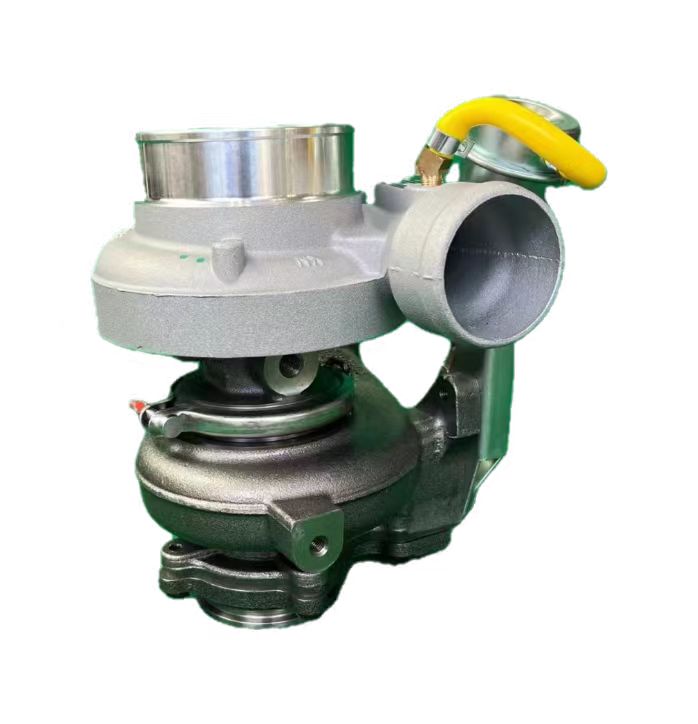
When configuring turbocharger for overseas customers, we often get this question: “Do you have a turbocharger matching XX horsepower?”
To be honest, selecting a turbocharger purely based on horsepower will almost always lead to poor matching. There is an essential difference between diesel engines and gasoline engines. Diesel engines run under heavy load for long continuous periods with much higher operating temperatures. If the turbocharger is too small, air intake will be insufficient and exhaust backpressure will build up. If the turbocharger is oversized, low-speed exhaust gas cannot spin the impeller, resulting in sluggish acceleration. Only a perfectly matched solution can balance power output, fuel consumption and service life.
We have been manufacturing and exporting turbocharger for more than a decade. We have served distributors of trucks, construction machinery, generator sets and marine equipment all over the world. We have seen countless customers suffer losses due to improper selection: some bought units according to the original OEM part number only to find they could not be installed directly; some blindly upgraded to larger-size turbocharger, only to end up with poor climbing power and continuous black smoke; others placed orders merely by appearance while ignoring differences in actuators and flange connections, which eventually led to product returns and rework.
Today we will go through the selection logic for diesel engine turbocharger.
Many customers immediately compare turbocharger sizes and pursue higher boost pressure without considering the inherent operating characteristics of diesel engines. Diesel engines rely on compression ignition, requiring far more intake air than gasoline engines. The turbocharger acts as the engine’s “respirator”, and matching quality directly determines overall engine performance.
Diesel engines operate under heavy load continuously with extremely high combustion chamber temperatures and sustained high exhaust gas temperatures. For this reason, the turbine housing of a diesel turbocharger must be made of high-temperature-resistant cast steel, and its bearings and oil seals must withstand prolonged high temperature and high pressure. Gasoline turbocharger mostly run at high speed intermittently with far lower heat resistance rating. Mixing them will easily cause oil leakage and turbine housing burnout.
Gasoline engines focus on peak power at high RPM, while diesel engines operate 80% of the time at low to medium RPM. A qualified diesel turbocharger prioritizes fast spool-up at low speed and stable operation without overheating under long-term full load, rather than peak horsepower. Using gasoline turbocharger selection logic will inevitably lead to power drop-off.
You can judge matching accuracy simply from vehicle performance without professional testing equipment:
Sluggish takeoff and weak climbing power: The turbocharger is oversized; low-speed exhaust gas cannot drive the impeller, resulting in severe turbo lag.
Persistent black exhaust smoke: Air intake cannot keep up with fuel injection, causing incomplete combustion — this is the most typical matching fault for diesel engines.
Consistently high exhaust temperature: Excessive exhaust backpressure traps heat, which will burn out the turbocharger housing and damage the cylinder head over time.
Frequent turbocharger whistling and oil seepage from seals: Long-term high-temperature overload accelerates seal aging, which stems directly from improper selection.
If two or more of these symptoms occur simultaneously, you should first check turbocharger matching instead of just replacing spare parts.
These two scenarios require completely different selection strategies; never mix them up.
OEM repair replacement: Strictly follow the original OEM part number and nameplate parameters. The original factory has already balanced low-end torque, boost pressure and exhaust backpressure, ensuring direct bolt-on installation and minimal failure rates.
Performance modification: You must upgrade the fuel injection system, intercooler and heat dissipation pipelines simultaneously. If you only install a larger turbocharger without upgrading fuel supply, more air without matching fuel will only worsen performance.

Never select a turbocharger solely based on horsepower. The core determining factors are equipment application, main operating RPM and continuous running time — this is always the first information we confirm when drawing up solutions for overseas customers.
For diesel engines with the same displacement, turbocharger selection varies drastically depending on application.
These vehicles run at steady cruising speed with stable load, prioritizing long-term operational stability and low exhaust backpressure. We recommend turbocharger with medium A/R ratio and low-inertia impellers, balancing throttle response and sustained air supply without overheating during prolonged high-speed operation.
Frequent stop-and-go operation requires rapid turbocharger spool-up. Turbocharger with small A/R turbine housing and compact impellers is the optimal choice, building boost immediately upon throttle input with no power delay.
These units run continuously at fixed RPM under full load with almost no fluctuation in working conditions. Fast throttle response is unnecessary; priority is given to high-temperature resistance and high steady-state efficiency to guarantee stable operation and avoid unexpected shutdowns.
These machines operate in dusty mine sites with high exhaust backpressure and full-load operation all day long. We prioritize thickened turbine housings and reinforced sealing structures. Do not chase theoretical power figures; durability is the top priority.
Do not only provide the maximum horsepower of the whole engine; send us the RPM range used in daily operation:
Does the engine mostly run at 1200–1600 RPM, or 1800–2200 RPM?
Do you mostly run fully loaded uphill or empty cruising?
Does the equipment operate at high altitudes? Thin air at high elevations requires readjustment of boost pressure.
The turbocharger is designed for the 80% of operating time. Choosing parts only based on maximum RPM will inevitably lead to insufficient low-speed power.
Engine displacement determines total exhaust gas volume, which sets the upper limit for turbocharger size.
Small-displacement diesel engines (light trucks, pickups, small agricultural machinery): Limited exhaust gas volume requires small-sized turbocharger to guarantee fast low-speed spool-up.
Large-displacement heavy-duty diesel engines (heavy trucks, construction machinery): Sufficient exhaust flow allows large-flow turbocharger to maintain steady air supply at high RPM.
Summary: Displacement determines the maximum size of the turbocharger, while main operating RPM determines throttle response.

After confirming engine operating conditions, focus on the turbocharger itself. Ignore exaggerated marketing claims; only three factors affect matching results: compressor end, turbine housing and structural type.
Impeller size directly determines air intake capacity, which always involves trade-offs with no perfect compromise.
Lightweight impeller spins easily with a small amount of exhaust gas, delivering fast low-speed spool-up and sharp throttle response. The downside is that air intake quickly hits the upper limit at high RPM, resulting in insufficient high-speed power. Ideal for short-distance urban vehicles with frequent stops and starts.
Higher airflow delivers strong sustained air supply at high RPM with ample power for heavy climbing. The drawback is that more exhaust gas is required to spin the impeller at low RPM, causing obvious turbo lag and sluggish takeoff. Suitable for long-haul trucks and continuous high-speed equipment.
Slow boost build-up when pressing the throttle at low RPM → impeller is oversized.
Power stagnation and sharp rise in exhaust temperature when accelerating at high RPM → impeller is undersized.
Fuel injection quantity dictates air demand for diesel engines. More fuel without sufficient air will definitely cause black smoke and damage the turbocharger.
You do not need to memorize the A/R ratio formula; just remember its real-world performance impact.
Narrow exhaust gas passages increase airflow velocity, enabling earlier turbocharger spool-up and strong low-end torque. However, high-RPM exhaust gas cannot flow out smoothly, sharply raising exhaust backpressure and leading to overheating and power restriction. Matched for urban delivery trucks and small-displacement diesel engines.
Wide exhaust passages enable smooth high-RPM exhaust flow, strong top-end power and lower exhaust temperatures. The tradeoff is slower spool-up due to insufficient low-speed exhaust gas velocity. Ideal for long-haul semi-trailers and large-displacement heavy-duty trucks.
⚠️ Important Note: A/R values from different brands cannot be compared horizontally. The same turbine housing may have different numerical standards across manufacturers; comparison must be limited to the same product series.
This is the most frequent question from overseas customers. The two structures each have advantages and disadvantages; select according to operating conditions and budget.
Simple structure, low failure rate, strong resistance to oil contamination and low maintenance cost, suitable for harsh construction site environments. It is the first choice for older heavy trucks, construction machinery and agricultural equipment with excellent cost performance. The wastegate automatically diverts excess exhaust gas at high RPM to keep boost pressure within a safe range.
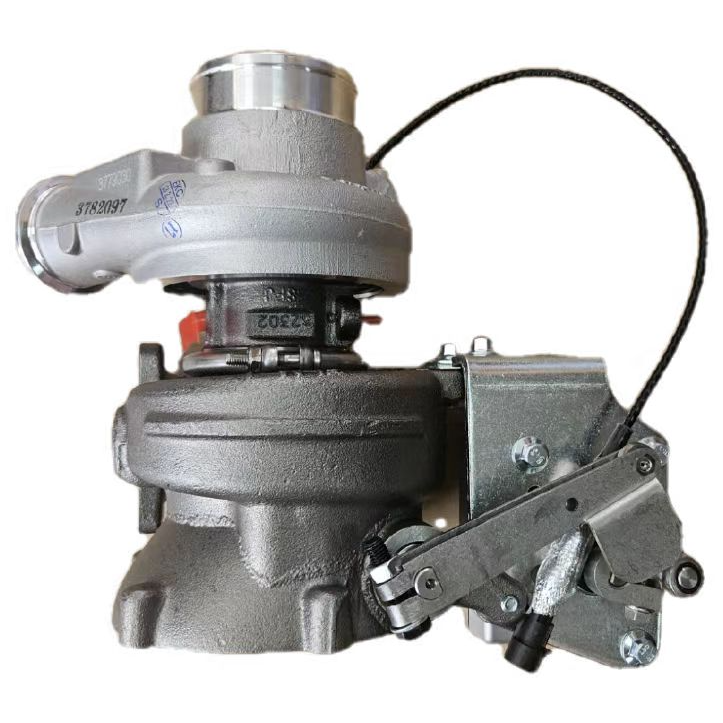
Adjustable vane angles: vanes narrow at low RPM to speed up turbocharger spool-up; vanes open wide at high RPM to reduce exhaust backpressure. One single turbocharger delivers both fast low-speed response and strong high-RPM power, making it the mainstream configuration for Euro VI and China VI new highway trucks.
However, VGT has prominent drawbacks: its precise structure requires extremely clean engine oil; oil sludge can easily jam the vanes. The electronic actuator must communicate and match with the original vehicle ECU; plug voltage and communication protocol must be fully compatible, otherwise the unit will not function properly.
Many customers find their new turbocharger develops oil leakage and wear after only a few thousand operating hours. In most cases, the turbocharger itself is not defective; the oil and air circuits were not inspected beforehand. Proper matching only completes half the work; supporting peripheral systems must meet standards to achieve the designed service life.
The turbocharger rotor spins at over 100,000 RPM, fully relying on engine oil for lubrication and cooling. Oil circuit faults will quickly lead to bearing seizure.
Clogged oil feed pipe and insufficient oil pressure: Dry bearing wear, with the worst damage occurring during cold starts.
Kinked or carbon-clogged oil return pipe: Poor oil backflow creates excessive pressure, forcing oil to leak out through the oil seals.
Mandatory installation requirement: Before fitting the turbocharger, fill clean engine oil into the oil inlet and manually rotate the impeller for pre-lubrication before starting the engine.
Compressed intake air reaches high temperatures; the intercooler cools the air down. If the intercooler is clogged or has poor heat dissipation, intake temperature rises, oxygen density drops, power output falls sharply and exhaust temperature spikes simultaneously.
Cracked boost hoses, loose hose clamps or cracked exhaust manifolds all lead to insufficient intake air and exhaust gas loss, producing exactly the same symptoms as a faulty turbocharger. We recommend customers perform a tightness test on the boost pipeline and confirm zero leakage before installing a new turbocharger.
Most turbocharger failures are caused by improper operation rather than normal wear and tear. We share three basic maintenance tips for overseas distributors:
Let the engine idle and warm up for 3–5 minutes after cold startup; avoid heavy throttle immediately after ignition.
Keep the engine idling for 1–2 minutes after heavy-duty high-load operation before shutting down, allowing the turbocharger to cool down gradually.
Strictly use engine oil meeting OEM specifications and replace oil filters on schedule; never use inferior lubricants.
Following these three rules can double the service life of the turbocharger.
We never quote blindly based only on engine model numbers. To provide an accurate one-off solution and reduce return risks, we require customers to submit all the following information at once:
Complete engine information: Brand + full model + production year (e.g. Cummins ISX15, 2016 model; do not only write ISX).
Original turbocharger information: Clear photos of the old turbocharger nameplate and complete OEM part number.
Equipment application: Long-haul transportation, urban delivery, generator set, marine vessel or mining construction machinery.
Operating conditions: Main RPM range, continuous full-load operation status, and high-altitude working environment.
Engine modification status: Whether fuel injectors have been replaced, ECU remapped or intercooler modified.
Procurement requirement: OEM replacement unit, remanufactured cartridge or performance upgrade version.
Electrical components: For VGT turbocharger, provide photos of the actuator plug, operating voltage and communication protocol.
Installation dimensions: Real photos of the turbocharger intake flange, exhaust flange, oil ports and water cooling ports.
Placing orders only based on the engine family model results in the highest return rate. The same engine model with different emission standards will have different wiring harnesses, actuators and housing interfaces; ordering only by model number often leads to wrong parts.
Let us go back to the opening question: How do you select a turbocharger for a diesel engine?
Three simple takeaways: First, the turbocharger must match the engine’s operating conditions for 80% of its runtime, not just peak horsepower. Second, balance impeller size and A/R ratio: avoid small units causing backpressure and overheating, and oversized units leading to weak low-speed performance. Third, proper matching is only complete when oil circuits, air circuits and cooling systems are fully qualified.
As a direct factory manufacturer exporting turbocharger worldwide, we rarely recommend high-horsepower performance models. We prioritize long-term stable operation and low after-sales failure rates. Overseas distributors fear unexpected equipment downtime most; production losses far outweigh the cost of spare parts once machinery breaks down on site.
A properly matched turbocharger delivers strong low-end power, stable high-speed operation without overheating, consistent fuel consumption and three years of trouble-free service. A poorly selected unit results in weak power, continuous black smoke, repeated oil leaks and endless after-sales disputes.
Feel free to send us your engine parameters and photos of the old turbocharger nameplate. We will help you accurately match impeller specifications and turbine housing A/R ratios, confirm direct bolt-on fitment, and deliver a reliable and durable turbocharger matching solution.