chris@alfredturbo.com
+86-18112348562
Language
Please Choose Your Language

Views: 38 Author: Site Editor Publish Time: 2026-03-06 Origin: Site


Brothers in the logistics fleet industry all understand one truth: time is money, and only when the wheels are turning can you make money. A semi-trailer over ten meters long can generate several thousand to over ten thousand yuan in daily revenue as long as it is running normally; but once the wheels stop, trouble comes—you not only fail to earn freight, but also have to pay the driver's salary and parking fees. If you delay the shipper's schedule, it is common to have freight deducted or orders lost. This is the "downtime loss" that troubles us the most.
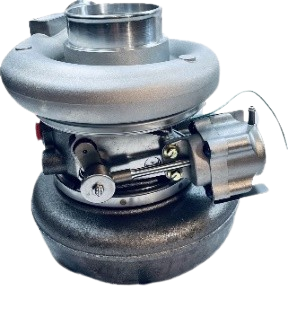
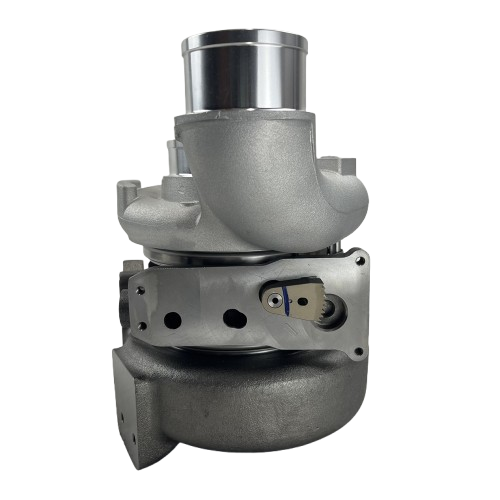
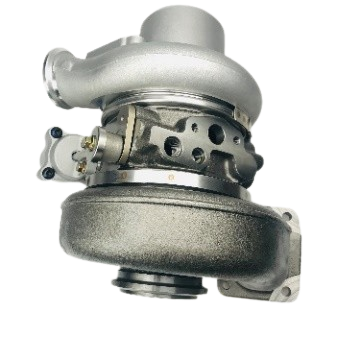
Many fleet owners focus their efforts on fuel consumption control, driver management, and route optimization, but overlook a small component hidden in the engine compartment—the turbocharger. It may seem insignificant, but it is the "heart and lungs" of the engine, equivalent to a "powerful blower" for the vehicle. It forces air into the engine to make diesel combustion more sufficient, giving the vehicle the strength to climb slopes, overtake, and carry heavy loads. However, if this small component is improperly selected and frequently malfunctions, the fleet will immediately fall into a vicious cycle of "repairing vehicles - downtime - losing money".
Today, I will integrate the core insights from the three articles in plain language and talk to you thoroughly: how to select and maintain turbochargers correctly to fundamentally reduce downtime losses, make your fleet run stably, earn more money, and spend less money and time on unnecessary troubles.
Many bosses do not have an intuitive understanding of "downtime loss" and always think, "It's just one day off, no big deal." But if you really figure out this account, you will know how distressing it is. A truck being out of service is not simply "not working"; instead, multiple losses add up. Especially for logistics fleets, downtime means pure loss, and only when the trucks are running can there be pure profit.
Let's take an ordinary heavy-duty tractor as an example to do a clear calculation:
1. Operational loss: On a normal working day, the freight is about 2,000 to 5,000 yuan. If the truck stops for one day, you earn one day less; if it is a fixed route, delaying the daily schedule will affect the connection of subsequent orders, and may even lead to the cancellation of long-term cooperation by the shipper;
2. Direct cost loss: The driver still needs to be paid even if he is idle, about 300 to 500 yuan a day. In addition to the labor costs of accompanying personnel and dispatchers, plus the vehicle loan and insurance, you have to pay these expenses even if the truck is stationary;
3. Maintenance and rescue costs: If the turbocharger breaks down, you may only need to replace parts for minor issues, with maintenance costs around 5,000 to 10,000 yuan. For major issues, it may cause collateral damage to the engine, and the maintenance costs can multiply several times. If the truck breaks down on the highway, the towing and rescue fees are an additional expense, ranging from several hundred to over a thousand yuan;
4. Penalty and reputation loss: Fresh food, express delivery, and less-than-carload (LCL) goods all have time-sensitive requirements. Being late will result in liquidated damages, ranging from several hundred to over ten thousand yuan. More importantly, a single delay or breakdown will directly reduce the shipper's trust. In the long run, customer loss and order reduction will lead to immeasurable losses.
Among the high-frequency faults of trucks, turbocharger problems are often troublesome. A considerable number of downtime incidents could have been avoided by "selecting the right turbocharger". Therefore, reasonable turbocharger selection is not about spending more money, but about avoiding unnecessary expenses and protecting our profits.
Many fleet owners have a misunderstanding: they think turbochargers are durable metal blocks that can be replaced with any random one when broken. In fact, turbochargers work in extremely harsh environments and can be called the "hardest-working" component in the engine.
Let's use a common metaphor: if the engine is the "heart" of the vehicle, then the turbocharger is the "lungs" of the vehicle. The heart is responsible for generating power, and the lungs are responsible for inhaling more air to make fuel combustion more sufficient, so that the vehicle has strength. However, the working intensity of these "lungs" is far beyond our imagination—its rotational speed can reach over 100,000 or even 200,000 revolutions per minute, and the working temperature is often above 700 to 800 degrees Celsius, which is equivalent to "rotating at high speed in a blazing fire" all the time.
Its normal operation relies entirely on the lubrication and cooling of high-quality engine oil. Once the engine oil is insufficient, the parts are mismatched, or the driving habits are poor, malfunctions are likely to occur. When the turbocharger fails, the most direct consequence is vehicle torque limitation. Today's electronic injection vehicles are very intelligent; if the air intake is insufficient, the computer will automatically reduce fuel injection to protect the engine. The result is: even if you step on the accelerator to the bottom, the vehicle speed cannot increase, and you will be honked by the cars behind when climbing slopes. At this time, the truck has to go to a service station, taking at least half a day and at most one or two days—this is real downtime loss.
More importantly, the quality of turbocharger selection directly determines its failure rate. It's like fitting a long-distance runner with a pair of ill-fitting shoes—they not only can't run fast, but also are prone to spraining their ankles (malfunctions). Selecting the right turbocharger is equivalent to fitting the vehicle with a pair of "fit and wear-resistant running shoes", which can make it run stably and have fewer problems.
Many fleets are often casual when replacing turbochargers to save money or trouble, but they don't know that this is laying hidden dangers for future downtime. Combining the practical experience from the three articles, we have summarized 4 common pitfalls that everyone is likely to step on—be sure to avoid them!
This is the most common and fatal pitfall. Some mechanics or parts dealers will say: "They are all engines of this series, universal, just install it!" Don't believe this. Even if the engines are identical, the parameters of the original turbochargers equipped by the manufacturer have slight differences due to different usage scenarios (for example, some run on mountain roads in Yunnan, Guizhou and Sichuan, while others run on plains in Jiangsu, Zhejiang and Shanghai).
Turbochargers and engines are "original partners" and must accurately correspond to displacement, model, and pressure parameters. Installing a large turbocharger on a small-displacement engine will cause power lag, weak climbing ability, and may even damage the engine. Installing a small turbocharger on a large-displacement, heavy-duty vehicle will lead to insufficient air intake and soaring fuel consumption. The turbocharger will work under long-term overload and will leak oil, make abnormal noises, or even be directly scrapped soon.
Some bosses also choose "universal models" for convenience. Although it seems to save time, it actually doubles the failure rate of the turbocharger. The subsequent downtime losses and maintenance costs are far more than the time and money saved.
Some fleet owners, in pursuit of fast acceleration, equip heavy-duty tractors with turbochargers designed for light buses—this type of turbocharger has a fast response but small air volume. It runs well on flat roads, but when climbing long slopes under heavy load, the air intake cannot keep up, the exhaust temperature is too high, which directly burns the turbocharger red and breaks the blades, leaving the vehicle stranded on the spot.
On the contrary, installing a large turbocharger on a light truck, although powerful, has a late turbo intervention. For urban distribution that requires frequent starting and stopping, the turbocharger cannot play its role at all. It is also prone to rotor shaft wear and oil leakage due to long-term low-speed operation, which will also cause malfunctions.
The core problem is: the "ability" of the turbocharger does not match the "workload" of the vehicle. Long-term overload or underload operation will naturally lead to failures.
The turbocharger market is very mixed now, with counterfeit products costing several hundred yuan and genuine products costing several thousand yuan. Many bosses think "save as much as possible" and buy cheap no-name or inferior remanufactured parts. Although it seems to save 500 yuan, you may have to spend 5,000 yuan or more later.
Most inferior turbochargers use low-quality bearings and ordinary cast iron, and their dynamic balance is not well done. During high-speed operation, a slight imbalance will cause the rotor shaft to break or even pierce the cylinder block. Moreover, such turbochargers cannot withstand high temperatures and wear, and will have problems in two or three months. If they suddenly fail on the highway and the vehicle is stranded, the towing fee + maintenance fee + liquidated damages will be more than ten times that of buying genuine products.
When buying a turbocharger, we should not only look at the purchase price, but also calculate the "total life cycle cost"—genuine turbochargers are more durable with lower failure rates. Although the unit price is higher, they can avoid frequent maintenance and downtime, which is more cost-effective in the long run.
Sometimes, if the turbocharger breaks down, it is not necessarily due to its own poor quality, but caused by the engine "being sick". For example, dirty engine oil, air leakage in the intake pipeline, or insufficient oil supply pressure of the oil pump—these problems will all lead to turbocharger damage.
If these root causes are not resolved, installing a new turbocharger is like inserting a new candle into a broken candlestick. Before long, the new turbocharger will be scrapped again due to lack of oil or inhalation of impurities. Secondary downtime and secondary maintenance will directly double the loss. Therefore, before replacing the turbocharger, you must first check the relevant components of the engine to eliminate the root causes.
You don't need to understand complex technology to select a turbocharger. Remember these 4 core principles, and bosses, purchasers, and drivers can quickly judge to fundamentally reduce the failure rate.
Unless you have professionally upgraded the vehicle's power as a whole (such as ECU tuning, changing fuel injectors, etc.), you should first choose the original model of the turbocharger. The original data is obtained by the manufacturer through tens of thousands of hours of bench tests, which perfectly matches the working conditions of your engine and is the safest and most reliable choice.
How to confirm the original model? The simplest way: check the part number on the nameplate of the old turbocharger, or directly report the frame number to a regular service station for inquiry. Even if you spend a few dozen yuan more to confirm, it is more cost-effective than replacing the wrong model and causing further downtime.
Remember: Only well-fitting shoes do not rub the feet; only matched turbochargers do not fail.
Different operating scenarios have completely different requirements for turbochargers. Selecting turbochargers according to routes and working conditions can double efficiency and halve failures.
If your fleet runs on mountainous heavy loads all year round (such as routes in Yunnan, Guizhou and Sichuan), you should choose a turbocharger with fast low-speed intervention, sufficient power, and strong resistance to thermal attenuation—this type of route imposes the greatest load on the turbocharger. Only turbochargers with good blade materials and high temperature resistance can withstand long-term high-load operation;
If the fleet runs on plain long distances all year round (such as trunk lines in Jiangsu-Zhejiang-Shanghai and Beijing-Tianjin-Hebei), choose a durable, stable, and fuel-efficient turbocharger, focusing on long-distance reliability, which can not only reduce failures but also lower fuel consumption;
If it is for urban distribution and short-distance transportation, choose a turbocharger with fast response and start-stop friendliness, which is suitable for the working conditions of frequent starting and stopping, avoiding carbon deposition and wear caused by long-term low-speed operation of the turbocharger.
When selecting a turbocharger, brand and after-sales service are more important than price. Prioritize original supporting or well-known brands, which are more guaranteed in materials, precision, and durability testing, with lower failure rates. At the same time, understand whether the brand has sufficient service outlets and parts supply in your main operating area—if you have to wait half a month to get parts when the turbocharger breaks down, no one can bear the loss.
In addition, prioritize turbochargers with more outlets, sufficient parts, and fast maintenance. Even in remote areas, you can quickly find maintenance parts and repair them the same day, minimizing downtime.
When removing the old turbocharger, check the following items by the way to avoid secondary failures:
Is it time to change it? Is the engine oil dirty? It is best to do maintenance by the way and replace it with new engine oil and oil filter—high-quality engine oil's oxidation resistance and high-temperature coking resistance are the keys to protecting the turbocharger;
Check if there are cracks in the pipes from the air filter to the turbocharger and if the clamps are loose. If there is air leakage, sand and dust will enter, and the new turbocharger will be scrapped in a few hours;
Ensure that the oil return pipe is unobstructed. If it is blocked, the engine oil cannot be discharged, and the turbocharger will leak oil, which will then cause malfunctions.
Selecting the right turbocharger is only the first step. To make it have a long service life and fewer breakdowns, simple daily maintenance is essential. It does not require complex operations; drivers can do it in a few minutes before and after departure, but it can double the turbocharger's service life and further reduce downtime risks.
Turbochargers rely entirely on engine oil for lubrication and cooling. Choosing the wrong engine oil or not changing it in time is the number one cause of turbocharger damage.
Be sure to use fully synthetic or semi-synthetic engine oil of the grade specified by the engine manufacturer. Especially for high-supercharged engines, high-quality engine oil can withstand high temperatures and reduce wear;
Strictly abide by the specified oil change cycle, whichever comes first—mileage or time. For harsh working conditions such as long-term heavy loads and heavy dust, shorten the oil change cycle;
Check the oil dipstick every day before departure to ensure that the oil level is within the normal range. Insufficient engine oil is a "quick death sentence" for the turbocharger.
Many drivers' driving habits are quietly damaging the turbocharger, especially these two misunderstandings—be sure to correct them:
① Do not step on the accelerator violently when cold starting: After starting, idle for 1-2 minutes to allow the engine oil to circulate to the turbocharger bearings and establish an oil film before starting slowly to avoid dry friction damaging the turbocharger;
② Do not turn off the engine immediately after long-distance driving: After driving on the highway or climbing slopes under heavy load, idle for 2-3 minutes to cool down the turbocharger, avoiding engine oil coking and carbon deposition caused by high temperatures. Many new cars now have a "delayed cooling system", but developing a good habit is always correct;
In addition, avoid long-term low-speed and low-load operation, and do not accelerate or decelerate sharply frequently to reduce severe load changes of the turbocharger, which can extend its service life.
The turbocharger's blades rotate at an extremely high speed. Even a little dust or gravel inhaled will damage the blades like bullets, leading to turbocharger damage. Be sure to clean or replace the air filter on time; do not wait until the instrument panel alarms. You can also simply check it before departure to avoid air filter clogging.
At the same time, regularly check the intake pipeline for air leakage and the intercooler for clogging, as these will affect the turbocharger's efficiency and service life.
Many vehicles now have on-board intelligent systems. You can pay more attention to real-time engine data at ordinary times, such as turbocharging pressure and intake air temperature. If you find abnormal fluctuations in pressure or if it fails to reach the calibrated value, it may be an early signal that the turbocharger or related systems have problems. Conduct timely maintenance to avoid minor problems turning into major failures and reduce unplanned downtime.
Let's do a long-term calculation again, and you will find that paying a little more attention and investment in the turbocharger will bring extremely high returns.
Suppose a fleet of 20 vehicles, previously due to improper turbocharger selection and inadequate maintenance, each vehicle was out of service for an average of 1 day per month due to turbocharger failures, with an average maintenance cost of 8,000 yuan per time. After optimizing selection and maintenance, each vehicle may have a turbocharger-related failure only once every six months, and the downtime is shortened to half a day.
Let's make a comparison:
Before optimization: 20 vehicles × 12 months × (1 day of downtime loss 2,000 yuan + maintenance cost 8,000 yuan) = 20 × 12 × 10,000 = 2.4 million yuan/year;
After optimization: 20 vehicles × 2 times/year × (0.5 days of downtime loss 1,000 yuan + maintenance cost 8,000 yuan) = 20 × 2 × 9,000 = 360,000 yuan/year;
In one year, you can save 2.04 million yuan just on turbocharger-related downtime and maintenance costs! This does not include additional benefits brought by reduced fuel consumption, extended engine service life, and increased orders.
Moreover, the optimized turbocharger can make the engine combustion more sufficient, reducing fuel consumption by 1-2 liters per 100 kilometers. For 20 vehicles running a year, it can save hundreds of thousands of yuan more in fuel costs. Reduced engine load extends the overhaul cycle and increases the residual value of the vehicle—these are all real profits.
Therefore, reasonable selection and careful maintenance of turbochargers are not about spending money, but about turning every cent into long-term returns, ensuring the continuity and reliability of fleet operations—which is the core competitiveness of logistics enterprises.
The logistics industry is becoming increasingly competitive. Cost reduction and efficiency improvement are not empty slogans, but require attention to every small component. Although the turbocharger is small, it directly determines whether the vehicle can run, how long it can run, and whether it loses money. It is not a simple part, but a key system related to power, fuel consumption, and especially attendance rate.
For our logistics fleets, behind every vehicle is the responsibility of supporting families. Every downtime is a real loss. Reasonable turbocharger selection seems to be selecting a part, but in fact, it is checking the fleet's attendance rate and profit margin.
I hope from today on, everyone can remember these points:
1. When buying a vehicle or replacing a turbocharger, ask more about matching and reliability; do not be greedy for cheap or make do;
2. When doing maintenance, pay close attention to engine oil quality and oil change cycle—this is the key to protecting the turbocharger;
3. In management, include the turbocharger's "start-stop habits" in driver assessment and training to develop good driving habits.
Treat the vehicle as a partner to make money, not a cost to consume. Reasonable selection and careful maintenance of your turbocharger will protect the rolling wheels of the fleet and the stable profits in your pocket.
Finally, I wish every logistics fleet can avoid those turbocharger pitfalls, have less downtime, run more jobs, make stable money, keep the wheels turning, and have a steady flow of wealth!