chris@alfredturbo.com
+86-18112348562
Language
Please Choose Your Language

Views: 0 Author: Alfredturbo Publish Time: 2026-07-13 Origin: Site


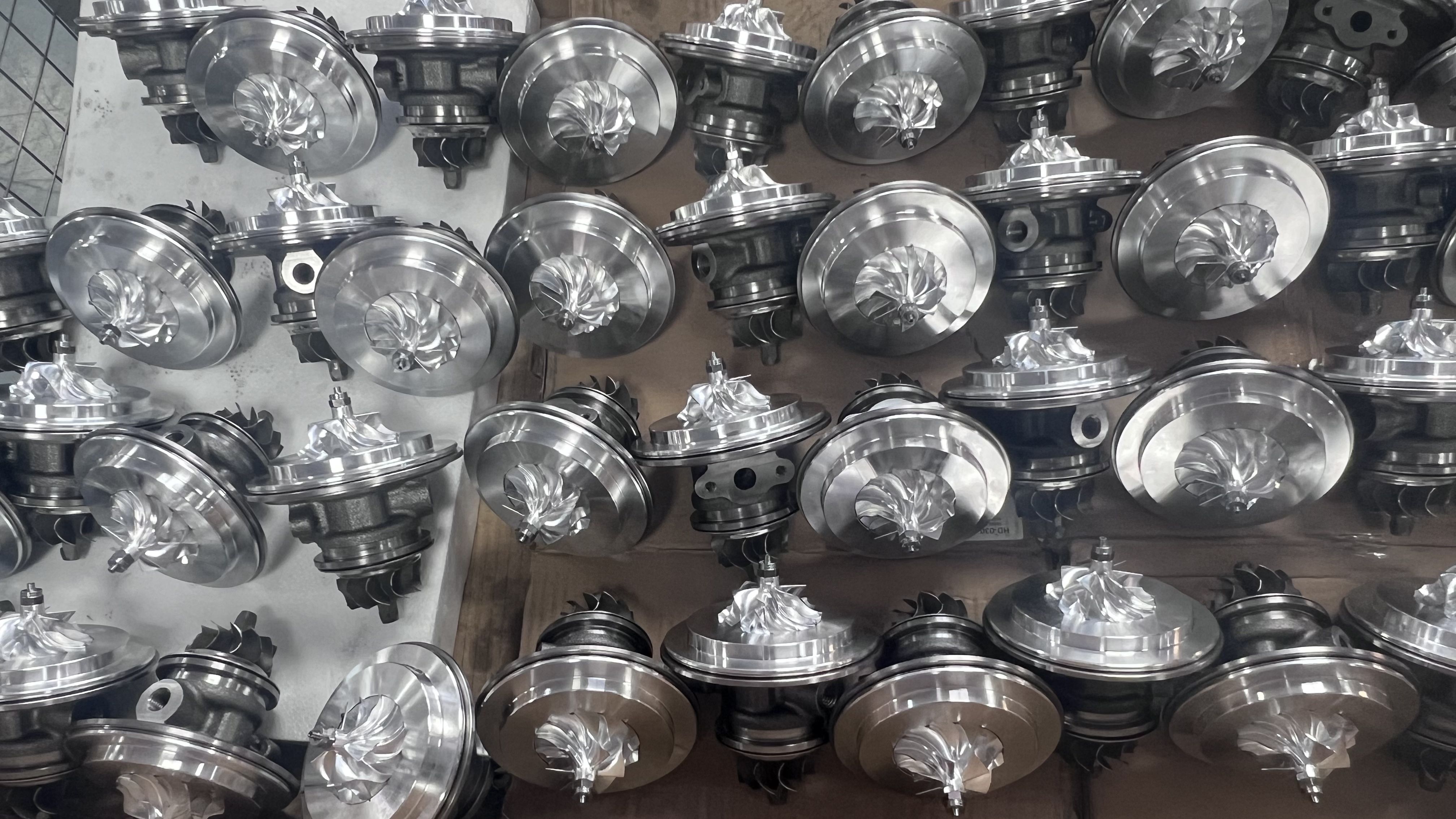
Many people regard turbochargers as ordinary iron fittings for trucks, yet they are actually the "power lungs" of diesel trucks, directly governing vehicle power output, fuel consumption and operational stability. A high-quality turbocharger delivers ample power, superior fuel efficiency and long service life; by contrast, inferior or mismatched turbochargers lead to weak power, soaring fuel consumption, frequent breakdowns and unexpected roadside stalls.
Currently, the market price of diesel truck turbochargers varies wildly, ranging from low-cost units worth several hundred yuan to high-end models priced at over ten thousand yuan. Most buyers fail to understand the logic behind such price gaps—some overpay for products inflated by brand premiums, while others chase cheap refurbished counterfeits, only to suffer heavy losses in the end. Drawing on overseas foreign trade market trends, years of manufacturing experience and frontline procurement & maintenance expertise, this article comprehensively breaks down turbocharger pricing structures, purchasing pitfalls to avoid, as well as installation and maintenance guidelines.
Many buyers get confused when checking online prices: seemingly identical diesel truck turbochargers can range from 300 yuan to over ten thousand yuan, with staggering price differences. In reality, turbocharger pricing is not arbitrary. Price tiers are mainly determined by product quality, raw material craftsmanship, compatible vehicle models and operating conditions. Below is a clear breakdown of mainstream turbocharger price tiers based on universal global foreign trade market data, alongside core explanations for price disparities to help you accurately assess product value.
Based on global auto parts procurement markets and domestic & overseas vehicle maintenance sectors, diesel truck turbochargers fall into three mainstream categories to suit different vehicle types, working conditions and procurement demands, with transparent real market price references:
Priced between 500 and 2,000 yuan, these are entry-level turbochargers on the market. Mostly mass-produced by small manufacturers, they fit older light-duty trucks, agricultural diesel vehicles and outdated construction machinery with low power and durability requirements, ideal for short-term temporary replacements and low-budget interim maintenance. However, they carry obvious drawbacks: most are made of ordinary steel with simplified assembly processes, featuring poor high-temperature resistance and wear resistance, plus crude sealing technology. Under long-term heavy loads, they are prone to oil leakage, engine oil burning and power degradation, accompanied by short service lives and high repair rates.
Priced from 2,000 to 6,000 yuan, these are our top-selling foreign trade products with the highest repeat purchase rates among domestic and overseas clients, compatible with mainstream medium and heavy-duty truck engines including Weichai, Cummins, Yuchai and Xichai. Turbochargers in this tier fully match OEM parameter standards, manufactured with compliant premium raw materials under standardized production workflows and strict quality control inspections, free from excessive brand markups, delivering outstanding cost performance. They boast exceptional stability, meeting standards for high-temperature resistance, vibration resistance and sealing performance, perfectly adapting to long-distance transportation and daily heavy-load operations. With a normal service life of 1 to 3 years under proper use, they represent the optimal choice for fleet bulk purchases, repair shop stock and individual long-term vehicle operation.
Priced at 6,000 to 15,000 yuan and above, this category includes original equipment from international leading brands such as Holset and Garrett, as well as variable geometry turbochargers (VGT) engineered for high-horsepower applications. Equipped with cutting-edge manufacturing technologies, their core components are forged from top-tier reinforced materials, designed for large-displacement heavy trucks, mining trucks and special engineering vehicles operating under extreme conditions: harsh road surfaces, frequent heavy loads and prolonged continuous operation. Unmatched durability, stability and power performance result in near-zero failure rates, making them suitable for high-end fleets and special operations with stringent requirements for vehicle attendance and reliability.
Despite identical appearances, diesel truck turbochargers vary drastically in price due to three key internal factors: raw material quality, machining precision and product authenticity—details easily overlooked by most purchasers.
Turbochargers operate under sustained high temperature and rotational speed, so raw materials directly determine service life. Low-grade cheap turbochargers use ordinary cast iron and inferior aluminum alloys, unable to withstand exhaust temperatures exceeding 700°C generated by diesel engines, leading to deformation, cracking and premature failure after prolonged high-speed operation. In contrast, premium foreign-trade-grade turbochargers feature impellers and bearings crafted from nickel-based high-temperature superalloys, delivering vastly superior resistance to high heat, deformation and abrasion. These components withstand rotational speeds of hundreds of thousands of revolutions per minute for consistent long-term operation, with raw material costs alone creating massive price gaps.
Turbochargers spin faster than aircraft engines and demand ultra-high dynamic balancing accuracy. Low-cost products from small workshops undergo only basic assembly without high-precision dynamic balancing testing, triggering vehicle vibration and accelerated bearing wear during operation, leading to malfunctions after short usage. Every turbocharger manufactured by certified formal foreign trade factories undergoes professional high-precision dynamic balancing calibration to eliminate impeller deviations, eradicating vibration, abnormal noise and rotor jamming. Higher costs for testing equipment, labor and calibration drive up pricing yet drastically improve product stability.
Most "brand-new turbochargers" priced at several hundred yuan are refurbished second-hand units. Vendors salvage scrapped turbochargers, simply polish outer casings and fit cheap replacement parts to pass them off as new goods, securing extremely low production costs and huge profit margins. Though functional initially, these refurbished units develop oil leaks, seized bearings and sudden power loss after only a few thousand kilometers of operation. Cumulative costs from repeated repairs and vehicle downtime far exceed the price of genuine new turbochargers.
Most buyers only focus on unit prices while ignoring hidden expenses, resulting in higher overall costs despite apparent upfront savings. These hidden expenditures are especially critical for cross-border foreign trade procurement:
- Shipping and customs duties: Overseas direct purchases require accounting for international logistics fees and import tariffs, rather than evaluating only bare unit prices.
- Premiums for discontinued models: Once OEM turbochargers for older vehicle models go out of production, scarce stock OEM spare parts and custom replacements surge in price, far exceeding standard aftermarket alternatives.
- Vehicle downtime and maintenance losses: Opting for cheap inferior turbochargers risks roadside breakdowns, incurring towing fees, repair charges, delivery liquidated damages and lost operating revenue—costs that often add up to enough to purchase multiple high-quality turbochargers.
Years of industry experience have exposed countless procurement disputes and operational failures, most stemming from incorrect model selection, inadequate pre-delivery inspections and unreliable purchasing channels rather than inherent product defects. Whether replacing a unit for personal use, bulk stocking for foreign trade distribution or restocking repair shops, mastering the following purchasing techniques helps you evade industry traps and source well-matched, durable, cost-effective turbochargers.
Turbochargers are precision-matched components with no universal fit-all models. Even minor parameter mismatches trigger insufficient power, elevated fuel consumption and engine damage, making accurate model matching the top procurement priority.
Never provide only vehicle or engine brand names (e.g., simply stating "Weichai" or "Cummins") as these cover excessively broad model ranges. You must confirm the exact engine model and locate the unique part number stamped on the original turbocharger housing—this universal global serial number guarantees perfect compatibility with zero matching errors. If model identification proves difficult, take clear photos of the engine nameplate and turbocharger label and send them to us for free professional matching verification.
The A/R ratio dictates turbocharger response speed and power output, serving as a core fixed parameter, not an adjustable arbitrary setting. Fitting a turbocharger with a larger A/R ratio to an engine factory-equipped with a smaller ratio causes turbo lag, weak power and increased fuel consumption. Conversely, swapping a factory large A/R turbocharger for a smaller unit leads to insufficient high-speed power and potential engine strain. Unless conducting professional engine modifications, always select turbochargers with the factory-specified matching A/R ratio.
No professional testing equipment is required—simple visual and manual checks upon delivery quickly differentiate genuine brand-new high-quality turbochargers from shoddy refurbished counterparts.
Gently spin the turbocharger compressor impeller by hand. A genuine new premium turbocharger rotates smoothly with uniform thin oil film resistance, free of jamming, stiffness or harsh grinding noises. If the impeller catches or emits obvious friction sounds, the bearings are defective and the unit must be rejected.
High-grade turbocharger turbine housings feature smooth, uniform casting surfaces free of sand holes and burrs, with flat, aligned flange joints that deliver excellent sealing post-installation to eliminate exhaust and oil leakage risks. Inferior small-manufacturer casings have rough surfaces, abundant sand holes and misaligned connection ports, prone to exhaust gas leakage and oil seepage after installation, creating persistent fault hazards.
All turbochargers produced by formal foreign trade factories feature clear nameplates, brand logos, exclusive part numbers and production serial numbers with fully traceable records. Blank turbochargers with no markings or units with blurry, worn labels are almost always uncertified refurbished products—avoid them regardless of low pricing.
Sourcing channels determine product quality and after-sales protection, constituting the most critical procurement factor. Prioritize source manufacturers with physical production facilities and official export qualifications. Foreign trade factory products pass international certifications including ISO and CE, adhering to far stricter quality control standards than generic unbranded alternatives, backed by complete after-sales support systems to avoid unresponsive online vendors that disappear post-sale. Reject all merchant claims of "one-size-fits-all universal turbochargers": turbochargers are precision-matched components with no universal fit, and forced installation of mismatched units will damage the engine.

Many vehicle owners assume fitting a new turbocharger eliminates all future issues, yet a turbocharger’s service life depends 30% on product quality and 70% on professional installation and routine maintenance. Most early turbocharger damage and frequent malfunctions stem from careless installation and improper driving habits rather than manufacturing defects. Adhering to the following protocols drastically extends turbocharger service life.
Once an old turbocharger fails due to wear, metal debris and carbon deposits accumulate within connecting pipelines. Failing to fully purge and clean these pipelines before fitting a new turbocharger allows impurities to enter the new unit upon engine startup, striking and damaging the impeller under high-speed rotation and rendering the brand-new turbocharger irreparably damaged.
Turbochargers rely on engine oil for lubrication and cooling. Before the first engine ignition post-installation, inject clean engine oil through the oil supply line or manually crank the engine to coat bearings with a protective oil film. This eliminates dry friction during initial startup that instantly damages core bearings, preventing premature failures at the source.
Upon cold startup, engine oil has not fully circulated to the turbocharger assembly, leaving the unit operating with inadequate lubrication. Aggressive acceleration and high idle speeds under these conditions rapidly burn out bearings. After startup, maintain idle speed for 30 seconds to 1 minute to allow full oil circulation before normal driving.
Following long-distance heavy loads or high-speed driving, turbocharger surface temperatures reach extreme levels. Instant engine shutdown cuts off oil circulation, trapping high heat inside the unit. The residual oil carbonizes into sludge that clogs oil galleries, gradually causing rotor jamming, oil leakage and permanent turbocharger failure. Idle the engine for 1 to 2 minutes before shutdown to cool the turbocharger thoroughly.
Engine oil and air filters act as protective barriers for turbochargers. Turbochargers fully depend on engine oil for lubrication and heat dissipation; low-grade, expired oil or clogged oil filters cause insufficient lubrication and poor heat dissipation, triggering power loss, oil leakage and seized rotors. Air filters also require regular inspection and replacement: clogged or damaged filters permit sand and debris into the intake system, striking the turbocharger impeller at high speed to unbalance the rotor and cause permanent component damage. Minor recurring air filter replacement costs pale in comparison to the high expense of replacing a failed turbocharger.
With years of experience specializing in turbocharger foreign trade production and export, we have collaborated with countless global buyers and vehicle operators. Below are pragmatic procurement insights to help you avoid common pitfalls and maximize overall cost performance.
Diesel trucks are revenue-generating equipment, and turbochargers are core power components—never prioritize rock-bottom pricing above all else. While cheap units may save a thousand yuan upfront, they often fail within six months. Combined towing, repair and downtime penalty fees, total comprehensive costs far exceed the price of high-quality OEM-grade turbochargers. By contrast, premium OEM-spec turbochargers operate reliably for over two years with consistent fuel efficiency and zero downtime-related losses, delivering superior long-term value over generic low-cost alternatives.
Individual vehicle owners seeking single replacement units may source from local authorized agents for convenient, accessible after-sales support. Fleets, repair chains and cross-border wholesale buyers placing bulk orders should directly partner with original foreign trade manufacturers. Eliminating multi-layer middleman markups delivers transparent pricing, with support for OEM customization, bulk stocking and global shipping, alongside tailored warranty plans suited for overseas distribution and fleet maintenance to drastically cut overall procurement costs.
Do not discard removed old turbochargers arbitrarily. Take clear photos of the housing nameplate and part numbers for permanent record-keeping. When ordering replacement parts later, simply provide these photos for 100% accurate model matching, eliminating compatibility errors, costly product returns and delivery delays that disrupt vehicle operations.
In short, the core principle of diesel truck turbocharger procurement is neither selecting the most expensive nor the cheapest option, but choosing the most compatible, stable and reliably supported product. Low-cost turbochargers carry inherent performance drawbacks, while premium high-priced models serve specialized high-intensity operating scenarios. Optimal purchasing decisions align turbocharger specifications with your vehicle model, operating conditions and procurement demands.
As a professional original manufacturer integrating R&D, production and export of turbochargers for diesel trucks, we supply a full range of turbochargers compatible with light-duty trucks, medium & heavy-duty trucks and special engineering vehicles. All products undergo export-grade quality control inspections, with zero refurbished or inferior units in our inventory. We support global bulk export, custom OEM manufacturing and dropshipping, complemented by a comprehensive after-sales service system. Whether you require model matching and quotations for individual vehicle owners, bulk stock for repair shops, or large-scale purchasing solutions for overseas merchants, feel free to contact us for free professional model selection, precise quotations and customized procurement plans—helping you avoid unnecessary expenditure while delivering consistent powerful performance and reliable vehicle attendance.