chris@alfredturbo.com
+86-18112348562
Language
Please Choose Your Language

Views: 0 Author: Alfredturbo Publish Time: 2026-07-01 Origin: Site


If you follow pickup trucks, especially hardcore yet family-friendly brands like GMC, you’ve probably heard this saying: “Pickups are gas guzzlers.” For a long time, American pickups won over countless fans with large-displacement engines and robust power, yet excessive fuel consumption and steep running costs remained the biggest pain points for vehicle owners and auto merchants alike.
Nevertheless, the pickup truck market has undergone a revolutionary shift in recent years. Leading American brands represented by GMC have phased out traditional large-displacement V6 and V8 engines in favor of 4-cylinder turbocharged powertrains, completely breaking the stereotype that “big engines must burn more fuel.”
Many pickup owners, overseas repair shops and auto parts wholesalers are curious: how can a compact 4-cylinder turbocharged model deliver powerful hauling performance while maintaining outstanding fuel efficiency? As a source factory specializing in the production and export of turbochargers, we will thoroughly break down the core strengths of GMC’s 4-cylinder turbo pickups in this article, with a sharp focus on the decisive role turbochargers play. We will also share industry trends and purchasing tips for pickup turbochargers in today’s market.
GMC pickups were once dominated by large-displacement V6 and V8 powertrains. The explosive power and deep exhaust note of big engines are the iconic charm of hardcore pickups. However, shifts in market demand and regulatory policies have magnified the drawbacks of large-displacement engines, pushing automakers to revamp their power solutions.
First and foremost, fuel consumption remains extremely high. Older GMC large-displacement pickups easily hit 15 to 20 liters per 100 kilometers in urban traffic, creating heavy fuel expenses for private owners and small commercial fleets over time. Second, stricter global standards for vehicle carbon emissions and particulate matter have made it difficult for large-displacement engines to meet updated regulatory requirements. Additionally, most overseas markets impose heavy taxes on large-displacement vehicles, inflating both upfront purchase costs and long-term running expenses, which erodes market competitiveness.
Against this backdrop, GMC needed a balanced solution: cut engine displacement and optimize energy consumption without sacrificing the core hauling and towing capabilities that pickups rely on. The 4-cylinder turbocharged engine emerged as the ideal answer.
A naturally aspirated 4-cylinder engine boasts a lighter build and less mechanical friction, delivering far better base fuel economy than large-displacement alternatives. Yet it suffers from an inherent flaw: insufficient torque and weak power, making it unfit for heavy pickup tasks such as cargo hauling, off-roading and trailer towing.
Turbochargers perfectly offset all the shortcomings of 4-cylinder engines. With turbo boost, GMC’s 2.7L 4-cylinder turbo engine matches or even outperforms the older 4.3L V6 large-displacement powertrain, offering superior low-end torque and towing stability while delivering fuel economy comparable to a family SUV. This winning combination of “small displacement, high power and low energy consumption” is the core reason GMC fully upgraded its engine lineup.
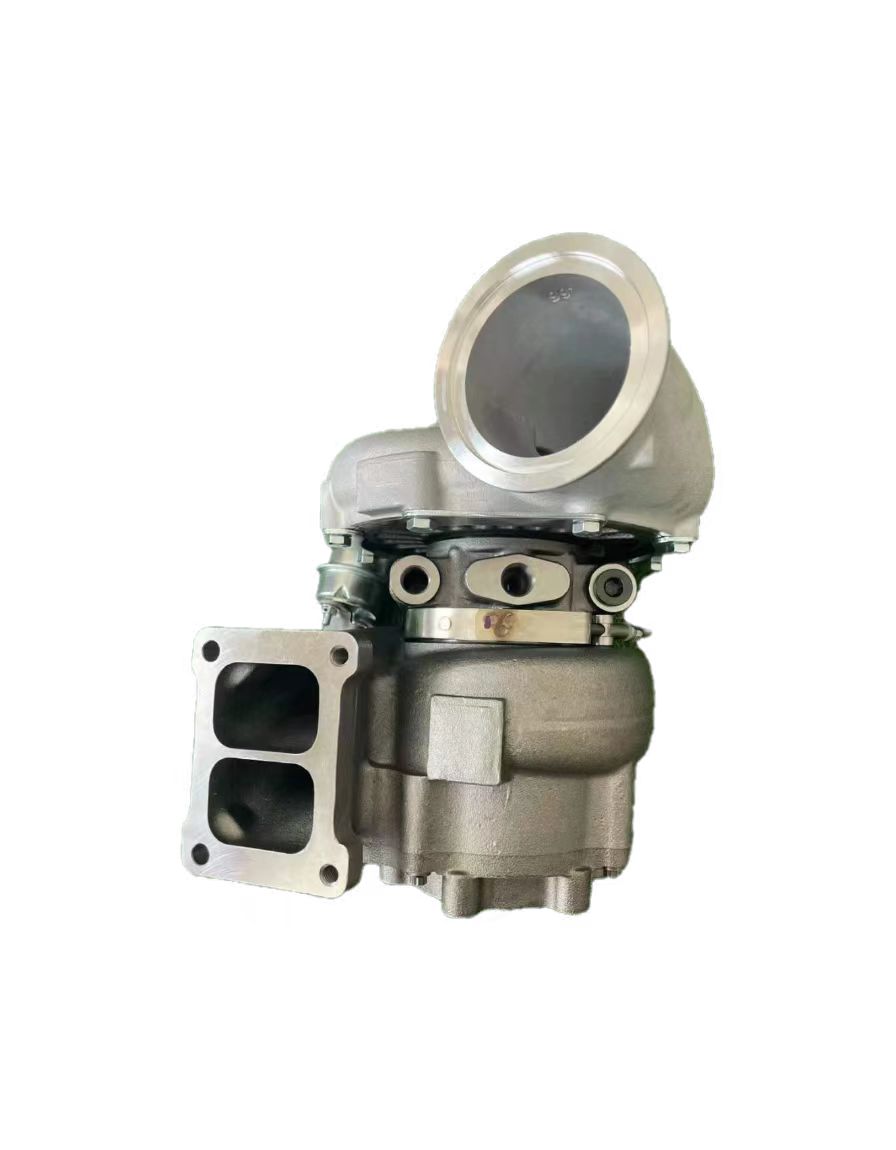
Many clients inquire about our turbo products with the same question: how can such a compact component completely transform a pickup’s power and fuel efficiency? The working principle of turbochargers is straightforward, free of complicated technical gimmicks, and serves as the fundamental engineering breakthrough that elevates GMC pickup performance to new heights.
A common misconception among vehicle owners is that turbochargers consume extra fuel to operate, which is entirely false. Turbochargers run solely on exhaust gas produced by the engine, requiring no additional fuel input. High-temperature, high-pressure exhaust gas generated during combustion is normally released directly into the atmosphere, wasting massive amounts of energy. Turbochargers capture this otherwise discarded energy efficiently.
Exhaust gas strikes the turbine wheel, spinning it at extremely high speeds. A shared shaft connects the turbine wheel to the compressor wheel on the intake side, forcing external air to be compressed and fed into the engine cylinders. To put it simply, naturally aspirated engines draw air solely via piston movement, while a turbocharger acts as a heavy-duty blower that drastically increases air intake volume.
A richer air supply enables more complete fuel combustion inside cylinders. With the same amount of fuel injected, greater power output is generated. This not only resolves the weak power issue of 4-cylinder engines but also eliminates fuel waste and carbon buildup caused by incomplete combustion.
The turbocharger fitted to GMC pickups is not a generic unit designed for passenger cars. It is specially calibrated for heavy-duty pickup scenarios including cargo transport, hill climbing, trailer towing and off-roading, setting it apart fundamentally from automotive turbos.
First, it delivers peak torque at just 1,500 to 2,000 RPM, eliminating the laggy low-speed performance typical of small-displacement engines. When fully loaded, climbing steep slopes or hauling heavy trailers, the engine does not need to rev high to maintain steady, composed power delivery. Second, it is equipped with high-precision electronic wastegates that intelligently regulate boost pressure. During steady cruising, boost load is reduced to save fuel; during overtaking or heavy-duty operation, boost pressure spikes instantly to unleash ample power, striking a perfect balance between fuel efficiency and performance. Third, it features high-temperature, high-strength housings and sealing components built to withstand prolonged high-heat, high-load pickup operation and prevent performance degradation over time.
We can compare an engine to a human body. A naturally aspirated engine can only draw air through its own “breathing,” limiting airflow and power output. A turbocharger acts as an assisted ventilation system, pumping large volumes of oxygen into the lungs. With the same “lung size” (engine displacement), drastically increased air intake doubles work efficiency — this is the core logic behind small-displacement turbo pickups rivaling large-displacement vehicles.
Most people assume fuel savings come solely from injecting less gasoline, yet true efficient fuel economy means eliminating all unnecessary fuel waste while meeting power demands. The fuel-saving advantages of GMC’s 4-cylinder pickups stem from two core factors: a lightweight small-displacement engine body and intelligent turbo boost control.
Compared with V6 and V8 large-displacement engines, 4-cylinder units feature a streamlined structure with fewer cylinders and valve train components, drastically cutting overall engine weight. A lighter engine reduces the energy required for vehicle takeoff and acceleration, lowering tire rolling resistance against the road surface. Over thousands of miles of driving, this lightweight advantage continuously cuts energy loss and eliminates wasteful fuel consumption at the source.
This turbo system adapts seamlessly to different driving scenarios by adjusting its operating state intelligently. During daily city commutes or steady highway cruising where strong power output is unnecessary, the turbo operates under low-pressure light load, allowing the engine to run as a highly efficient naturally aspirated unit with restrained fuel use — a massive improvement over traditional gas-guzzling pickups in daily traffic.
When facing steep hills, overtaking maneuvers, fully loaded cargo or towing campers and equipment, stepping firmly on the throttle triggers full turbo boost, instantly releasing peak torque to compensate for power shortages. This characteristic of “fuel-efficient during casual driving, powerful when needed” is impossible to achieve with conventional large-displacement pickups.
The fuel-saving performance of GMC’s turbo setup does not rely on a single component; it works in tandem with the entire powertrain system. The vehicle’s 10-speed automatic transmission, intelligent engine management system and multi-mode drive selector all coordinate with the turbocharger. In ECO mode, turbo engagement is delayed to prioritize fuel efficiency. In Sport or Tow mode, the turbo activates earlier with more aggressive boost to prioritize power output, creating an optimal balance of fuel consumption and performance for every driving scenario.
From the perspective of vehicle owners, the new GMC 4-cylinder turbo pickups completely break outdated stereotypes of bulky, fuel-thirsty, rough-riding traditional pickups, striking a perfect balance between family comfort and work utility.
Stop-and-go urban congestion is the most fuel-intensive and awkward driving condition for pickups. Thanks to the turbo’s rapid low-speed response and efficient combustion, the new GMC takes off responsively without the sluggishness of small naturally aspirated engines or excessive fuel burn of large-displacement models. Compared with older large-displacement variants, daily commuting fuel costs drop significantly, generating substantial long-term fuel savings and making it perfectly suitable for family daily transport.
The vast majority of pickup owners rely on their vehicles for cargo and trailer towing. The core strength of GMC’s 4-cylinder turbo engine lies in abundant low-end torque available starting at roughly 1,500 RPM. When fully loaded with construction materials and tools, or towing campers, industrial machinery and boats, the engine delivers smooth power without straining at high RPM, enabling composed takeoffs and hill climbs. It offers far superior stability to naturally aspirated pickups of the same class, and its official maximum towing capacity of 7,700 pounds is entirely supported by the turbocharger system.
During steady highway cruising, the engine maintains low RPM while the turbo operates smoothly at low boost, delivering outstanding noise and vibration suppression. The driving experience closely matches premium SUVs, doing away with the harsh ride quality associated with traditional work pickups. Ample reserve power for high-speed overtaking of large trucks inspires confidence on long drives and reduces fatigue. Consistent fuel efficiency also greatly extends the vehicle’s driving range per tank.

As a factory with years of experience researching, manufacturing and exporting turbochargers, we serve countless auto parts wholesalers and repair shops across North America, Australia, the Middle East and other global regions. Based on market feedback, we can clearly outline emerging trends in the pickup turbo sector while sharing professional selection advice for overseas buyers.
Globally, small-displacement engines paired with high-efficiency turbochargers have become the undisputed mainstream for pickups. Tightening environmental regulations and rising fuel costs have led end-users to reject blind pursuit of large-displacement powertrains, with fuel-efficient, durable heavy-duty turbo pickups becoming the top choice. Meanwhile, pickups operate in harsh conditions including heavy loads, extreme heat and dusty terrain, demanding far higher reliability and durability from turbochargers than standard passenger car turbos, driving surging demand for dedicated heavy-duty turbo units. As the total number of GMC 4-cylinder turbo pickups on roads grows annually, demand for replacement and performance-upgrade turbochargers in the aftermarket continues to rise steadily.
The overseas aftermarket is flooded with cheap, inferior turbochargers that appear cost-effective upfront but carry severe hidden risks. Units made with substandard materials feature housings unable to withstand high temperatures and wear-prone bearings, leading to stalling and power loss under prolonged heavy loads. Poor dynamic balancing creates loud abnormal noise, and in extreme cases, broken turbine blades can destroy the entire engine assembly. Low-grade oil seals leak lubricant easily, directly causing increased fuel consumption and heavy carbon buildup. These issues damage the vehicle ownership experience for end customers and expose repair shops and wholesalers to frequent after-sales disputes that erase any cost savings from cheap purchases.
Our factory specializes in turbocharger production for all vehicle models. Every unit is constructed with high-temperature resistant alloy materials and premium sealing components, and undergoes full testing for dynamic balancing, high-temperature sealing and boost pressure compliance with international export standards for smooth customs clearance worldwide. We maintain permanent stock inventory, supporting small mixed batch orders and full-container bulk shipments. We also provide complete quality inspection documentation and technical installation support to help overseas clients cut after-sales costs and boost market competitiveness.
The success of GMC’s 4-cylinder turbo pickups fundamentally represents performance innovation enabled by turbocharger technology. Premium turbochargers break the long-standing rule that “engine displacement equals power,” allowing small-displacement powertrains to match the performance of large-displacement engines while drastically improving fuel economy and lowering long-term running costs. These vehicles excel in all use cases, including daily commuting, family transport, cargo hauling, off-roading and trailer towing.
For private vehicle owners, a high-quality turbocharger is the core guarantee of stable power and controlled fuel consumption. For overseas auto parts industry professionals, high-fit, low-failure turbochargers designed specifically for pickups represent a high-potential best-selling product category. Moving forward, small-displacement turbo pickups will continue to dominate the global market, and high-performance, highly reliable turbochargers will remain an essential aftermarket component for pickups. If you have demand for bulk purchasing or sample testing of turbochargers for GMC pickups, feel free to contact us. As a direct manufacturing source, we provide consistent, trustworthy supply services to clients worldwide.