chris@alfredturbo.com
+86-18112348562
Language
Please Choose Your Language

Views: 0 Author: Alfredturbo Publish Time: 2026-06-22 Origin: Site


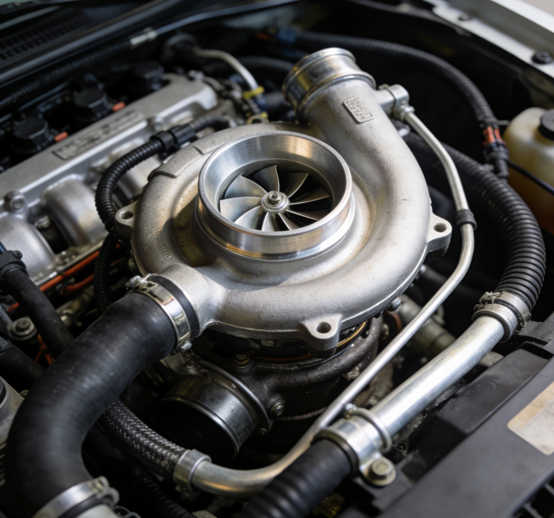
When purchasing garbage trucks, buyers usually focus on intuitive parameters such as loading capacity, compression configuration, and overall price. However, there is a core component hidden under the hood — invisible and intangible — that directly determines the vehicle’s working efficiency, service life, and operating cost: the turbocharger. Many clients frequently ask during inquiries: Do garbage trucks come with turbochargers? Are turbo-equipped models worth buying?
This seemingly simple question actually contains many industry insights. Many low-cost trucks on the market look fully configured, yet suffer from poor turbo matching or unqualified turbo assemblies, resulting in weak power, high fuel consumption, and frequent failures in later use. Today, combining the actual working conditions of sanitation vehicles, we will thoroughly explain the functions, advantages, and purchasing pitfalls of turbochargers for garbage trucks.
Early simple mini garbage trucks and light bucket-lift garbage trucks are generally equipped with naturally aspirated engines. These vehicles are lightweight with small load capacity, designed for scattered and short-distance garbage collection in residential communities, commercial streets, and campuses. With low working load and flat road conditions, basic engine power is sufficient for simple operations, so turbochargers are unnecessary. They were the entry-level mainstream models in the early sanitation market.
For the latest sanitation vehicles, including mid-to-large compression garbage trucks, hook lift garbage trucks, and docking transfer garbage trucks, turbocharging has become a factory standard configuration. With the upgrading of global sanitation standards, urban garbage volume continues to rise, and operating scenarios extend to mountainous areas, hilly lands, and complex old road sections. High-intensity and heavy-load operation has become the norm, while traditional naturally aspirated engines can no longer adapt. Turbocharged models have become the mainstream for foreign trade exports.
You can regard the engine as the vehicle’s “heart”, fuel as “food”, and air as essential “oxygen”. Sufficient power fully depends on complete fuel combustion. A naturally aspirated engine works like human nasal breathing: it performs well at low speed and light load but suffers from insufficient air intake and weak power under full load, climbing, or high-intensity operation.
A turbocharger is equivalent to installing a high-power blower and high-efficiency oxygen mask for the engine. It actively compresses air and forces a large volume of air into the cylinder, fully mixing and burning fuel to instantly boost engine power and deliver stronger performance.
Garbage trucks operate completely differently from private cars and ordinary trucks, featuring typical low-speed and high-load heavy-duty work. They require frequent starts and stops, carry tons of garbage uphill, and travel on bumpy rural and urban roads, while continuously driving the hydraulic compression system. Under such harsh conditions, non-turbo naturally aspirated engines will run under continuous overload, causing problems like roaring without power, sluggish response, and heavy black smoke, which greatly reduce working efficiency.
Many overseas buyers hesitate over the slightly higher purchase price of turbocharged models. However, for long-term high-frequency sanitation equipment operation, the benefits of turbochargers far exceed the price difference. They offer irreplaceable advantages in working efficiency, operating cost, and environmental compliance, making them the preferred choice for municipal and corporate sanitation procurement.
Fully loaded mid-to-large compression garbage trucks gain significant overall weight. Naturally aspirated models struggle with slow start-up and weak climbing power, and may even stall or roll backward, disrupting collection schedules and bringing potential safety hazards. Turbocharged vehicles deliver sufficient low-speed torque and explosive power. Even under full load, they start, drive, and brake stably. The hydraulic system receives steady power supply, accelerating garbage compression and unloading and effectively increasing daily workload.
Many overseas regions feature mountains, hills, steep slopes, and rough roads that impose strict requirements on vehicle power. Turbocharged engines outperform ordinary engines in environmental adaptability. They maintain stable and continuous power output on steep slopes, rough roads, and frequent start-stop scenarios without power attenuation or vehicle breakdowns, perfectly adapting to complex global operating environments.
Most buyers hold a wrong belief that turbocharged vehicles consume more fuel. In fact, for heavy-duty sanitation operations, the opposite is true. The turbo forced air intake system ensures thorough fuel combustion and eliminates fuel waste and incomplete burning. Under the same load and mileage, turbo garbage trucks save 10%-20% fuel compared with naturally aspirated models, completely avoiding high fuel consumption.
Sanitation vehicles operate all year round with high frequency, and fuel consumption and maintenance constitute the main fleet operating expenses. Turbocharged vehicles consume less fuel and keep the engine working under stable conditions without overload operation, reducing component wear and carbon deposition as well as failure rates. They effectively avoid additional costs caused by maintenance downtime and parts replacement. Although the initial purchase cost is slightly higher, turbo models save considerable long-term operating costs with far higher comprehensive cost performance.
Most countries and regions across Europe, Southeast Asia, Africa, and beyond have strict exhaust emission regulations for engineering and sanitation vehicles, with Euro and US emission standards continuously upgraded. Naturally aspirated engines produce large amounts of pollutants and particulate matter due to incomplete combustion, easily failing environmental inspections. Turbocharging combined with intercooler technology optimizes combustion efficiency and greatly reduces exhaust pollution for cleaner emissions.
For foreign trade procurement, vehicle compliance is the foundation of customs clearance and local registration. Formal turbocharged sanitation vehicles are fully certified for emissions, easily passing global environmental tests and customs inspections. They fundamentally eliminate risks such as customs detention, registration failure, and inability to operate, protecting buyers’ procurement interests.


Almost all new mainstream garbage trucks are labeled “turbocharged”, but quality varies greatly. Many low-cost models have nominal turbo configurations but suffer from poor matching, unqualified refitted turbos, and insufficient after-sales support — common pitfalls in foreign trade procurement that require careful screening.
To cut costs, some small manufacturers assemble low-quality aftermarket turbos that do not match the chassis and engine parameters. This causes severe turbo lag, with power output delayed for several seconds after stepping on the accelerator. This poses major safety risks during operation in narrow streets and crowded urban areas, while unstable power output leads to erratic hydraulic system operation and reduced working efficiency.
Reliable export-grade garbage trucks adopt factory-calibrated integrated turbocharging systems with perfectly matched engines, turbochargers, gearboxes, and hydraulic systems. Our exported vehicles are mainly equipped with globally recognized mature power brands including Yuchai, Weichai, and Dongfeng Cummins, ensuring stable operation without matching failures and serving as a trustworthy choice for overseas buyers.
Many buyers worry that precision turbo components working under high temperature and high speed (over 100,000 revolutions per minute) are fragile and expensive to repair. In fact, genuine factory turbos are highly durable with standardized operation. Basic daily maintenance can effectively extend their service life.
Follow three simple daily operation rules: idle the engine for one minute after cold start to fully lubricate turbo components with engine oil; do not turn off the engine immediately after full-load climbing or high-intensity operation — idle for a while to cool down the turbo; always use genuine high-quality engine oil and avoid inferior oil that damages turbo core parts. These practices almost eliminate turbo failures.
Always confirm the turbo brand before procurement. Prioritize internationally renowned brands such as BorgWarner and Holset, or factory universal models. These turbos feature global parts availability, enabling local replacement overseas without relying on China-based shipping and avoiding long-term vehicle downtime. Stay away from niche generic turbos that cause difficult parts replacement and maintenance deadlocks.
With years of experience in sanitation equipment export, we provide full export qualification documents and complete technical materials for all turbo garbage trucks. We offer one-stop after-sales services including remote technical guidance, troubleshooting, and maintenance training. Custom configuration is available to adjust power parameters according to local road conditions, emission standards, and operating requirements, adapting to procurement demands worldwide.
Turbos deliver outstanding performance, but blind procurement is unnecessary. Select models based on actual operating scenarios, load capacity, and working frequency to balance working efficiency and procurement cost.
As the mainstream municipal sanitation vehicles, they feature large load capacity, high compression load, and intense daily operation. Long-term full-load operation requires turbo power support. They are core bulk procurement models for overseas municipal projects, and non-turbo models cannot meet operational requirements.
These vehicles tow heavy garbage containers and transfer full-load garbage from transfer stations with extreme overall load and strict torque requirements. Factory original turbocharging systems come standard to ensure stable and efficient heavy-load transportation.
Lightweight and small-sized, they are used for scattered small-range garbage collection with flat road conditions and low working intensity. Naturally aspirated engines fully meet daily demands. Featuring lower purchase cost and simpler maintenance, they are ideal for small cleaning companies and community property management.
Electric vehicles are motor-driven without fuel engines, so turbochargers are not required. With zero emissions, low noise, and low energy consumption, they adapt to urban and scenic areas with strict environmental requirements and serve as popular niche procurement models.
Turbo: The Perfect Match for Modern Sanitation Trucks
Back to the core question: Do garbage trucks have turbochargers? The answer is clear: light-duty, low-load, short-distance mini garbage trucks do not need turbos; turbocharging is a mandatory core configuration for all mid-to-large, heavy-load, high-frequency, and complex-condition sanitation vehicles.
Acting as the “powerful lung” of garbage trucks, turbochargers solve the common pain points of traditional sanitation vehicles: weak power, high fuel consumption, frequent failures, and substandard emissions. For overseas buyers, choosing genuine factory turbo models means investing in an efficient, cost-saving, stable, and compliant long-term operation solution, free from vehicle breakdowns, excessive fuel consumption, customs clearance failures, and poor after-sales service.