chris@alfredturbo.com
+86-18112348562
Language
Please Choose Your Language

Views: 9 Author: Alfredturbo Publish Time: 2026-05-11 Origin: Site


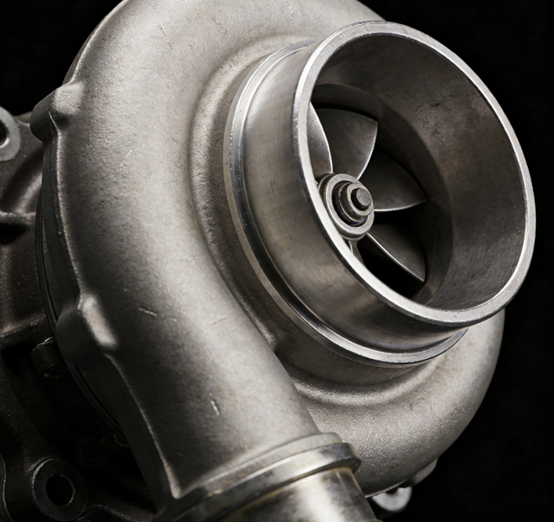
Recently, many overseas customers have been asking me: "My gas pickup is too sluggish, can I install a turbocharger?" As a veteran with more than ten years of experience in the pickup truck foreign trade industry, we have encountered too many pickup truck owners who want to modify their turbochargers—some use them for hauling goods, some for off-roading, some simply to improve the driving experience, and many overseas distributors also consult about bulk purchasing of modification parts. Today, I’ll use the most down-to-earth plain language to clarify this matter for everyone—installing a turbocharger on a gas pickup is feasible, but it’s not something you can do casually, nor is it necessarily good after modification, and not all vehicles are suitable for modification.
Many overseas customers are worried at first: "My pickup is factory naturally aspirated, will installing a turbochargerdamage the engine?" "Can only diesel pickups be turbocharged?" "Can small-displacement pickups be turbocharged?" In fact, there’s no need to worry. Installing a turbocharger on a gas pickup is nothing new, and it’s completely feasible technically, but not all vehicles are suitable.
Just like putting running shoes on an ordinary person won’t turn them into Bolt, modifying a turbocharger also depends on the "foundation"—how strong your pickup’s engine is and its displacement directly determine the success rate and long-term reliability of the turbo modification. Let’s break it down into two cases; you can easily judge it yourself without consulting a professional.
If your pickup is a gasoline engine with a displacement of 2.0T, 2.4L or more (such as Ford Ranger 2.3T, Toyota Hilux 2.7L, Great Wall Wingle series large-displacement versions), the factory engine is strong enough, and the success rate of turbo modification can reach more than 90%. The cylinder block, crankshaft, connecting rods and other core components of such vehicles have a certain margin, just like a "strong young man wearing running shoes"—a little extra pressure can make it run, and it can fully withstand a moderate boost pressure.
For example, many of our overseas customers drive Ford F-series and Toyota Hilux 2.7L gasoline versions. The factory engines are strong enough, and after turbo modification, they have not had any major problems for two or three years; many Australian customers have modified their Ford Rangers with turbochargers, and the power has been significantly improved whether for hauling goods or off-roading, with very good feedback.
If it’s a small-displacement naturally aspirated pickup with 1.5L or 1.6L (such as some entry-level models in the Southeast Asian market), or an old vehicle with a service life of more than 10 years, we sincerely do not recommend modification. Such engines are like "a thin person wearing spiked shoes"—the core components such as the cylinder block and piston are inherently insufficient in strength, or have obvious wear, oil leakage, or oil burning. Forcibly increasing pressure may lead to cylinder explosion or cylinder scuffing—in the end, the cost of repairing the engine will be enough to buy half a new car, which is not worth the loss.
We have a Southeast Asian customer who was greedy for cheap and modified his 1.5L small-displacement pickup with a turbocharger without any supporting upgrades. As a result, the engine had a cylinder scuffing failure in less than 3 months, and the repair cost was more than the modification itself. In the end, he could only admit bad luck. Another customer’s old pickup had a service life of 12 years, and the engine itself was a bit aging. After forcibly modifying the turbocharger, it frequently had detonation in less than half a year, and finally the engine was directly scrapped.
Modifying a turbocharger is not just "installing a part for a few hundred yuan"; it’s a complete system project that requires a certain budget. Moreover, modification regulations vary from country to region. This is something that both individual car owners and overseas distributors must pay attention to.
In terms of budget, a reliable turbo kit (including turbocharger body, intercooler, pipelines, etc.), plus installation and commissioning, costs about 6,000-9,000 RMB in China. In overseas markets, depending on regional differences, a mid-range turbo system costs about 3,000-5,000 US dollars. If you choose refurbished or non-standard products, although they are cheaper, they are prone to problems in the later stage. Whether for personal use or selling to customers, we do not recommend saving money on this.
In terms of regulations, some countries have relatively loose restrictions on vehicle power modification, such as parts of Australia and North America, as long as the vehicle can pass the annual inspection after modification; but in some countries (such as some European countries and California), modifying a turbocharger is illegal, which will result in fines or even being unable to drive on the road. Moreover, the emission requirements are extremely strict, and it is easy to exceed the emission standards after turbo modification.
Therefore, before modification or recommending a modification plan to customers, you must first understand the local modification and emission regulations to avoid spending money and being unable to use it.
Many customers think that "modifying a turbocharger is just tightening a few screws and installing a turbo body", but this is a big mistake—modifying a turbocharger is a complete system project that affects the whole body. Let’s break it down using the logic of "building blocks" to let everyone clearly know what parts need to be modified for a turbocharger, as well as the most easily overlooked details. Whether you modify it yourself or recommend it to customers, you can avoid pitfalls.
Modifying a turbocharger is definitely not just installing a turbocharger; it also requires supporting upgrades of a series of components to ensure that the power is improved without damaging the engine. Specifically, there are three main types:
There are mainly two types of turbocharger bodies, suitable for different needs and budgets. You can choose according to your own situation (or the customer’s needs):
One is an "external turbocharger", which is relatively cheap and easy to install, suitable for mild modification—for example, customers who only want to slightly improve power and do not haul much goods or go off-roading at ordinary times; the other is an "internal turbocharger", which is slightly more expensive but has better matching with the engine and more stable power output, suitable for heavy modification—for example, customers who often haul heavy loads, like off-roading, or pursue extreme power.
The function of the turbocharger is to compress air to allow more air to enter the engine for combustion, so the intake and exhaust system must keep up, otherwise there will be a situation of "not being able to breathe". The factory exhaust pipe is relatively thin and cannot meet the exhaust demand after turbo modification, so it must be replaced with a thicker exhaust pipe; the air filter must also be replaced with a high-flow mushroom head to make the intake smoother, so as to give full play to the role of the turbocharger and improve power.
This is the most critical and indispensable step! After modifying the turbocharger, you must flash the ECU program, which is equivalent to "reprogramming" the engine, telling the engine "now someone is boosting you, you need to inject more fuel and adjust the ignition time" to make the engine adapt to the power output of the turbocharger. If you only modify the hardware without flashing the ECU, not only will the power improvement be insignificant, but it will also lead to an imbalance in the air-fuel ratio, and the engine will be in an "overload" state for a long time, which is prone to failure.
Many failed modification cases are not due to poor accessories, but because of ignoring some details. Especially these three points, whether you modify it yourself or recommend it to customers, you must pay close attention:
The temperature of a turbocharger can reach 900℃ when working, and the temperature of the compressed air will rise sharply. If it is not cooled in time, entering the engine will cause the engine to overheat, and even lead to "lung explosion" like failures—detonation and cylinder scuffing. Therefore, when modifying the turbocharger, an intercooler must be installed to cool the compressed air. Especially for customers in the Middle East, where there are many high-temperature days, a large-size intercooler must be matched to avoid insufficient heat dissipation.
Many customers only pay attention to whether the engine can withstand it, but ignore the transmission. The 4AT transmission of some old pickups has limited torque-bearing capacity. After turbo modification, the engine power surges and the torque also increases, which may lead to transmission shift shock, slippage, or even transmission damage. Therefore, before modifying the turbocharger, you must first confirm whether your transmission can withstand the increased torque, and if necessary, also upgrade the transmission accessories synchronously.
Many people think that modifying a turbocharger will consume more fuel, but this is not necessarily the case—as long as the tuning is proper, it will be more fuel-efficient during high-speed cruising. However, if you only modify the hardware without flashing the ECU program, the fuel consumption will surge. For example, the original fuel consumption of 8L per 100km may soar to 15L. In the long run, the fuel cost is also a considerable expense, which is not worth the loss. Therefore, you must find a professional technician to do a good job in ECU tuning to balance power and fuel consumption.
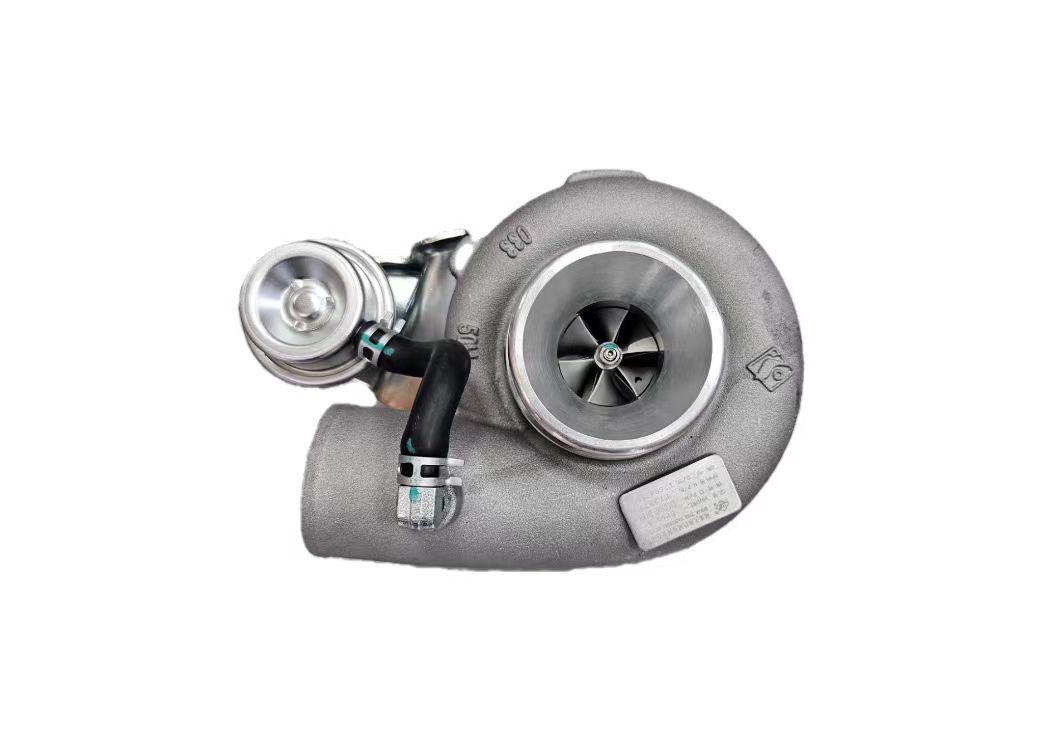
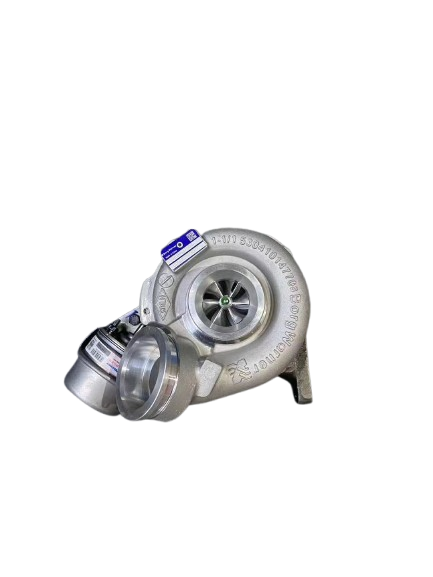
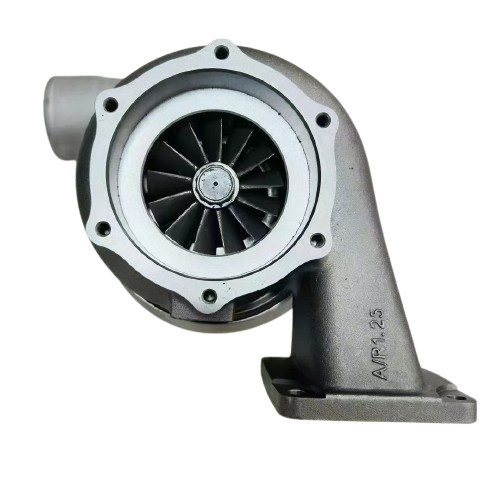
This part is the most tangled for overseas customers. Both individual car owners and distributors want to know what the advantages and disadvantages of turbo modification are. We don’t play tricks; we use the most down-to-earth plain language, combined with the actual needs of overseas customers, to clarify the advantages and disadvantages without exaggeration or concealment, helping everyone make a rational decision.
The reason why many overseas customers want to modify turbochargers is mainly for these three advantages. Especially for customers who often haul goods, go off-roading, or pursue cost-effectiveness, the experience improvement after modification is very obvious.
This is the most intuitive advantage of turbo modification. Generally speaking, after modifying a turbocharger on a gas pickup, the power can be increased by more than 40%. Taking the 2.7L Hilux as an example, the original 163 horsepower can be increased to about 220 horsepower, which can completely solve the problems of sluggish start, difficult climbing, and weak hauling capacity.
For example, one of our Australian customers drives a pickup that usually hauls construction materials. When fully loaded, climbing slopes is particularly difficult, and sometimes even needs help pushing. After turbo modification, climbing slopes with full load is much easier, no longer worrying about insufficient power, and work efficiency has also been greatly improved; there are also customers in the Middle East who like to drive pickups for off-roading. After turbo modification, the power response is faster when dealing with muddy and steep road sections, and the off-road experience is directly full. Moreover, this power improvement is not "only powerful when stepping on the accelerator hard", but the power is abundant throughout the driving process, and obvious changes can be felt whether driving in the urban area or on the highway.
For many overseas customers, the cost of changing a new pickup is too high, often starting from 20,000 US dollars, while a mid-range turbo system only costs 3,000-5,000 US dollars, which is far more cost-effective than changing a car. Especially for distributors who purchase in bulk, providing modification services to customers can not only improve product competitiveness but also increase profits, killing two birds with one stone.
Moreover, after turbo modification, the practicality of the pickup will be greatly improved. It can be competent for both hauling goods and off-roading, which is equivalent to spending a small amount of money to make the old pickup "reborn". It is very attractive to customers in Southeast Asia and the Middle East who pay attention to cost-effectiveness.
In regions with a strong pickup culture such as Australia, North America, and the Middle East, modifying a turbocharger is the "romance" of many male car owners and a trend. Watching the power of your own pickup improve makes you more face when driving out, and the modification process itself is also full of fun. For overseas distributors, mastering modification-related knowledge can also better connect with local customers, fit the local automotive culture, and improve customer stickiness.
After talking about the advantages, let’s talk about the disadvantages. These disadvantages are not "fatal", but if you don’t pay attention, they can easily affect the user experience or even damage the vehicle. Whether you modify it yourself or recommend it to customers, you must know in advance to avoid disputes in the later stage.
The design life of a factory engine is generally about 200,000 kilometers, but after turbo modification, the working pressure of the engine increases, and it is in a high-load state for a long time, so the service life may be reduced to 120,000-150,000 kilometers. Especially in the case of frequent heavy loads and off-roading, the wear will be faster. Moreover, the service life of a turbocharger is generally 5-8 years, and it needs to be replaced when it expires. The cost of replacing a turbocharger is not low, which is also an expense to be borne in the later stage.
This is the most troublesome problem for many overseas customers. Some European and American countries, California and other regions have very strict requirements on vehicle emissions. After turbo modification, the CO and NOx emissions of the engine are likely to exceed the standards, leading to failure to pass the annual inspection, or even fines and vehicle impoundment. For example, California has CARB certification, and modification parts must meet the certification standards to be legally on the road, otherwise it is illegal. This must be confirmed in advance.
The overseas used car market has a low acceptance of modified vehicles. When used car dealers see a pickup with a "modified turbocharger", they will directly lower the price, because the next buyer is worried about hidden engine problems and frequent failures in the later stage. Therefore, if you plan to resell your pickup later, modifying the turbocharger will greatly affect the resale value, which must also be considered in advance.
After turbo modification, the working pressure of the engine increases, so the requirements for maintenance are higher. The later maintenance costs will be higher than the factory ones, and it is also more troublesome. For example, the factory engine oil may need to be changed every 10,000 kilometers, but after turbo modification, it is recommended to change it every 5,000 kilometers, and you must use fully synthetic high-viscosity engine oil to ensure the lubrication of the turbocharger bearings and avoid turbocharger damage; in addition, after each long-distance drive, you cannot turn off the engine immediately, but need to idle for 2-3 minutes to fully cool the turbocharger, otherwise it is easy to damage the turbocharger. For customers who are unwilling to spend time and money on maintenance, we do not recommend turbo modification.
This is very important, especially for new pickups. Most automobile manufacturers stipulate that私自 modifying a turbocharger will invalidate the vehicle warranty. That is to say, after modifying the turbocharger, if there is a problem with core components such as the engine and transmission, the manufacturer will not be responsible for maintenance, and all costs must be borne by yourself. We have an overseas customer who modified the turbocharger of his new gas pickup just one year after buying it. Later, the engine had detonation. When he contacted the manufacturer’s after-sales service, the manufacturer refused to provide warranty on the grounds of "unauthorized modification". In the end, the customer spent more than 20,000 US dollars to repair the engine, which he deeply regretted. If your pickup is still under warranty and you want to modify the turbocharger, it is recommended to consult the manufacturer first to see if there is an officially recognized modification plan to avoid affecting the warranty.
If you are our overseas distributor or plan to provide modification services to customers, these experiences can help you avoid detours, improve customer satisfaction, and reduce your own risks. After all, helping customers choose the right plan can establish a long-term cooperative relationship.
Customers in different regions have different needs and usage environments, so we cannot adopt a one-size-fits-all approach. It is recommended to recommend suitable modification plans according to regions to better meet the actual needs of customers:
The pickup culture in Australia and North America is strong. Many customers like heavy modification and pursue extreme power experience. Moreover, the local modification regulations are relatively loose and the budget is relatively sufficient. It is recommended to recommend the "turbocharger + supercharger" twin-charging plan, which has a more obvious power improvement and can meet the customers’ needs for heavy hauling and off-roading; if the customer’s budget is limited, you can also recommend a high-quality single turbo kit with professional ECU tuning.
Most customers in Southeast Asia are practical, mainly using pickups to haul goods, with limited budgets and focusing on cost-effectiveness. It is recommended to recommend cost-effective domestic turbo kits, which are 40% cheaper than European and American brands, have good adaptability, can meet the daily hauling power needs, and have relatively low later maintenance costs, which are more in line with the needs of local customers.
The weather in the Middle East is hot, and the high-temperature environment has very high requirements for the heat dissipation of turbochargers. If the heat dissipation is not good, it is easy to cause engine failure. It is recommended to recommend turbo kits matched with large-size intercoolers and oil coolers, focusing on solving heat dissipation issues, and at the same time adapting to local oil products to avoid engine failure due to oil product problems.
No matter which region’s customers you recommend the plan to, you must do the following three points to avoid pitfalls and reduce later disputes:
✅ Confirm local emission regulations (such as California CARB certification): Understand the local modification and emission regulations in advance, and recommend modification parts and plans that meet local standards to avoid customers being unable to drive on the road or being fined after modification.
✅ Prioritize turbo kits with "plug-and-play" programs: For novice customers or customers with insufficient local modification technology, plug-and-play turbo kits are more worry-free, no need to find additional technicians to tune the ECU, reducing modification difficulty and risks.
✅ Reserve 10% of the budget for later maintenance: After turbo modification, the later maintenance costs will increase. You must remind customers to reserve a part of the budget for oil replacement, turbocharger maintenance, etc., to avoid customers failing to maintain the vehicle due to insufficient budget, leading to vehicle failure.
As a company with more than ten years of experience in pickup truck foreign trade, we can not only provide turbo kits suitable for different regions and models but also provide comprehensive supporting services to help you better serve customers and solve your worries:
English installation video tutorials: Convenient for overseas customers or local modification shops to install, with clear steps and easy understanding, no need to worry about language barriers.
2. ECU program customization according to local oil grades: Oil grades vary from region to region. We will customize adaptive ECU programs according to the oil products in the customer’s region to avoid engine failure due to oil product problems and improve modification reliability.
3. 6-month warranty + overseas technical remote guidance: Our turbo kits provide a 6-month warranty. If there is a quality problem during the period, it can be replaced for free; at the same time, we provide overseas technical remote guidance. Whether you encounter problems during installation or failures during later use, we can provide professional solutions in a timely manner.
In general, installing a turbocharger on a gas pickup is technically feasible and useful, but it is not suitable for everyone, nor can it be successfully modified casually. The core is to look at your own car usage needs (or the customer’s needs), budget and local regulations, find a professional modification shop, choose the right accessories, and do a good job in later maintenance, so that the turbocharger can play its maximum role, both improving power and not damaging the vehicle.
If you are a "practical person" who hauls goods and runs construction sites every day, I recommend prioritizing "flashing stage 2 program + high-flow air filter", which has low cost, does not affect reliability, and can also slightly improve power; if you are a "car enthusiast" who pursues extreme power and off-road experience, turbo modification can indeed make the pickup "reborn". As long as you do a good job in supporting upgrades and later maintenance, you can use it with confidence.
We will always provide suitable turbo accessories and reliable modification suggestions for overseas customers and distributors. If you have specific models, customer needs, or plan to purchase modification parts in bulk, you can consult us at any time to help you avoid pitfalls, so that you and your customers can modify with confidence and use with peace of mind!