chris@alfredturbo.com
+86-18112348562
Language
Please Choose Your Language

Views: 58 Author: Alfredturbo Publish Time: 2026-04-22 Origin: Site


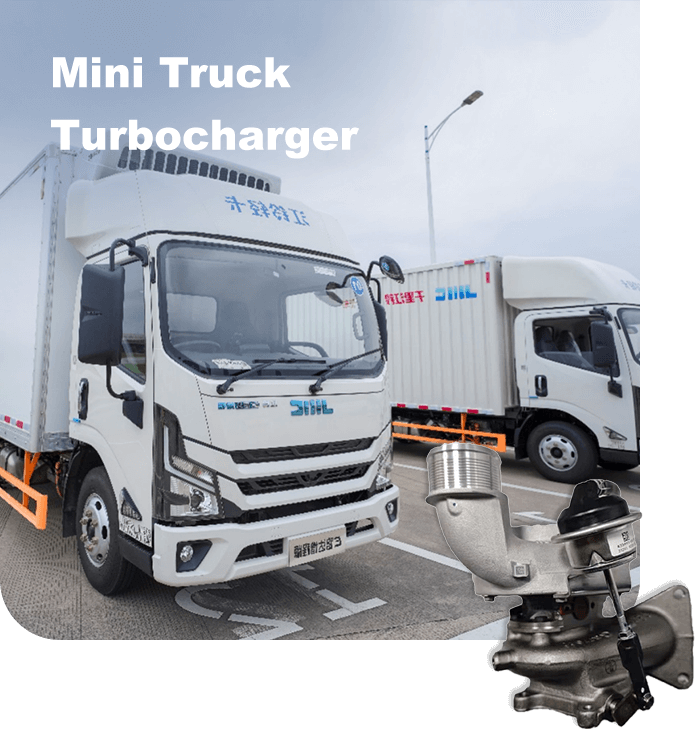
Today, combining the actual cases of our overseas customers from the United States, Germany, Japan, Australia, the Netherlands, France and other countries that we usually contact, we will talk about this topic in detail from three aspects: the actual situation, special exceptions and industry trends. We also hope to help friends who are engaged in procurement selection and foreign trade communication avoid pitfalls and provide references.
As a foreign trade business, we have to check the vehicle model and confirm the adaptability of accessories before shipping. Over the past few years, an obvious pattern has emerged: whether it is the Mercedes-Benz Actros and Scania S660 shipped to Europe, the long-head Peterbilt and Ford F-250 sent to the United States, or the Kenworth for mining in Australia and the Isuzu light trucks in Southeast Asia's Thailand, "Turbocharged" is written in the configuration list nine times out of ten. This is not a coincidence, but jointly determined by the physical characteristics of diesel engines, the needs of the transportation industry, and global environmental protection regulations. More than 95% of the diesel trucks running on the market now are turbocharged. Turbocharging is no longer a "high-end configuration", but a solid "standard configuration".
The core task of diesel trucks is to pull heavy loads. Whether it is European long-distance logistics vehicles often pulling more than 40 tons of goods, American farms pulling grain and equipment, or Australian mining areas pulling ore, strong power is essential. Turbocharging is the key to helping diesel vehicles "exert force".
We have a German customer who mainly engages in European long-distance trunk line logistics, running the Paris-Milan route. He told us that there is no speed limit on European highways, but their trucks often pull more than 40 tons of goods. If it is an old naturally aspirated diesel engine, relying only on the piston to suck air downward, the air intake is limited, and the injected oil cannot be fully burned. The vehicle starts sluggishly, and it is even more "powerless" when climbing hills, which may even affect transportation efficiency. Turbocharging is like installing a "blower" for the engine. It does not consume additional engine power, but uses the exhaust gas discharged by the engine to drive the turbine blades to rotate, forcing more air into the cylinders. The oil is fully burned, and the torque (traction) at low speeds is particularly large, which can easily handle full-load climbing. This is a rigid demand for heavy trucks.
We also have a French customer who owns 20 Scania S660 heavy trucks equipped with 16.4L V8 turbo engines with 660 horsepower. Pulling 40 tons of goods for long distances, the power is readily available, which is more than one level more efficient than the old naturally aspirated vehicles they used before.
Compared with gasoline engines, diesel engines have a higher compression ratio and are more "air-hungry". A common saying among the foreign customers we contact is: "Diesel loves boost". Without turbocharging, even a large-displacement diesel engine cannot give full play to its effectiveness, just like a bodybuilder who cannot breathe and cannot exert force. For example, the power of a diesel engine with the same displacement can increase by 30%-50% after adding a turbocharger. It can output the maximum torque at 1000-1400 rpm, making it easy to start and overtake. This is why diesel trucks are more dependent on turbocharging than gasoline trucks.
For foreign fleet owners and logistics providers, operating costs are the top priority, and fuel consumption and compliance directly determine their profit margins. The reason why turbocharging has become the mainstream is that it can not only help customers save money, but also help them avoid environmental fines.
We once had a customer from Texas, USA, who owned hundreds of trucks and mainly engaged in cross-state long-distance transportation. The first thing he looked at when selecting models was fuel consumption. He calculated a sum for us: a 400-horsepower turbo heavy truck consumes 3-5 liters less diesel per 100 kilometers than a naturally aspirated truck of the same horsepower. Their trucks run 100,000 kilometers a year, which can save 3,000-5,000 liters of diesel a year. According to the U.S. diesel price, this can save tens of thousands of US dollars a year, which is a considerable profit for them who rely on small profits but quick turnover for transportation.
Our Dutch customer also had a similar feedback. His 5 turbo trucks have saved nearly 200,000 euros in fuel costs in 3 years, which is the key reason why they insist on choosing turbocharged models when purchasing new vehicles later. There is also a Thai customer with 100 Isuzu light trucks, 2.5L turbo engines with 150 horsepower, pulling 5 tons of goods for distribution around Bangkok. The fuel consumption per 100 kilometers is only 8 liters, which is 2 liters less than the old naturally aspirated vehicles. The money saved in long-term operation is particularly considerable.
Nowadays, foreign environmental protection regulations are extremely strict, such as the U.S. EPA standards and European Euro VI standards, which have extremely high requirements for nitrogen oxides and particulate matter (black smoke) in exhaust gas. A single violation may result in a fine of tens of thousands of euros or even vehicle impoundment, which is a heavy loss for the fleet. As a foreign trade accessory business, we all know that naturally aspirated diesel engines burn insufficiently and have heavy exhaust pollution, which can never meet such strict emission requirements. Turbocharging, combined with intercoolers, high-pressure common rail injection, SCR (urea exhaust gas treatment), and DPF (particulate filter), can reduce exhaust pollutants by more than 90%, easily meeting the standards.
Our German customer clearly said: The first thing to consider when purchasing a truck is emissions. Turbo engines + after-treatment systems are standard configurations. Naturally aspirated vehicles can never pass Euro VI, and buying them is a waste of money because they cannot be put on the road. For this reason, almost all medium and heavy-duty diesel trucks produced in the past two or three decades are turbocharged.
Whether in Europe, the Americas, Asia or Australia, almost all mainstream diesel trucks are equipped with turbochargers as standard, but the types of turbochargers adapted to different models are slightly different. Combining our usual shipping experience and customer feedback, we will tell you in detail.
Europe is a major heavy truck power. All heavy trucks (above 400 horsepower) of brands such as Scania, Mercedes-Benz, MAN, and Volvo are turbocharged, with displacements mainly 13L and 15L, most equipped with VGT variable geometry turbochargers, which have strong low-speed power and fuel-saving at high speeds, perfectly adapting to the needs of European long-distance trunk line logistics. Our French, German and Dutch customers all purchase heavy trucks with such configurations, and the feedback is particularly good, with few failures and stable fuel consumption.
All diesel pickups in the United States and Canada (Ford F-250, Ram 2500, Chevrolet Colorado) are turbocharged diesel as standard, taking into account cargo hauling, off-roading and daily commuting. For example, the Ford F-250 is equipped with a 6.7L Power Stroke turbo engine with 385 horsepower, which can easily pull 10 tons of goods, and is a favorite of farmers and construction companies. For American long-distance heavy trucks (Peterbilt, Kenworth), 15L turbo engines are standard, with 500-600 horsepower, pulling 50 tons of goods for intercontinental highways, with low fuel consumption and high reliability. Most of the turbo accessories we send to American customers are adapted to such models.
Japanese Isuzu N series, Hino 700, South Korean Hyundai Trago, as well as Australian Kenworth and Mitsubishi, almost all light trucks (4-6 tons) and heavy trucks (above 20 tons) are turbocharged, fuel-saving and durable, adapting to urban distribution, intercity logistics and mining operations. Our Thai customer's 100 Isuzu light trucks are all equipped with turbochargers for distribution around Bangkok; turbo engines are even more a rigid demand for mining heavy trucks purchased by Australian customers. After all, mining areas have high load capacity and complex road conditions, and strong power is essential.
Although turbocharging is now the absolute mainstream, it is not correct to say that "all" diesel trucks are turbocharged. When we review accessories for old models with old customers and handle special orders, we often encounter some "special cases". Although these vehicles are now few, they still exist in specific circles or old vehicle series, especially some foreign classic car enthusiasts, farmers and small construction sites still use such non-turbo diesel trucks.
Most of these non-turbo diesel trucks are old models that have been in service for more than 10 years. In those years, turbocharging technology was immature and costly, so naturally aspirated diesel engines were the mainstream. Although they are gradually being phased out now, some of them are still "playing their remaining heat", especially in scenarios where power requirements are not high and simple maintenance is pursued.
We have an old Japanese customer who occasionally orders a batch of maintenance parts for old Hino or old Isuzu vehicles. He mentioned to us that in the 1990s and even the early 2000s, there were some medium-sized trucks in Japan, such as models equipped with Hino P11C naturally aspirated engines, or Isuzu's early V12 and V8 large-displacement naturally aspirated diesel engines (such as 10TD1, 8TD1, etc.). These vehicles have huge displacements (some exceeding 30 liters), and can squeeze out good horsepower relying solely on the large displacement, with relatively low noise, but the fuel consumption is indeed high. Now most of them are used for classic display or pulling light goods in rural areas.
There is also a British customer engaged in scrap metal recycling who has a 1970s Volvo N86 dump truck in his garage, which is actually equipped with a 150-horsepower D70 naturally aspirated diesel engine (there is also a 210-horsepower TD70 turbo version in the same period). He keeps this truck for doing rough work and nostalgia, saying that this truck has no turbocharger, has a simple structure, and can be repaired in any blacksmith shop if it breaks down, unlike modern vehicles that have to be replaced with computers when broken, with high maintenance costs.
Our Spanish customer also has a 1998 Nissan UD old heavy truck, an RD8 8-cylinder naturally aspirated diesel engine with 300 horsepower, which is usually used to pull light goods for short distances and is reluctant to throw it away - it has a simple structure, cheap maintenance, and easy-to-find parts, so there is no need to spend a lot of money on maintenance. For him, it is enough.
In rural areas of Southeast Asia (Vietnam, Indonesia), South Asia (India), and urban-rural fringe areas of Africa (Kenya, Nigeria), a large number of old diesel light trucks and agricultural vehicles with 10-20 years of service are mainly naturally aspirated diesel engines, with power of 100-150 horsepower, pulling agricultural products, farm tools, and daily necessities, running on rural roads with poor road conditions and light load capacity. Naturally aspirated engines are sufficient, cheap and durable.
Our Indonesian customer has a 2005 Toyota Dyna light truck with a 3.0L naturally aspirated diesel engine and 120 horsepower in his hometown farm, pulling 3 tons of coconuts and rubber, running on muddy dirt roads. It is sufficient without a turbocharger, with extremely low maintenance costs. He can simply repair it himself if it breaks down, without delaying work. There is also a Brazilian customer whose modified truck in the farm around São Paulo uses a 4.0L naturally aspirated diesel engine with 130 horsepower, pulling 5 tons of corn, running on dirt roads. It is no problem without a turbocharger, with low cost, and it is their "cost-effective choice".
In addition to old vehicles, some low-power light trucks, micro-trucks, and special operation vehicles also use naturally aspirated diesel engines. The core reason is "unnecessary, uneconomical, and unsafe" - these scenarios have low power requirements, and naturally aspirated diesel engines have a simple structure, low cost, and convenient maintenance, which are more suitable than turbocharging.
Some low-end versions of micro diesel trucks (2-3 tons) for urban distribution in Europe and on the streets of Japan use naturally aspirated diesel engines, with displacements of 2.0-2.5L and power of 80-120 horsepower, pulling light goods (couriers, fresh food, small commodities), running short distances in urban areas, with low speed and light load capacity. Naturally aspirated power is sufficient and cheap. Our Italian customer uses a Fiat micro truck with a 2.2L naturally aspirated diesel engine and 95 horsepower for courier delivery in downtown Milan, pulling 2 tons of couriers, running on congested urban roads, with low fuel consumption and flexible driving. He said, "There is no need to install a turbocharger, which is a waste of money and increases maintenance troubles."
In addition, some low-end versions of light diesel pickups or agricultural trucks we send to rural areas in Australia used to use naturally aspirated engines in small displacement to control costs. Although there are few new models now, there are many in the second-hand market. Farmers think that pulling some forage and farm tools on flat farms does not require so much torque. Naturally aspirated engines are durable and cheap, which is sufficient, and there is no need to spend extra money on turbo configurations.
In some special working conditions, turbocharging is not only useless, but also brings potential safety hazards or failure risks, so such vehicles will deliberately choose naturally aspirated diesel engines.
For example, some low-speed models of small excavators, loaders, and forklifts (diesel versions) in Europe and the Americas use naturally aspirated diesel engines, with low speed (below 1500 rpm) and long-term high-load work. Turbochargers have poor supercharging effect at low speeds, and are also prone to carbon deposition and damage. Naturally aspirated engines are more stable and durable. Our German customer uses a Caterpillar loader with a 3.5L naturally aspirated diesel engine and 110 horsepower in a small construction site, shoveling sand and gravel for a long time, with stable speed. Naturally aspirated engines are more reliable and easier to maintain than turbocharged ones.
In addition, some explosion-proof diesel trucks in European chemical zones and oilfields use naturally aspirated diesel engines - turbochargers have high speed and high temperature, which have the risk of sparks and do not meet explosion-proof requirements; naturally aspirated engines have a simple structure, low temperature, and no sparks, with safety as the first priority, suitable for operation in flammable and explosive environments. Our Dutch customer's explosion-proof trucks in the Rotterdam chemical zone are equipped with 5.0L naturally aspirated diesel engines with 180 horsepower, pulling chemical raw materials. Naturally aspirated engines must be used, and turbochargers are absolutely prohibited. Safety and compliance are the most important.
After contacting many such special cases, we have summed up a rule: these diesel trucks without turbochargers have three common characteristics: first, low power, mostly below 200 horsepower, with light load capacity (below 5 tons); second, simple working conditions, mainly short-distance, low-speed, and poor road conditions, or in special environments (explosion-proof, construction sites); third, cost-sensitive, with low customer budget, pursuing cheapness, durability, and simple maintenance, not high performance. To put it bluntly, it is not that turbochargers cannot be used, but that they are unnecessary, uneconomical, and unsafe.
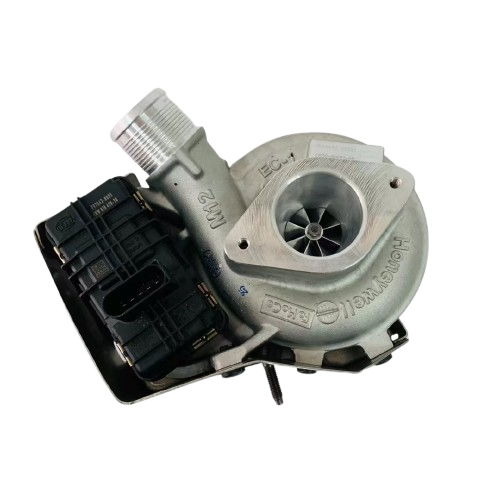
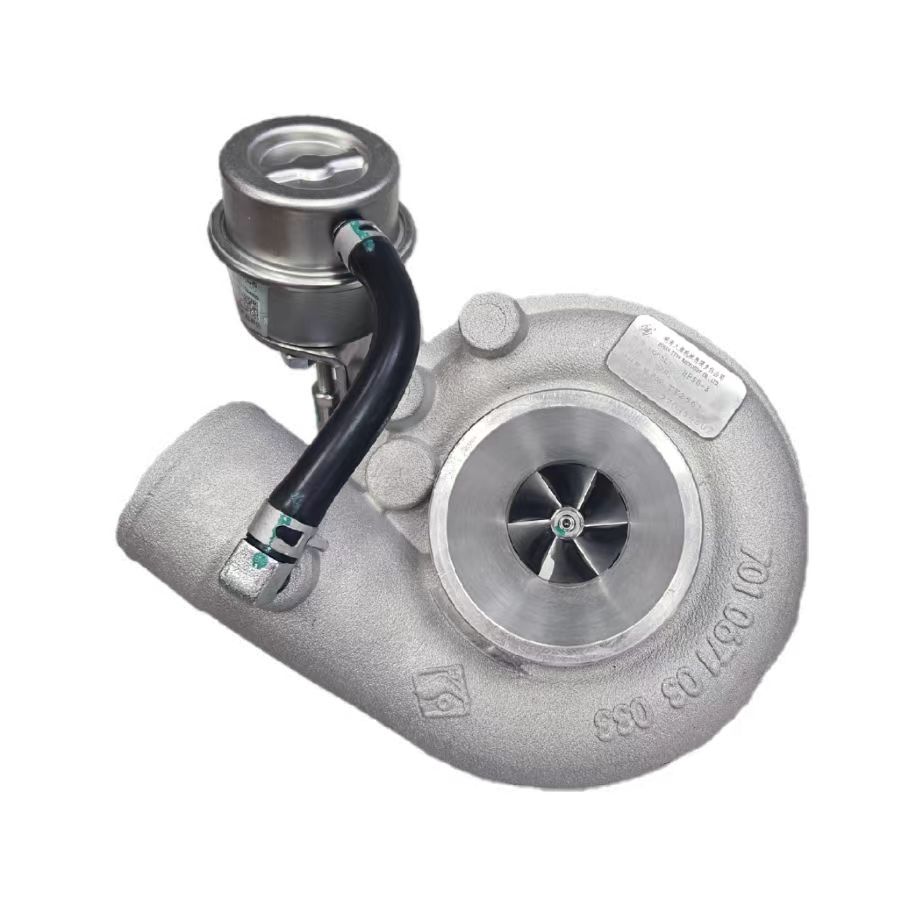
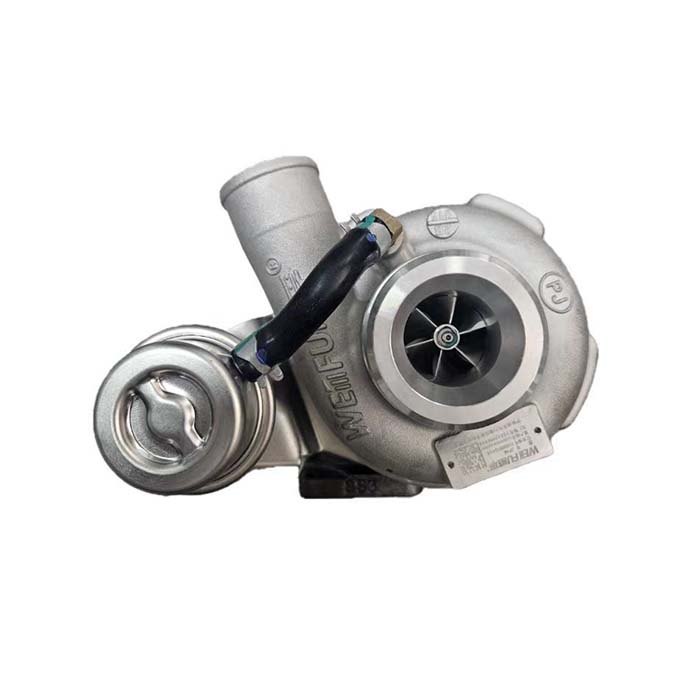
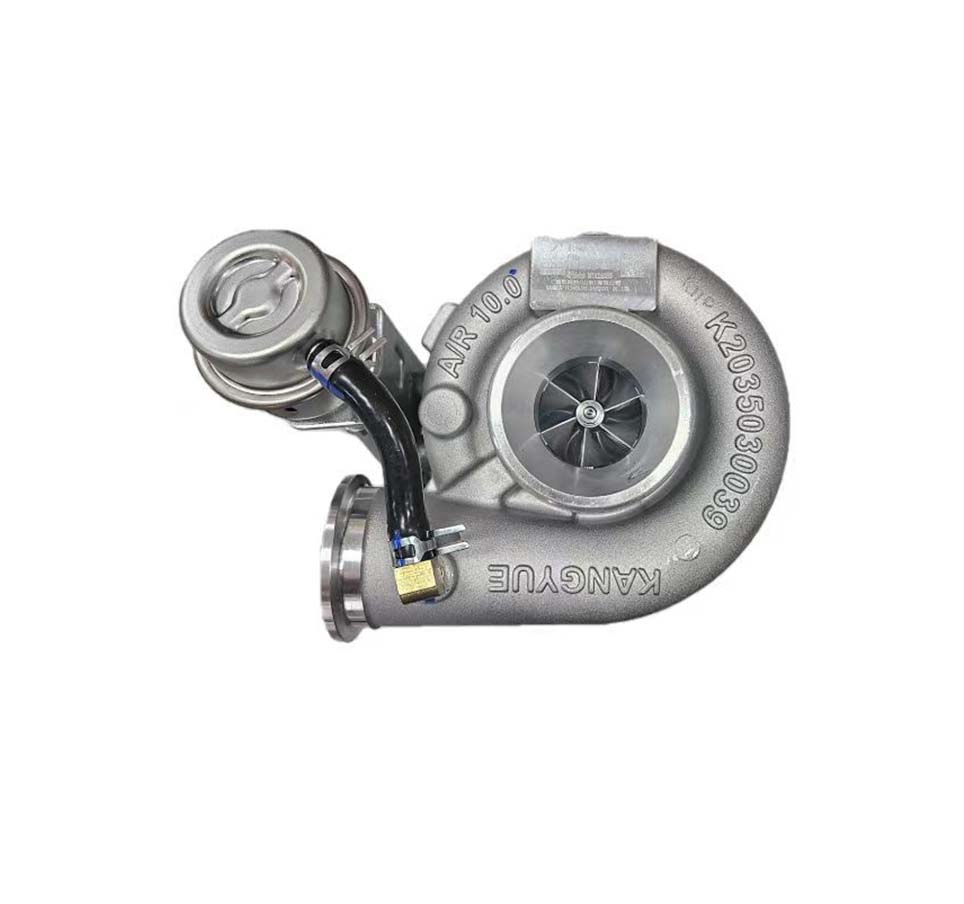
As a foreign trade factory, we are most afraid that our products cannot keep up with the needs of the customer market. From the dynamics of major European and American manufacturers and the changes in inquiries from foreign customers we have contacted in recent years, the technology of diesel truck engines is still constantly iterating. Turbocharging is only one of the nodes. The future trend is: turbocharging will continue to upgrade, naturally aspirated engines will be gradually phased out, and at the same time, it will integrate with new energy technologies to move towards a more efficient, environmentally friendly and intelligent direction.
Early turbocharging had two pain points: low-speed lag (sluggish start), high temperature and easy damage, and high maintenance costs, which are also problems complained by some old customers. But now, with technological upgrading, these pain points have basically been solved. The performance of turbocharging is getting stronger and stronger, and the applicable scenarios are getting wider and wider.
Traditional turbochargers have a fixed cross-section. At low speeds, there is less exhaust gas and weak supercharging, resulting in sluggish start; while VGT variable geometry turbochargers can adjust the blade angle. At low speeds, the blade angle becomes smaller, the supercharging effect is strong, and the start is powerful; at high speeds, the blade angle becomes larger to avoid overpressure, with smooth power and low fuel consumption. Now, European heavy trucks (Scania, Mercedes-Benz) and American pickups (Ford F-250, Ram 2500) are 100% equipped with VGT turbochargers as standard. Our customers feedback: the power is readily available without lag, which is much better than the old turbochargers.
Our cooperating American customers have recently been asking about parts for Cummins X15 or PACCAR MX-13. These new engines all use VGTturbochargers, aiming to balance low-speed torque and high-speed fuel saving, and also meet the stricter EPA emission regulations in 2027.
For high-horsepower heavy trucks (above 600 horsepower), a single turbocharger can no longer meet the needs. Two-stage turbochargers (series connection of large and small turbochargers) have begun to be popularized: small turbochargers are used at low speeds for fast supercharging and sufficient power; large turbochargers are used at high speeds for large air intake and low fuel consumption, maintaining high efficiency in the full speed range. For example, European Scania S770 and Mercedes-Benz Actros 680 are equipped with 16L two-stage turbo engines with more than 700 horsepower. Pulling 50 tons of goods for long distances, the fuel consumption is 5%-8% lower than that of single-turbo engines of the same horsepower. Our Swedish customer has purchased such models, and the feedback is particularly good.
In addition, electric auxiliary turbochargers have begun to be applied in small batches. At low speeds, the motor drives the turbocharger to completely solve the lag problem, and it will be gradually popularized in the future, especially in trucks for urban distribution and short-distance transportation.
The early turbocharger service life was only 100,000-200,000 kilometers, with high maintenance costs, which is also a concern for some customers. But now, turbochargers adopt high-performance bearings, water-cooled + oil-cooled dual heat dissipation, and high-temperature resistant materials, with a service life of 500,000-1,000,000 kilometers, basically the same as the engine service life. Usually, only regular maintenance is needed, and no additional maintenance costs are required. Our Swedish customer has a Volvo heavy truck that has been used for 8 years and run 1.2 million kilometers. The turbocharger has never been broken, and only a few regular maintenances have been done, with low costs.
Many people say that "diesel vehicles will be replaced by electric vehicles", but from the foreign customers and industry dynamics we have contacted, in the short term (10-20 years), diesel trucks will still be the main force in long-distance heavy-haul, mining areas, and remote areas. Turbocharging technology will continue to upgrade and integrate with new energy technologies, while naturally aspirated diesel engines will only become more and more marginalized.
Our customer in California complained to us that diesel trucks for distribution in downtown California may not be allowed to enter in the future, and they are looking at electric trucks to adapt to urban short-distance distribution. But for cross-state long-distance or heavy trucks in remote mining areas like Australia, the batteries are too heavy to be cost-effective, and the cruising range is not enough, so they still have to rely on diesel trucks. Moreover, these long-distance heavy trucks will all be equipped with advanced turbocharging systems to pursue higher thermal efficiency and lower fuel consumption.
In Europe, the new generation of diesel engines from Mercedes-Benz, MAN, and Volvo, combined with turbocharging, waste heat recovery, and more precise thermal management systems, are trying to push the thermal efficiency to more than 48% or even 50%. The original words of foreign engineers are: "Squeeze the value of every drop of oil", and turbocharging is the core technology to achieve this goal.
Now, European and American automakers are developing turbocharged diesel hybrid trucks: using electricity at low speeds and diesel turbo at high speeds, which can reduce fuel consumption by more than 30%, with lower emissions, adapting to mixed urban + long-distance working conditions. Our cooperating German automaker will launch a turbocharged diesel hybrid heavy truck in 2026, with 500 horsepower, and the fuel consumption is 25% lower than that of pure diesel turbo vehicles. At present, it has received a large number of orders from European fleets.
In addition, turbocharged diesel engines are also adapting to new zero-carbon fuels, such as biodiesel (B100) and hydrogen fuel, to achieve zero carbon emissions. European Scania and Mercedes-Benz have been testing hydrogen-fueled turbocharged diesel engines, which have the same power as diesel and zero emissions, and will be gradually commercialized in the future. In other words, turbocharging is not a transitional technology, and will continue to play a role in hydrogen engines in the future.
From our customer procurement data, in 2024-2025, the proportion of turbocharged diesel truck procurement exceeded 98%, and naturally aspirated vehicles accounted for only 2%, and most of these 2% were for old vehicle replacement and special operation needs. Whether it is European long-distance fleets, American farmers, or Asian logistics bosses, when purchasing diesel trucks now, the first thing to look at is whether they are turbocharged - strong power, fuel saving, compliance, and high value retention. Naturally aspirated vehicles are basically not wanted except for very special cases.
The same is true for the second-hand car market. In the truck second-hand market in Europe, the United States, and Japan, the value retention rate of turbocharged diesel trucks is 20%-30% higher than that of naturally aspirated vehicles, and they are easy to sell; while naturally aspirated vehicles have low prices and are difficult to sell, and can only be sold as scrap cars or at low prices to small farms and construction sites. Our British customer's 2020 Scania turbo heavy truck was sold at 65% of the original price in 2025; while the naturally aspirated old truck of the same year was only sold at 30% of the original price, and it took a long time to find a buyer.
Moreover, as global environmental protection regulations become more and more strict, such as the implementation of Euro VII in Europe in 2027, the stricter EPA heavy truck emissions in the United States in 2025, and many Asian countries following Euro VI standards, naturally aspirated diesel engines can never meet the future emission requirements and will be gradually eliminated. Turbocharging will become the "only standard configuration" for diesel trucks. Our European customers (France, Germany, the Netherlands) unanimously feedback: after 2025, naturally aspirated diesel trucks can basically not be licensed or put on the road in Europe, and only turbocharged engines can be selected when purchasing new vehicles. Compliance is the bottom line.
Up to now, I believe everyone has the answer: Are all diesel trucks turbocharged? No, but most of the commercial diesel trucks on the market now (especially medium and heavy-duty vehicles in the past 30 years) are turbocharged, which is also the standard configuration of the global transportation industry; but there are indeed a few old models, specific light vehicles or special vehicles that use naturally aspirated diesel engines, but they are now very marginalized.
As a diesel truck engine and turbocharger foreign trade factory with many years of experience in the foreign trade industry, we deal with foreign customers every day. Only by understanding these details can we communicate with our customers from the United States, Germany, Japan, and Australia, avoid making jokes when quoting plans, and help customers choose the most suitable products to reduce operating costs and improve efficiency. Here, we also put forward 3 practical suggestions for foreign customers and purchasers:
Whether it is long-distance heavy trucks, short-distance light trucks, pickups, or engineering vehicles, priority should be given to turbocharged models, especially VGT variable geometry turbochargers. They are superior to naturally aspirated vehicles in terms of power, fuel consumption, emissions, and value retention, and are more cost-effective for long-term operation. For example, European customers choose Scania and Mercedes-Benz, and American customers choose Peterbilt and Ford, all of which prioritize turbo configurations, which is also the optimal choice verified by the market.
If you still have naturally aspirated old vehicles, it is recommended to replace them with turbocharged new vehicles as soon as possible. Although there is a replacement cost in the short term, in the long run, turbocharged vehicles save fuel, have few failures, and high value retention, and can recover the cost in 1-2 years. Moreover, they can avoid fines due to non-compliant emissions, killing multiple birds with one stone. Our Dutch and American customers have been gradually replacing naturally aspirated old vehicles with turbocharged new vehicles in recent years, and the operating costs have been greatly reduced.
Only in special scenarios such as low-speed and light-load (below 5 tons), explosion-proof, and extremely low budget, consider naturally aspirated vehicles; otherwise, choose turbocharged vehicles. For example, light pickups pulling forage on Australian farms and explosion-proof trucks in European chemical zones are more suitable for naturally aspirated vehicles; but for long-distance heavy-haul and urban distribution, choosing turbocharged vehicles is definitely correct.
Finally, as a professional turbocharger foreign trade factory, we can provide high-quality turbochargers, complete engine units, technical support, and after-sales guarantee, which are suitable for mainstream models in Europe, the Americas, and Asia. If you are a foreign fleet owner, logistics provider, farmer, or purchaser, and want to know more about turbocharger selection, engine matching, technical parameters, quotes and other information, please feel free to contact us. We will provide one-on-one professional services to help you choose the most suitable products, and help you reduce operating costs and improve transportation efficiency!